
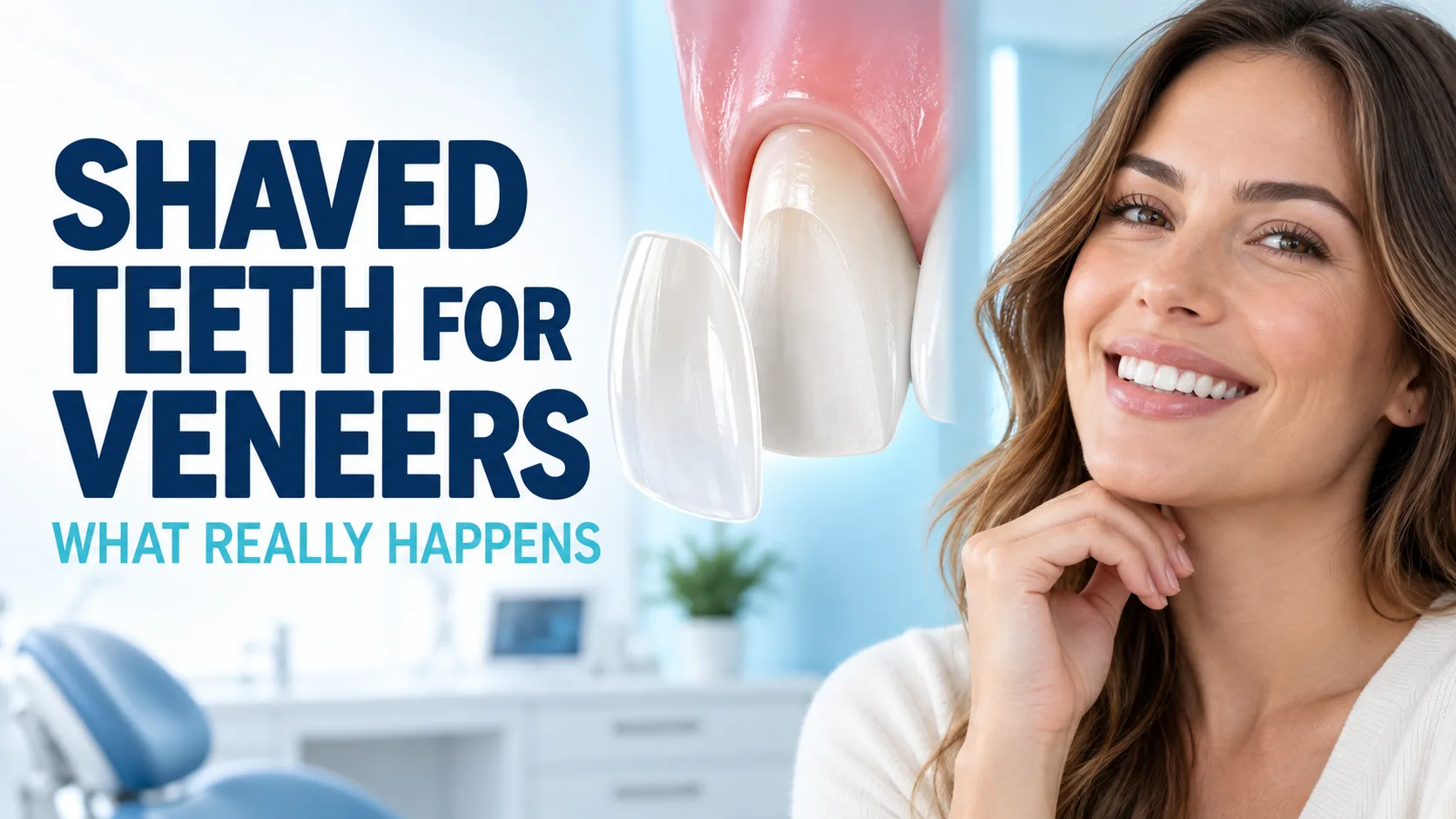
Shaved Teeth for Veneers usually have a small, carefully planned amount of enamel removed from the front and sides so the new shell can fit naturally. They should not routinely be reduced to tiny pegs. The amount varies with the veneer type, tooth position, existing shape, and treatment plan. Because removed enamel does not grow back, conventional porcelain veneer preparation is generally irreversible.
Table of Contents
That direct answer matters because social media often mixes two different procedures. A veneer covers mainly the visible front surface of a tooth. A crown surrounds the tooth much more extensively. The American Dental Association explains this distinction in its consumer guide to veneers, which also advises using a licensed dentist for irreversible treatment.
What Do Shaved Teeth for Veneers Look Like?
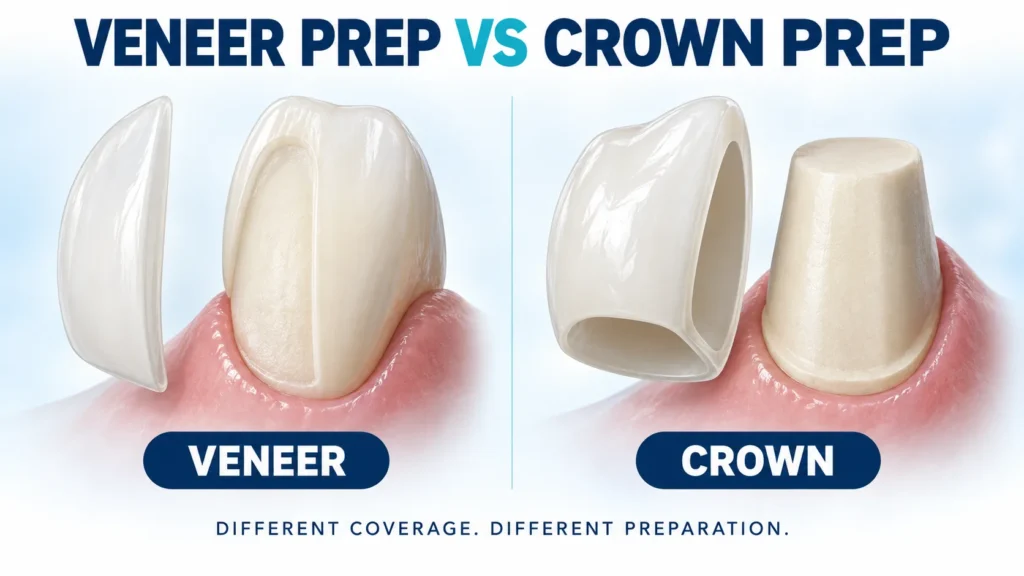
A conservatively prepared tooth usually still looks recognizably like a tooth. Its front surface may appear slightly flatter, less glossy, or smaller, and its edges may be refined to create room for the veneer. The exact appearance depends on how much space the dentist needs and whether the veneer wraps around an edge or side.
The dramatic pointed stumps sometimes labeled online as “veneers shaved teeth” often resemble preparations for full-coverage crowns, not routine veneer preparations. Crowns cover the whole visible tooth, while veneers cover the front. If you are comparing these treatments, this guide to veneers versus crowns on front teeth explains why the amount and location of tooth reduction differ.
Why Do Dentists Shaved Teeth for Veneers?
The goal is not to make a healthy tooth dramatically smaller. Preparation creates controlled space for restorative material and helps the final tooth avoid looking thick or overcontoured. It can also allow the dentist to correct limited shape differences and establish a clean finishing edge for the laboratory and bonding process.
Enamel reduction may be needed when a tooth already projects outward, has uneven contours, or needs a veneer thick enough to mask discoloration. Conversely, a small or inward-positioned tooth may need less preparation. This is why an online promise such as “no shaving for everyone” cannot replace an examination and case-specific design.
How Much Tooth Structure Is Removed?
There is no responsible one-size-fits-all number. Preparation depends on the material, planned color change, tooth alignment, bite, and the thickness the restoration requires. Dentists may use photographs, scans, diagnostic models, wax-ups, or trial mock-ups to decide where space is actually needed.
| Option | Typical preparation approach | Important distinction |
| Porcelain veneer | A small amount of enamel is commonly removed from the front and sides. | Bonded restoration covering mainly the front surface. |
| Composite veneer | May require less enamel removal, depending on the case. | Tooth-colored resin is shaped and bonded directly. |
| Minimal-prep or no-prep veneer | Little or no reduction may be possible in selected cases. | Not suitable for every tooth shape, alignment, or cosmetic goal. |
| Dental crown | More extensive reduction is generally required around the tooth. | Full-coverage restoration, not a veneer. |
| Removable clip-on veneer | No enamel is intentionally removed for fitting. | Removable cosmetic cover, not a bonded dental restoration. |
What Happens During Veneer Preparation?
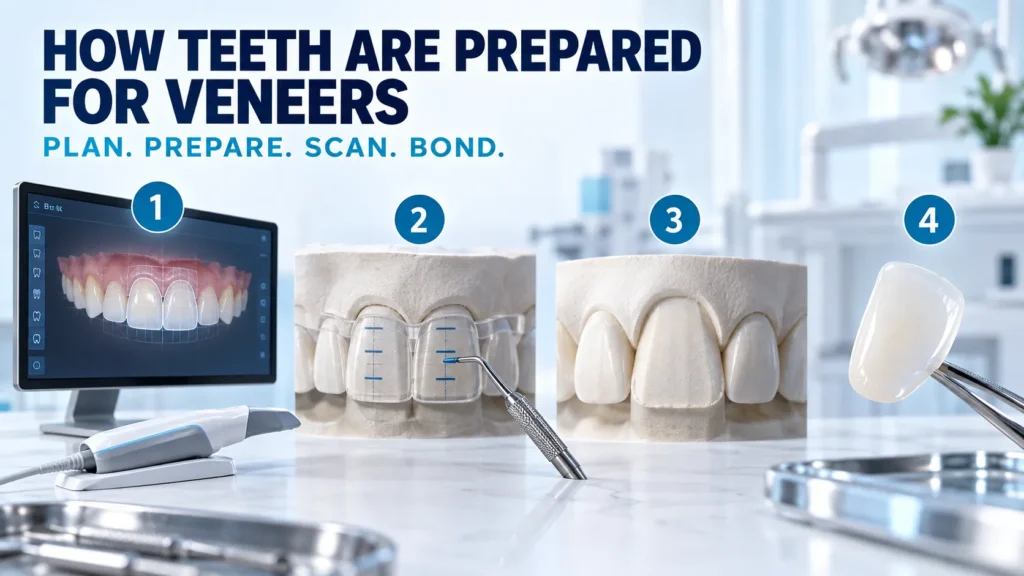
The sequence varies by material and dental office, but a conventional porcelain veneer process commonly includes the following stages:
- Examination and diagnosis: The dentist checks the teeth, gums, bite, existing restorations, and whether decay or another problem must be treated first.
- Smile design: Photos, scans, impressions, models, or a mock-up help define the proposed shape and the amount of space needed.
- Controlled preparation: A small amount of enamel is removed from planned areas. Local anesthetic may be used depending on the depth and the patient’s comfort needs.
- Impression or scan: The prepared teeth are recorded so the laboratory can make the porcelain restorations. Temporary veneers may be used while the final work is made.
- Try-in and bonding: The dentist checks fit, appearance, contact points, and bite before cleaning the teeth and bonding the veneers.
Composite veneers follow a different workflow because the tooth-colored resin is usually sculpted directly on the tooth and hardened with a curing light. According to the ADA, composite may require less enamel removal, but “less” does not automatically mean none.
Is Getting Teeth Shaved for Veneers Painful?
Preparation should be managed as a dental procedure, not a beauty-service shortcut. Experiences vary. Removing a very shallow layer of enamel may feel different from deeper preparation, and a dentist may use local anesthetic when sensitivity or preparation depth warrants it. You may notice short-term sensitivity or an unfamiliar bite while wearing temporaries.
Persistent pain, a veneer that feels high when you bite, gum swelling, or worsening sensitivity deserves prompt attention from the treating dentist. An article cannot determine the cause. The useful rule is simple: do not accept significant or ongoing symptoms as an unavoidable price of a cosmetic smile.
Are Shaved Down Teeth for Veneers Permanently Changed?
Yes, when enamel has been removed, that change is permanent because enamel does not regenerate. The prepared teeth generally need continuing coverage with the bonded restorations or suitable replacements. Veneers themselves can chip, loosen, wear, or eventually require repair or replacement, even when treatment is well planned.
This does not mean veneers automatically “ruin” teeth. Conservative planning, sound bonding, good oral hygiene, and regular professional care all matter. It does mean the decision should be made with clear expectations about irreversibility and future maintenance. Our related guide addresses the question do veneers ruin your teeth? without treating every case as either harmless or disastrous.
Risks and Long-Term Tradeoffs to Understand
Any irreversible cosmetic procedure deserves a realistic risk discussion. Important considerations include:
- Sensitivity: Teeth may react to temperature after preparation, especially when more tooth structure is removed.
- Dentin exposure: Deeper preparation can reach the layer beneath enamel, which changes the bonding situation and may increase sensitivity concerns.
- Repair and replacement: Veneers are not lifetime devices. A damaged or loosened restoration may require professional repair or replacement.
- Decay and gum health: Cavities can still develop around or beneath veneer margins, and overcontoured restorations can make hygiene harder.
- Bite forces: Clenching, grinding, nail biting, and chewing hard objects can place restorations under additional stress.
Long-term expectations also differ among porcelain, composite, and removable products. See the site’s evidence-based overview of how long different veneers last for a format-by-format explanation rather than a single universal lifespan.
Can No-Prep Veneers Avoid Shaving?
Sometimes, but only in selected cases. A minimal-prep or no-prep approach may work when adding a thin restoration will not make the tooth look or feel bulky and when the existing alignment, bite, color, and contours cooperate. Even products marketed as no-prep may require minor adjustments in an individual treatment plan.
The compromise is geometry. Adding material without creating space can produce an overcontoured result or an edge that is harder to clean. Ask to see a proposed mock-up and clarify whether “no-prep” means absolutely no enamel removal, very limited preparation, or simply less preparation than a conventional veneer.
Three Removable Veneer Alternatives Without Tooth Shaving
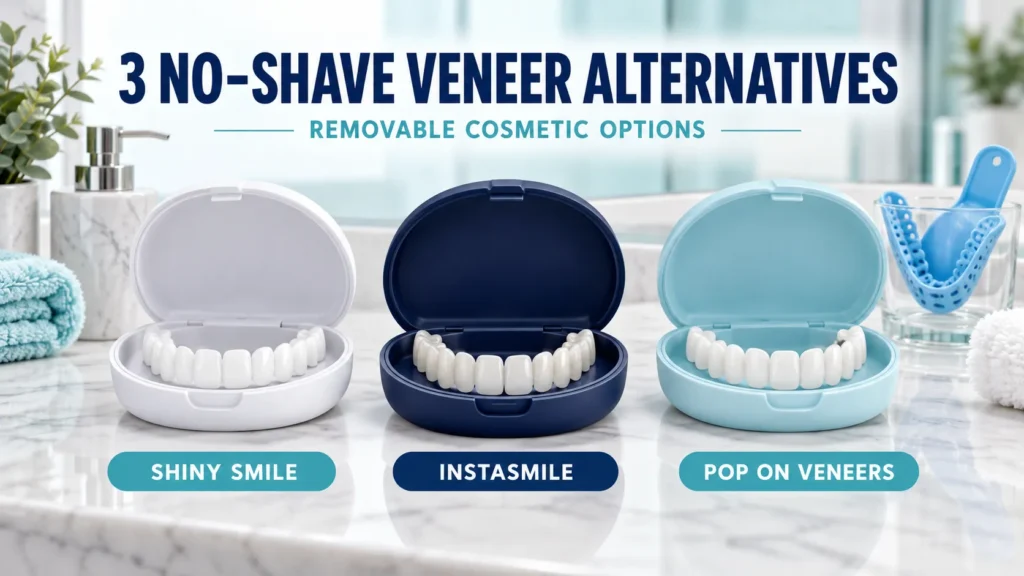
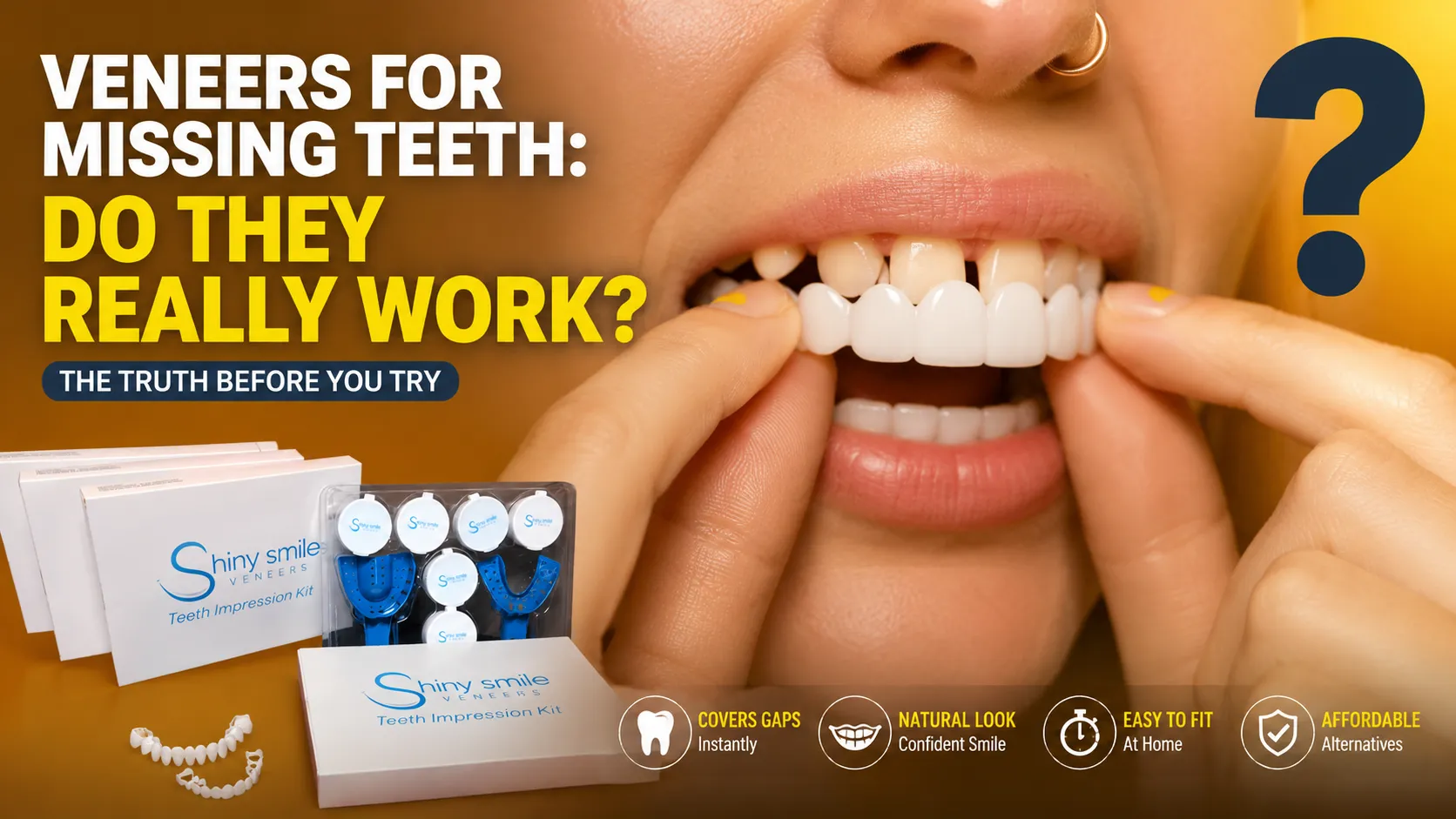
If your goal is a temporary cosmetic change and avoiding irreversible enamel removal is the priority, custom removable veneers are a separate category to consider. They fit over existing teeth and are taken in and out by the wearer. They are not porcelain veneers, crowns, aligners, dentures, or treatment for decay, gum disease, bite problems, or missing roots.
The following are editorially selected examples, not a claim that one product is best for every person. The facts below come from the companies’ current public websites and can change. Readers should complete any suitability screening, review current terms, and seek dental care for unresolved oral-health problems before using a cosmetic cover.
| Brand | Product category | Fitting process stated by brand | Editorial note |
| Shiny Smile Veneers | Custom clip-on veneers | At-home impression kit; finished veneers are made from accepted impressions. | Worth comparing if you want a straightforward single- or double-arch option. |
| Instasmile | Custom removable clip-on veneers | Online assessment followed by a mailed at-home impression kit and photo check. | Offers a structured screening and impression workflow. |
| Pop On Veneers | Custom removable cosmetic smile | At-home impression molds and smile photos are used for the custom design. | Discloses polyethylene as its product material on the official site. |
1. Shiny Smile Veneers
The official Shiny Smile Veneers website describes custom clip-on veneers ordered with an at-home impression process. The product is removable and does not require the enamel preparation used for bonded porcelain veneers. Because promotions, production timing, guarantees, and policies can change, confirm the current terms directly before ordering.
2. Instasmile
Instasmile’s official US website describes a removable product made to an individual dental profile. Its process starts with an online assessment, then an at-home impression kit and a photo check before the impression is mailed back. This is a cosmetic cover, so suitability screening is not the same as a dentist diagnosing oral disease.
3. Pop On Veneers
Pop On Veneers states that its custom product is designed from at-home impression molds and smile photos. The company currently identifies the material as polyethylene and describes the product as fitting over existing teeth. That disclosure is useful for comparison, but it does not turn the appliance into a restorative dental treatment.
For a broader side-by-side look at these companies, including practical limitations that do not fit this preparation guide, read the site’s three-brand snap-on veneer comparison.
Questions to Ask Before Agreeing to Tooth Preparation
- How much enamel do you expect to remove from each tooth, and why?
- Can you show me the design with a mock-up, scan, or diagnostic model before preparation?
- Will the planned margins stay mainly in enamel?
- Would orthodontics, whitening, bonding, or no treatment meet my goal with less irreversible change?
- What happens if a veneer chips, debonds, or needs replacement later?
- Are you a licensed dentist in this state, and who will perform each step?
Bottom Line
Do they Shaved Teeth for Veneers? Often, yes, but conventional veneer preparation should remove a limited, planned amount from the front and sides, not routinely reduce teeth to tiny pegs. The change is irreversible, so ask exactly what will be removed and why. Minimal-prep options may suit selected cases, while removable clip-on veneers avoid intentional enamel removal but provide cosmetic coverage only and cannot replace necessary dental care.
Frequently Asked Questions
Do they shave all your teeth for veneers?
No. Only teeth included in the treatment plan are prepared, and each tooth may need a different amount. A dentist should base the plan on the proposed smile design, existing tooth position, material needs, and bite.
Do Shaved Teeth for Veneers grow back?
No. Removed enamel does not grow back. That is why conventional veneer treatment is generally considered irreversible and why future repair or replacement needs should be discussed before treatment begins.
Are teeth shaved into pegs for porcelain veneers?
Not routinely. Standard veneers cover mainly the front surface and generally involve limited preparation there and at the sides or edge. Peg-like preparation is more consistent with the greater reduction used for a full-coverage crown. Individual cases can vary.
Can you get veneers without shaving teeth?
Some patients may qualify for minimal-prep or no-prep bonded veneers, while removable clip-on veneers do not require intentional enamel removal. Neither route is suitable for every goal or dental condition, so the difference should be reviewed with a licensed dentist.
This article contains affiliate links. If you purchase through our links, we may earn a commission at no extra cost to you. We only recommend products we genuinely believe in. Read our Affiliate Disclaimer for full details.