
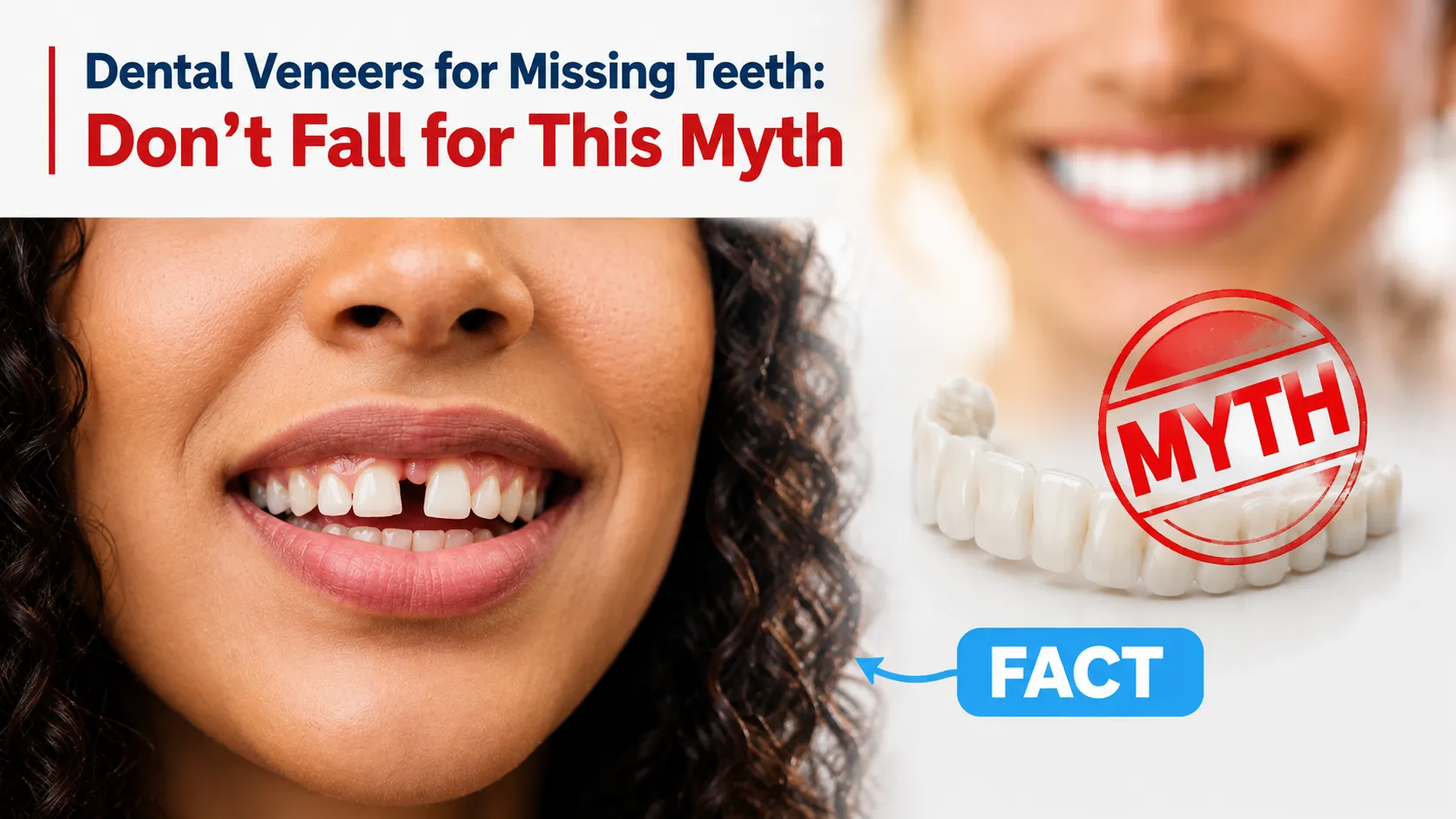
Veneers for missing teeth can work only as a cosmetic solution, not a functional tooth replacement. Traditional veneers require an existing tooth, while removable clip-on veneers may visually cover a gap by attaching to healthy remaining teeth. Neither option replaces the missing root or restores normal chewing strength. For functional replacement, a dentist may recommend a bridge, implant, or partial denture.
Table of Contents
If you searched “can you get veneers with missing teeth” hoping for a simple yes-or-no, here it is: it depends on how many teeth you’ve lost and where. A single missing tooth with strong neighbors on both sides is usually an easy case for removable veneers. Missing most of an arch is a different story, and that calls for a dentist, not a snap-on product.
This guide breaks down exactly how veneers for missing teeth work, which removable brands handle missing-tooth cases well, what they cost, and when you genuinely need a dental professional instead. Every fact here comes from official brand websites, published pricing pages, and general dental education resources, not invented reviews or star ratings.
What “Veneers for Missing Teeth” Actually Means
Here’s where a lot of confusion starts. When people ask about dental veneers for missing teeth, they’re usually picturing one of two very different products.
The first is a dentist-placed porcelain veneer, a thin permanent shell bonded to an existing tooth. Porcelain veneers cover and reshape a tooth that’s already there. They can’t replace a tooth that’s gone.
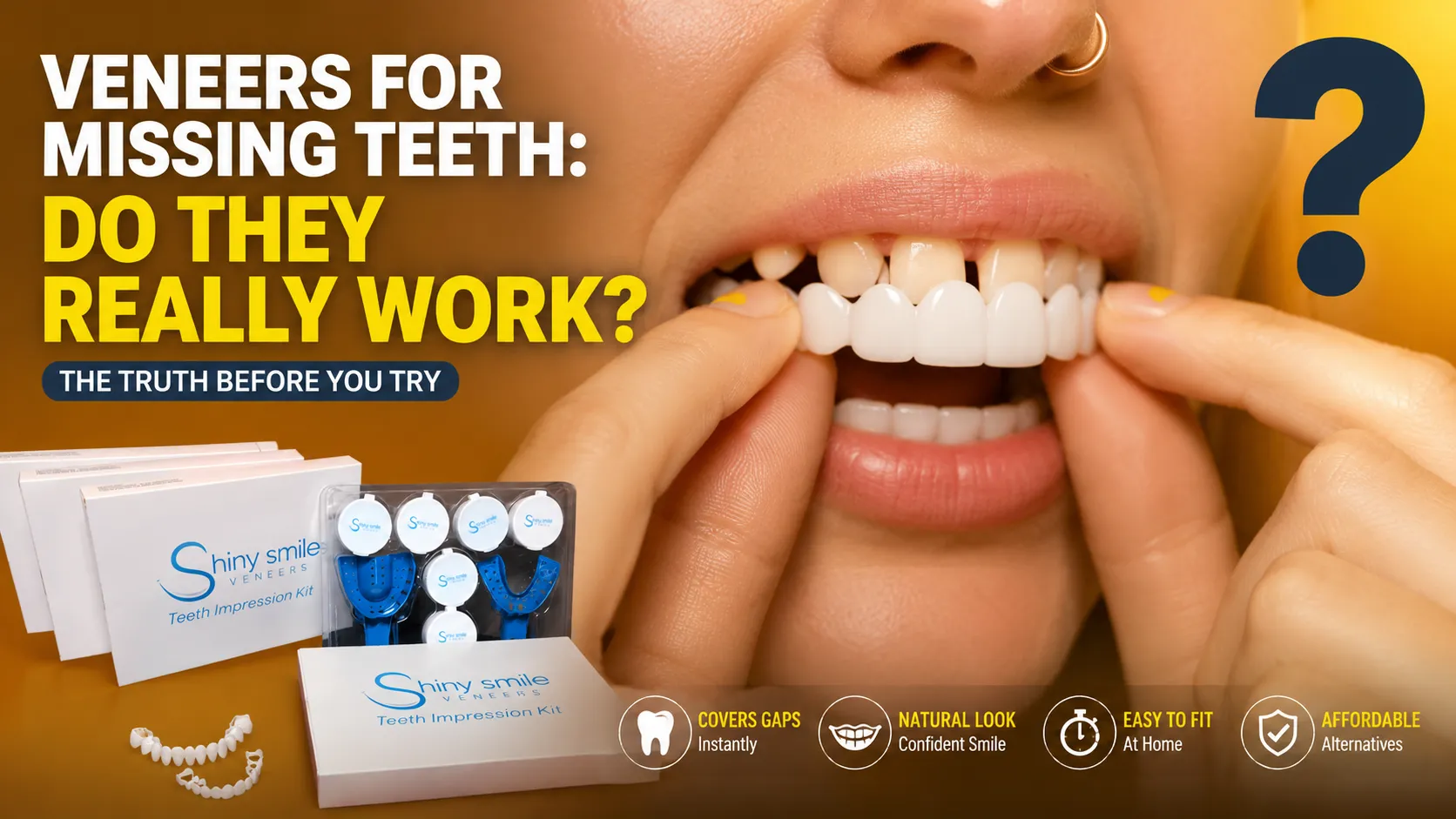
The second, and the actual answer to most searches like this one, is a removable clip-on veneer. These are custom-molded plastic shells you fit over your own teeth at home, no drilling or dental visit required. A section of the veneer is filled in to visually close a gap where a tooth used to be, which is exactly what most people mean when they search for dental veneers for missing teeth.
This article is about the removable, cosmetic kind unless stated otherwise. If you’re weighing both paths, our breakdown of what porcelain veneers actually cost is a useful comparison before you commit to anything permanent.
Can You Get Veneers With Missing Teeth?
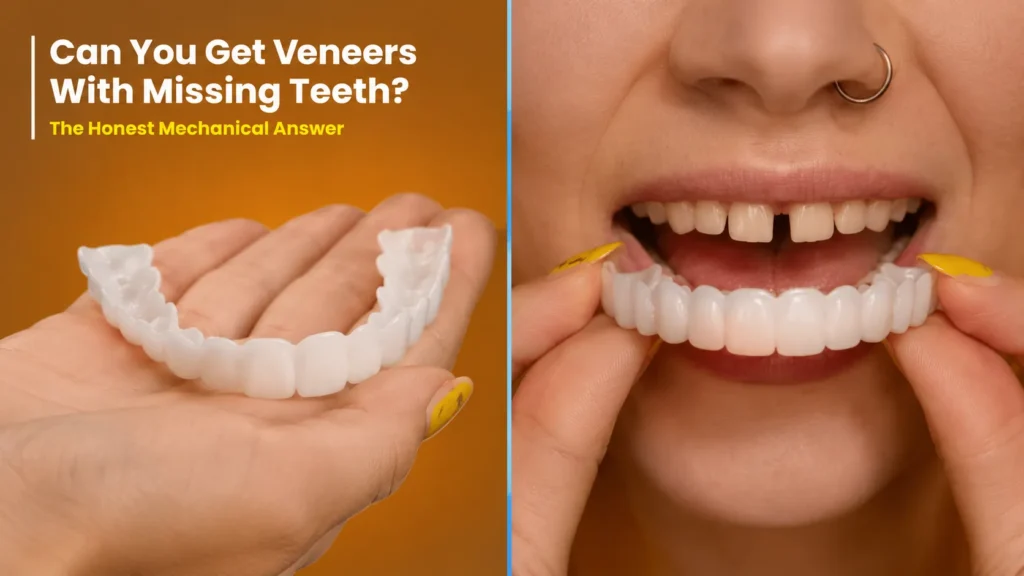
Can you get veneers with missing teeth is the single most common version of this question, and the honest answer is: usually yes, within limits.
Removable veneer brands build a filled-in tooth shape directly into the appliance, so wearing the veneer visually completes your smile even where a natural tooth is absent. A set of veneers with missing tooth coverage works this way regardless of brand. What determines whether you qualify comes down to three things:
- Anchor teeth. You typically need healthy teeth on either side of the gap for the veneer to grip onto.
- Number of missing teeth. One or two gaps in a row is usually fine. Three or more consecutive missing teeth per arch often requires a reinforced model.
- Overall dental health. Active gum disease, loose teeth, or untreated decay usually disqualifies you until treated.
Most brands run a free online smile assessment before you order specifically to check these factors. Skipping it is the fastest way to end up with a veneer that doesn’t seat properly.
Can I Get Veneers With Missing Teeth? Checking Your Own Situation
If you’re asking “can I get veneers with missing teeth” about your specific mouth, start with a simple self-check before you order anything.
- Count how many teeth are missing, and note whether they’re in a row or scattered.
- Check whether you have a healthy tooth directly on each side of every gap.
- Note any pain, swelling, or looseness in your remaining teeth.
- Take the brand’s free eligibility quiz to get a direct answer for your case.
Pass the first three checks without a red flag, and most brands will likely qualify you for at least a standard product. Missing several teeth in a row usually means looking for a reinforced or “dynamic” model instead.
How to Hide a Missing Tooth: Your Realistic Options
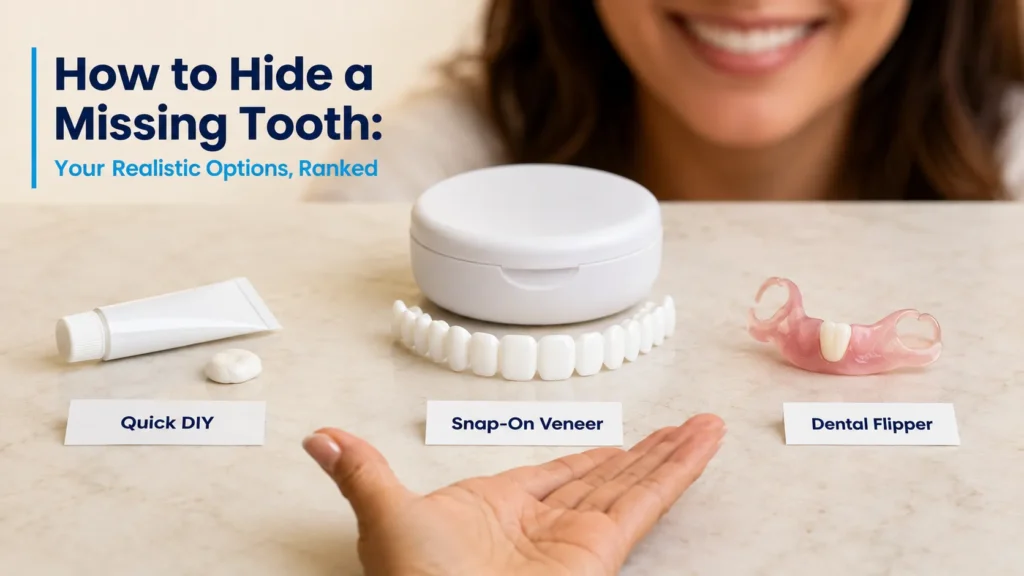
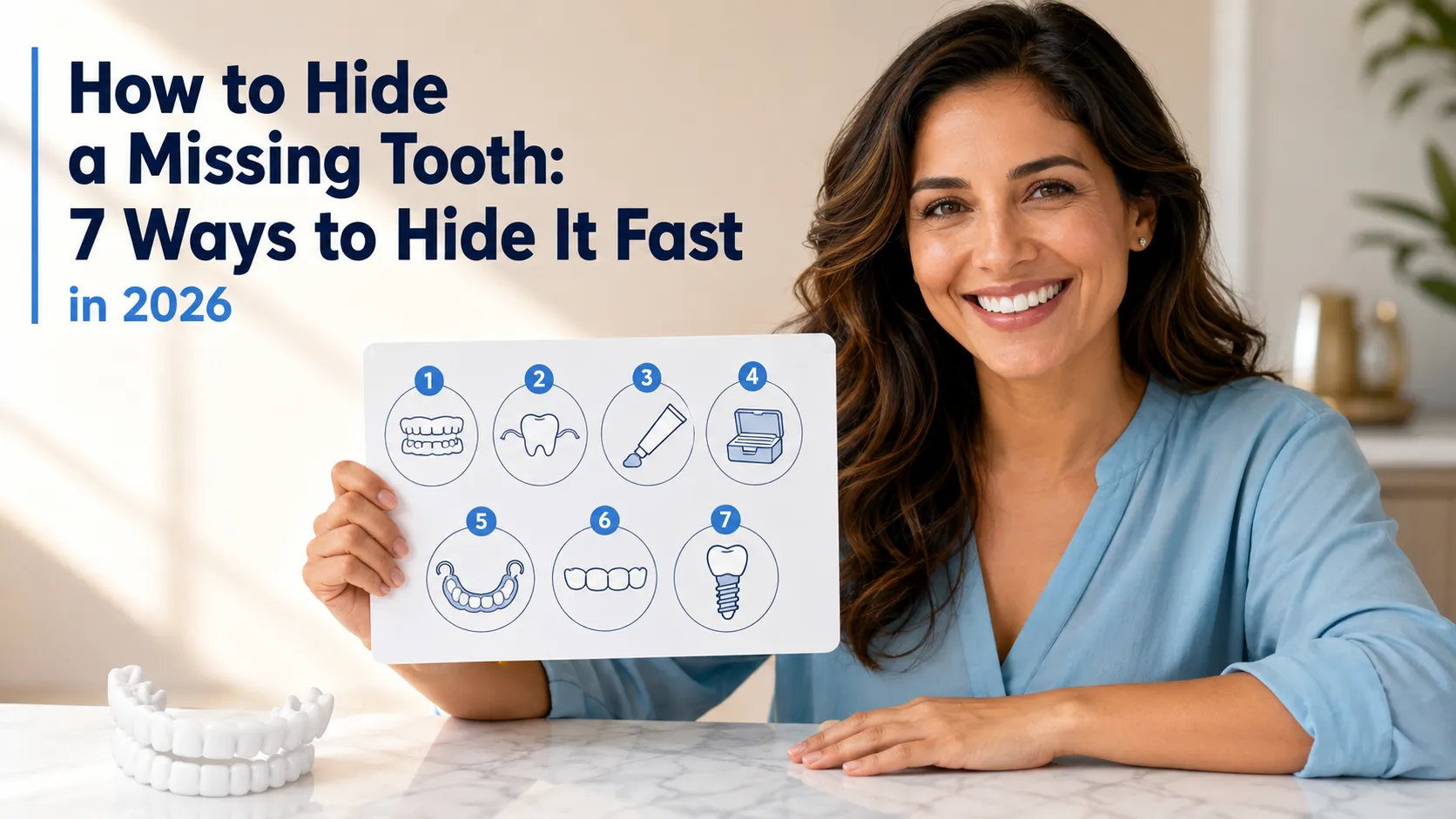
People searching how to hide a missing tooth usually land on one of four paths, each with a different cost and commitment level.
| Option | How It Works | Function Restored? | Typical Cost |
| Removable clip-on veneers | Custom shell snaps over remaining teeth | No, cosmetic only | $270-$950 per set |
| Partial denture | Dentist-fitted, replaces missing teeth with clasps | Yes, partial | $500-$2,500 per arch |
| Dental bridge | Permanently bonded, anchored to neighboring teeth | Yes | $4,100-$9,650 |
| Dental implant | Surgically placed titanium post with a crown | Yes, full | $1,600-$4,200 per tooth |
Among these four, removable dental veneers for missing teeth sit at the entry point: lowest upfront cost, no dental visit, and fully reversible. They’re also the option most limited in what they can actually do for your bite. For a closer look at how a comparable removable option stacks up against a functional appliance, our comparison of Pop On Veneers versus dentures walks through the cost and durability trade-offs in more depth.
What Removable Veneers Can and Can’t Do for a Missing Tooth
It helps to be blunt here, because a lot of marketing around this category blurs the line.
| What They Can Do | What They Can’t Do |
|---|---|
| Visually close the gap using a built-in filled section shaped and shaded to match your remaining teeth | Restore chewing force on the missing tooth’s side |
| Be worn during the day and removed at night, similar to a retainer | Attach securely if you don’t have enough healthy anchor teeth |
| Offer an affordable, no-commitment way to look complete while you save for or consider a permanent fix | Fix an underlying issue like infection, decay, or bone loss |
| Be reordered or adjusted if your dental situation changes | Replace a licensed dentist’s evaluation if you’re in pain |
Removable veneers are a cosmetic appliance. This article isn’t offering dental diagnosis or treatment advice, and no removable veneer brand should be marketed as a substitute for one.
Best Removable Veneers for Missing Teeth in 2026
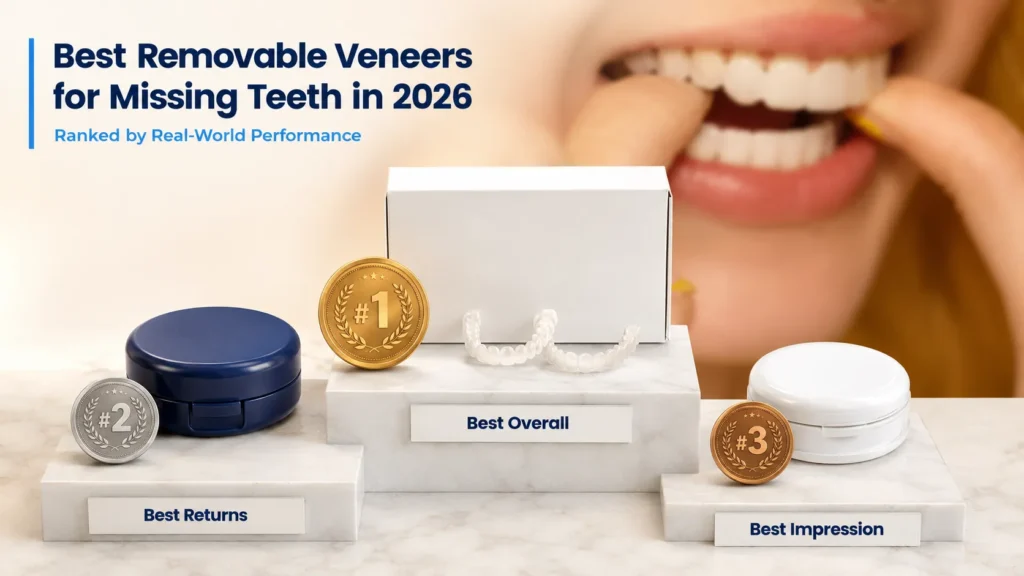
Among the brands we’ve reviewed, a handful stand out specifically for how they handle missing-tooth cases. Pricing and eligibility rules below come from each brand’s official site and are worth confirming directly before you order, since promotions shift often.
Shiny Smile Veneers
Shiny Smile Veneers markets its custom snap-on product for covering stains, gaps, chips, and missing teeth in one set. Current pricing runs around $370 for a single arch and $570 for a full top-and-bottom set at regular price, with frequent promotions bringing that lower. You can check live pricing on the official Shiny Smile Veneers website.
We’ve covered this brand extensively, including a full breakdown of whether Shiny Smile Veneers is legit based on BBB standing and thousands of verified customer reviews.
Pop On Veneers
Pop On Veneers, based in New York, requires at least four healthy teeth on the upper and/or lower arch to qualify. A full set lists at $699, typically promoted to roughly $479-$499, with a single arch around $499 list price. The brand backs orders with a 30-day Pop On Promise covering up to two remakes if the fit isn’t right, which matters more for missing-tooth cases where fit tolerance is tighter. Details are on the official Pop On Veneers website.
instasmile
instasmile is the only major brand with a product built specifically for multiple missing teeth. Their Dynamic model uses a thicker, more structured design recommended once you have three or more missing teeth in a row per arch. Classic veneers suit people with no missing teeth or only minor gaps. Pricing starts around $275-$400 for a single arch and roughly $600-$950 for a full set. You can review current options on the official instasmile website.
TruSmile
TruSmile is a newer entrant in the removable veneer space, and we’ve published a full TruSmile Veneers review covering its process, pricing, and whether the brand is legitimate based on available evidence. If you’re comparing every option before ordering, that review is worth a read alongside the three above.
Veneers for Missing Teeth: Side-by-Side Pricing
| Brand | Single Arch | Full Set | Missing-Teeth Support |
| Shiny Smile Veneers | ~$270-$370 | ~$470-$570 | General coverage, no dedicated model |
| Pop On Veneers | ~$279-$499 | ~$479-$699 | General coverage, needs 4+ healthy teeth |
| instasmile (Dynamic) | ~$275-$400 | ~$600-$950 | Dedicated Dynamic model for multiple gaps |
Prices shift with ongoing promotions across every brand in this category, so treat this table as a starting range and confirm the live total at checkout.
How the Ordering Process Works
- Take the brand’s free online eligibility quiz to confirm your missing-tooth pattern qualifies
- Choose your shade and, where offered, your model (standard versus reinforced)
- Mold your teeth at home using the included impression kit, following instructions exactly
- Mail your impressions back for lab review before production starts
- Receive your custom veneers, typically within two to three weeks
Rushing step three is the single biggest cause of a poor-fitting veneer, even if it means requesting a second kit.
Are Veneers With Missing Teeth Worth It?
Our honest, editorial take: yes, for the right person, and no for the wrong one.
They’re worth it if you have healthy remaining teeth, want an affordable and fully reversible way to look complete for daily life or a specific event, and you understand you’re buying appearance rather than function.
They’re not worth it if you’re missing most of an arch, have ongoing dental pain, or genuinely need to chew normally again on the affected side. That situation calls for a conversation with a dentist about bridges, implants, or dentures, not a snap-on cosmetic product.
Safety, Care, and When to See a Dentist Instead
Removable veneers are cosmetic appliances, not medical devices, and nothing here is a substitute for professional dental advice.
See a licensed dentist before ordering any removable veneer if you have:
- Pain, swelling, or bleeding gums
- Loose or shifting teeth
- Active orthodontic treatment
- A missing-tooth pattern spanning most of an arch
The American Dental Association’s guidance on tooth replacement options is a solid starting point if you want the clinical side of this comparison, since only a licensed dentist can tell you whether a functional replacement like a bridge or implant is appropriate for your case.
Daily care matters too, regardless of brand. Our guide on what you can and cannot eat with removable veneers covers habits that apply across most snap-on products, not just one.
Frequently Asked Questions
Can you get veneers with missing teeth?
Yes, in most cases. Removable veneers use a built-in filled section to cosmetically close the gap, as long as you have healthy anchor teeth on each side of the missing tooth or teeth.
Can I get veneers with missing teeth if I’m missing several in a row?
Often yes, but you’ll likely need a reinforced model, such as instasmile’s Dynamic line, built specifically for multiple consecutive missing teeth.
Do veneers for missing teeth restore chewing function?
No. Removable veneers are purely cosmetic. They don’t restore chewing force the way a dental implant, bridge, or partial denture does.
How much do veneers with missing tooth coverage cost?
Pricing generally runs $270 to $950 depending on the brand, whether you order a single arch or a full set, and current promotions.
How do I hide a missing tooth without visiting a dentist?
Removable clip-on veneers are the main at-home option, using an impression kit and an online eligibility quiz instead of an in-person visit.
What disqualifies someone from veneers for missing teeth?
Too few remaining healthy anchor teeth, active gum disease, loose teeth, or a missing-tooth pattern covering most of an arch typically disqualifies buyers until the underlying issue is treated.
Is a dental bridge or implant better than veneers for a missing tooth?
If you need restored chewing function, yes. Bridges and implants are structural replacements placed by a dentist. Removable veneers only address appearance.
Final Verdict
Veneers for missing teeth are a real, workable option for the right situation: someone with healthy remaining teeth who wants their smile to look whole again without committing to permanent dental work right away.
They are not a replacement for a missing tooth’s function, and no reputable brand should claim otherwise. If your case involves several missing teeth in a row, look specifically at brands offering a reinforced model. If it involves pain, a loose tooth, or most of an arch, a dentist consultation about bridges, implants, or dentures is the more appropriate next step.
Whichever direction fits your smile, take the free eligibility quiz seriously before ordering, and don’t skip a dental checkup if something feels off in your mouth beyond the missing tooth itself.
This article contains affiliate links. If you purchase through our links, we may earn a commission at no extra cost to you. We only recommend products we genuinely believe in. Read our Affiliate Disclaimer for full details.