
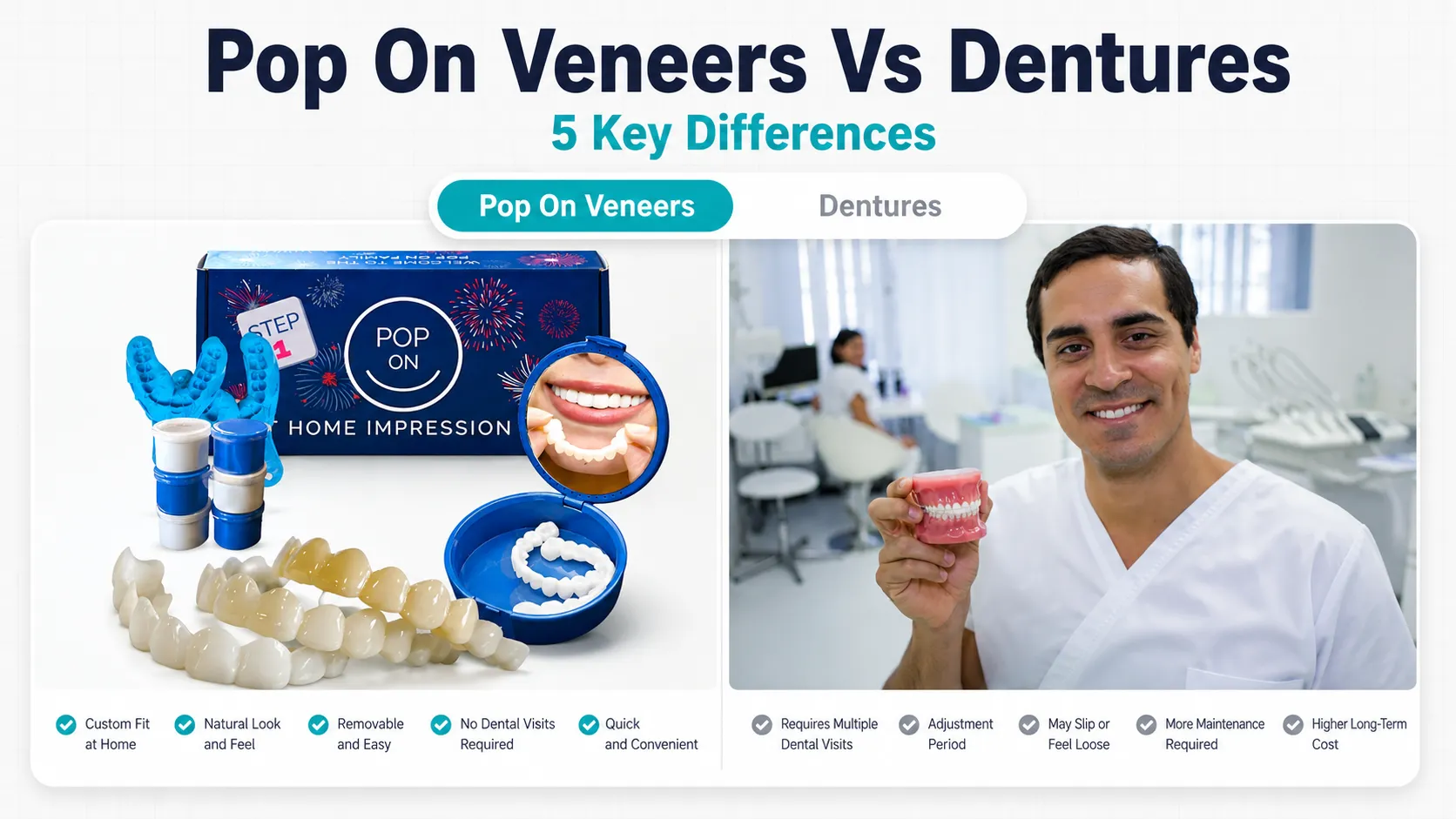
Pop On Veneers cover existing teeth to create a temporary cosmetic appearance. Dentures replace missing teeth and may help restore oral function. This means price comparisons alone can be misleading because the products solve different problems. Someone with extensive tooth loss should begin with a dentist rather than selecting a cosmetic cover based on appearance or convenience.
Table of Contents
Every fact here comes from the Pop On Veneers brand itself, the American Dental Association, and current 2026 dental pricing data, not guesswork. By the end, you’ll know exactly which category you fall into, and which of these two very different products actually solves your problem.
Quick Answer: Pop On Veneers Vs Dentures
- Pop On Veneers are a cosmetic cover that snaps over your existing teeth. Dentures are a functional replacement for teeth that are already missing.
- If you have most of your natural teeth and want a cosmetic upgrade, Pop On Veneers fit that goal. If you’re missing several teeth or an entire arch, dentures solve a different problem entirely.
- They can overlap for some users, but they aren’t interchangeable, and choosing the wrong one for your situation wastes money either way.
What Are Pop On Veneers?
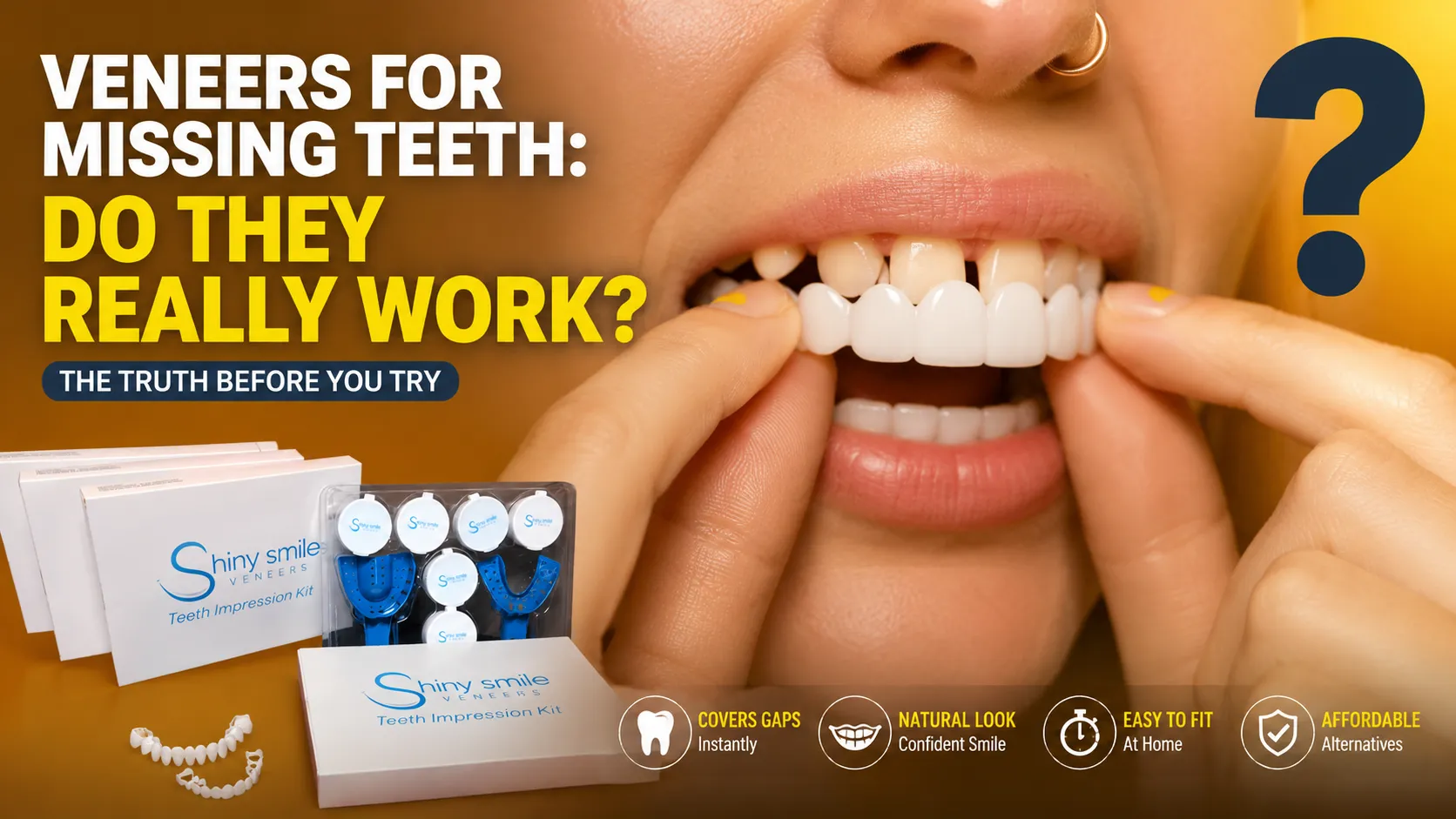
Pop On Veneers are custom, removable snap-on veneers made from an at-home impression kit. You can see current pricing and options on the official Pop On Veneers website.
The company, based in New York, requires at least four healthy teeth on the upper and/or lower arch to qualify, since the veneer needs existing tooth structure to snap onto.
They’re designed purely for cosmetic use, covering stains, gaps, chips, or minor unevenness. The brand is explicit that they aren’t a substitute for dental treatment.
What Are Dentures?
According to the American Dental Association, dentures are removable replacements for missing teeth and the surrounding tissue, custom-fitted by a dentist or prosthodontist.
Full Dentures
Full dentures replace an entire arch of missing teeth, resting directly on the gums. They’re an option once all natural teeth in that arch are gone.
Partial Dentures
Partial dentures fill in gaps from several missing teeth while your remaining natural teeth stay in place, typically anchored with clasps or precision attachments.
Pop On Veneers Vs Partial Dentures: The Key Difference
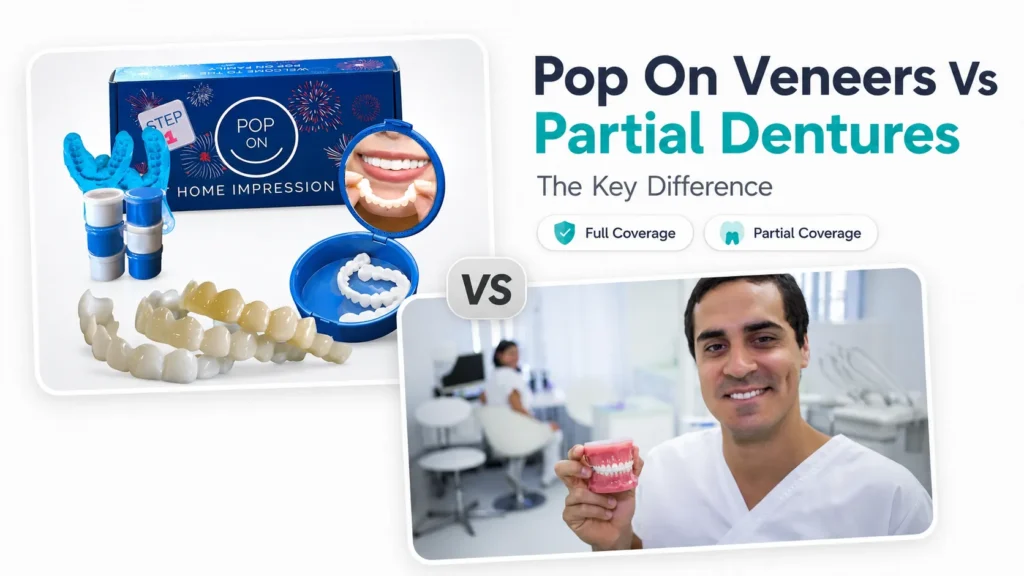
This is where the confusion usually starts, since both are removable and both can visually fill a gap in your smile.
Pop on veneers vs partial dentures comes down to what’s actually missing. A partial denture replaces teeth that are gone. A Pop On veneer sits over teeth that are still there, using a filled-in section only to cosmetically mask a small gap.
If a tooth is completely missing and there’s nothing left to snap onto, a Pop On veneer generally can’t provide a stable, functional fix the way a partial denture can.
Veneers vs Dentures: Who Actually Needs Which One?
Veneers vs dentures isn’t really a matchup: it’s a sorting question based on how many natural teeth you have left.
- Mostly healthy teeth with cosmetic issues (stains, gaps, chips): Pop On Veneers
- Several missing teeth, but some natural teeth remain: partial dentures
- An entire arch of missing teeth: full dentures
- Want a permanent, non-removable cosmetic fix: porcelain veneers, not either option here
Pop On Veneers Vs Dentures Cost
Pop on veneers vs dentures cost is one of the more surprising comparisons, since the cheaper-looking option isn’t always the actual cheaper option long term.
Pop On Veneers list a full top-and-bottom set at $699, with running promotions bringing it down to roughly $479 to $499. A single arch runs about $499 list, often promoted to $279 to $299.
Partial dentures typically cost $500 to $2,500 per arch depending on the material, while full dentures generally run $1,000 to $3,000 per arch, or $2,000 to $6,000 for a complete upper-and-lower set.
For comparison, professional porcelain veneers run $900 to $2,500 per tooth through a dentist, which puts both Pop On Veneers and most dentures well below permanent cosmetic dentistry in upfront cost.
Comfort and Daily Wear: How They Compare
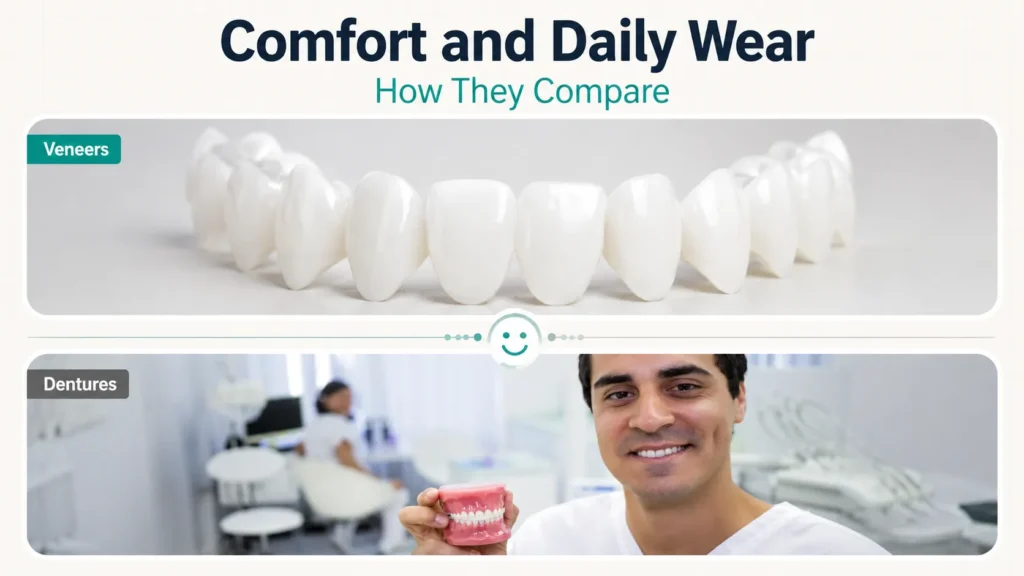
Pop On Veneers are thin, custom-molded shells meant to be worn during the day and removed for eating and sleeping, similar to a retainer.
Dentures, especially full sets, are designed for more extended daily wear, including eating, though most dentists still recommend removing them overnight to let the gums rest.
New wearers of either product typically go through an adjustment period for speech and fit, generally a few days for veneers and a few weeks for a new denture.
Durability: How Long Does Each Option Last?
Pop On Veneers typically last six months to two years with careful daily use, according to third-party reviews of the category, after which most people order a fresh set.
Partial dentures generally last 5 to 8 years before needing replacement or relining, while full dentures often last 7 to 10 years with proper care and adjustments as your gums change shape over time.
Dentures win clearly on lifespan, which matters more once you calculate a multi-year cost rather than just the upfront price tag.
Can Pop On Veneers and Dentures Be Combined?
In a sense, yes, though not literally worn together. Someone with a partial denture replacing a few back teeth could still choose Pop On Veneers for the front teeth that remain, since the veneer only needs natural tooth structure to snap onto.
What doesn’t work is snapping a Pop On veneer over teeth a denture is currently replacing. There’s simply nothing left for the veneer to grip.
What Happens If You Choose the Wrong One?
Ordering Pop On Veneers when you’re actually missing teeth is one of the more common mistakes people make searching this exact comparison.
Without enough healthy teeth to anchor to, the veneer won’t seat properly, and the company’s own qualification quiz exists specifically to catch this before you order.
On the flip side, choosing a full denture when a cosmetic cover would have solved the problem means paying for a dental visit and a longer production process you didn’t need.
A five-minute honest inventory of your own mouth, ideally backed by a dentist’s opinion, saves both the money and the disappointment of the wrong purchase.
Pop On Veneers Vs Dentures: Pros and Cons
| Pop On Veneers | Dentures |
|---|---|
| Pros: Lower upfront cost | Pros: Replaces actually missing teeth |
| Pros: No dentist visit required | Pros: Restores chewing function |
| Pros: Fully reversible | Pros: Longer lifespan |
| Pros: Fast turnaround | Pros: Dentist-supervised fit |
| Cons: Shorter lifespan | Cons: Higher cost for premium materials |
| Cons: Requires existing healthy teeth | Cons: Requires a dental visit |
| Cons: Purely cosmetic | Cons: Adjustment period |
| Cons: Not a functional tooth replacement | Cons: Possible slipping without adhesive or implants |
Insurance and Payment Considerations
Dental insurance generally treats dentures as a covered restorative procedure, often reimbursing a meaningful portion of the cost, especially for medically necessary tooth replacement.
Pop On Veneers, like most cosmetic products, aren’t typically covered by dental insurance, since they’re classified as an aesthetic purchase rather than a medical necessity.
Both offer financing through third-party providers like Affirm or CareCredit, which can make either option more manageable regardless of insurance coverage.
Our Recommendation
If your teeth are mostly intact and you want a faster, lower-cost cosmetic upgrade, Pop On Veneers make sense, and they’re a reasonable way to test a new smile before committing to anything permanent.
If you’re missing teeth and need actual function restored, a dentist consultation about dentures, or comparing veneers against crowns and other permanent options, is the more appropriate route.
Curious how Pop On stacks up against other removable brands? Our review of Shiny Smile Veneers covers a comparable alternative worth checking before you order.
Frequently Asked Questions
Are Pop On Veneers the same as dentures?
No. Pop On Veneers are cosmetic covers that snap over existing teeth. Dentures are functional replacements for teeth that are already missing.
Can Pop On Veneers replace missing teeth?
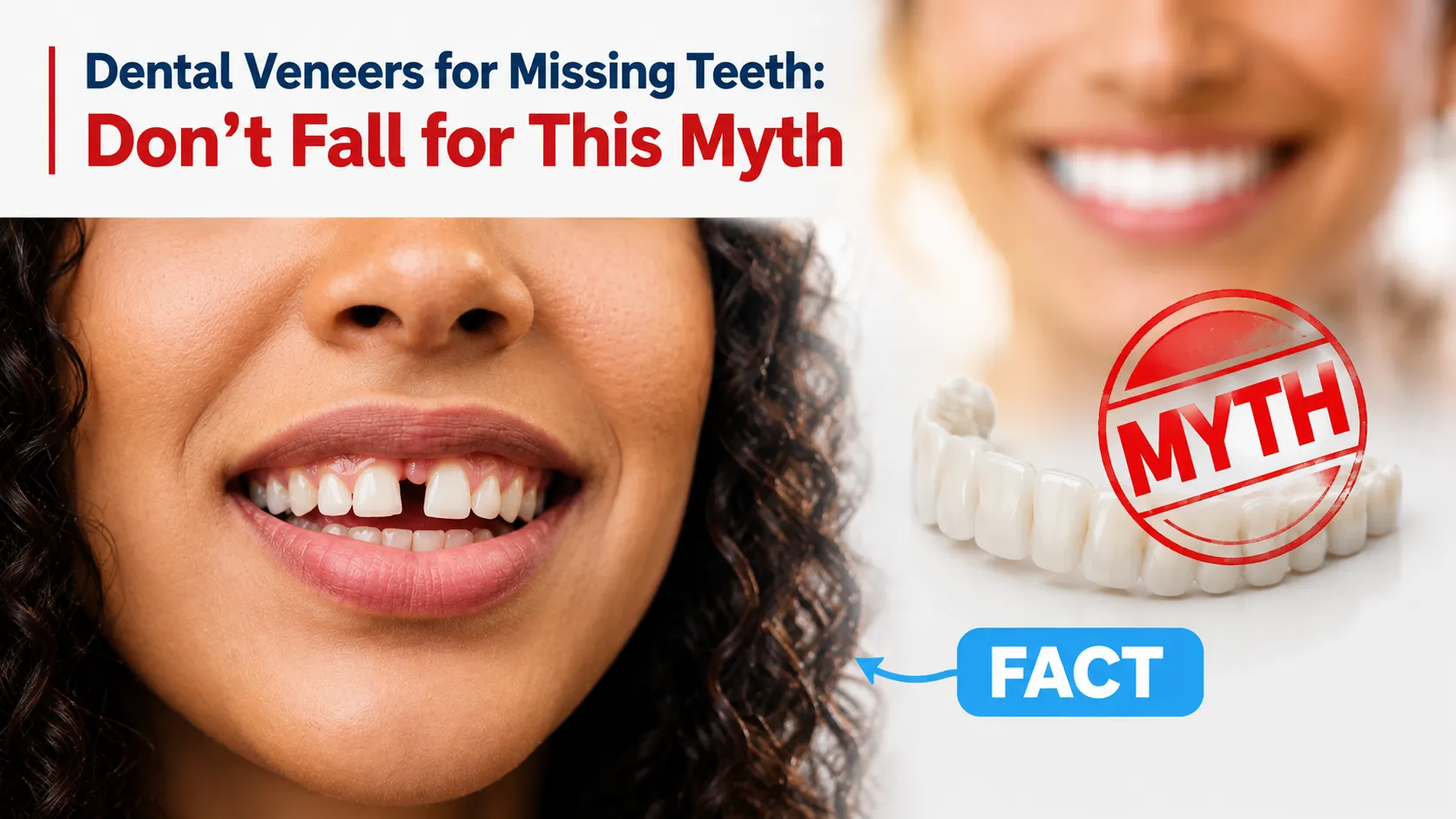
Not functionally. Some designs cosmetically hide a gap from a missing tooth, but they aren’t a structural replacement the way a partial denture or implant is.
Which is cheaper, Pop On Veneers or dentures?
Pop On Veneers usually cost less upfront, around $479 to $699 per set, while partial dentures run $500 to $2,500 and full dentures $1,000 to $3,000 per arch.
Which lasts longer, Pop On Veneers or dentures?
Dentures generally last longer. Pop On Veneers typically last six months to two years, while partial dentures often last 5 to 8 years with proper care.
Do I need a dentist for Pop On Veneers?
No. Pop On Veneers use an at-home impression kit. Dentures, by contrast, require a dentist or prosthodontist for fitting and adjustments.
Can you eat with Pop On Veneers in?
It’s not recommended. Most brands advise removing them before eating, similar to how you’d remove a retainer, to avoid damage or discomfort.
Do partial dentures look as natural as Pop On Veneers?
Both can look natural when well-made. Partial dentures sometimes show metal clasps, while Pop On Veneers are custom-colored shells covering the full visible arch.
Can I wear Pop On Veneers with a partial denture?
Often yes, if the veneer covers different teeth than the denture replaces. A veneer still needs healthy tooth structure to snap onto, so overlap isn’t possible on the same teeth.
Do dentures require special cleaning compared to Pop On Veneers?
Both need daily cleaning with a soft brush and a non-abrasive cleanser, and both should come out for cleaning rather than being brushed while worn.
Which option is better for missing teeth?
Dentures, without question. Pop On Veneers require healthy remaining teeth to attach to and were never designed to replace teeth that are actually gone.
Final Thoughts
Pop On Veneers vs dentures isn’t really a fair fight, because they’re built for two different situations. One dresses up teeth you still have. The other replaces teeth you don’t. Get honest with yourself about which category you fall into before you buy either one; the wrong purchase here is an expensive lesson, not just a disappointing one.
Whichever direction fits your smile, a quick consultation, either with a dentist for dentures or through the brand’s own qualification quiz for veneers, is worth doing before you spend a dollar.
This article contains affiliate links. If you purchase through our links, we may earn a commission at no extra cost to you. We only recommend products we genuinely believe in. Read our Affiliate Disclaimer for full details.