
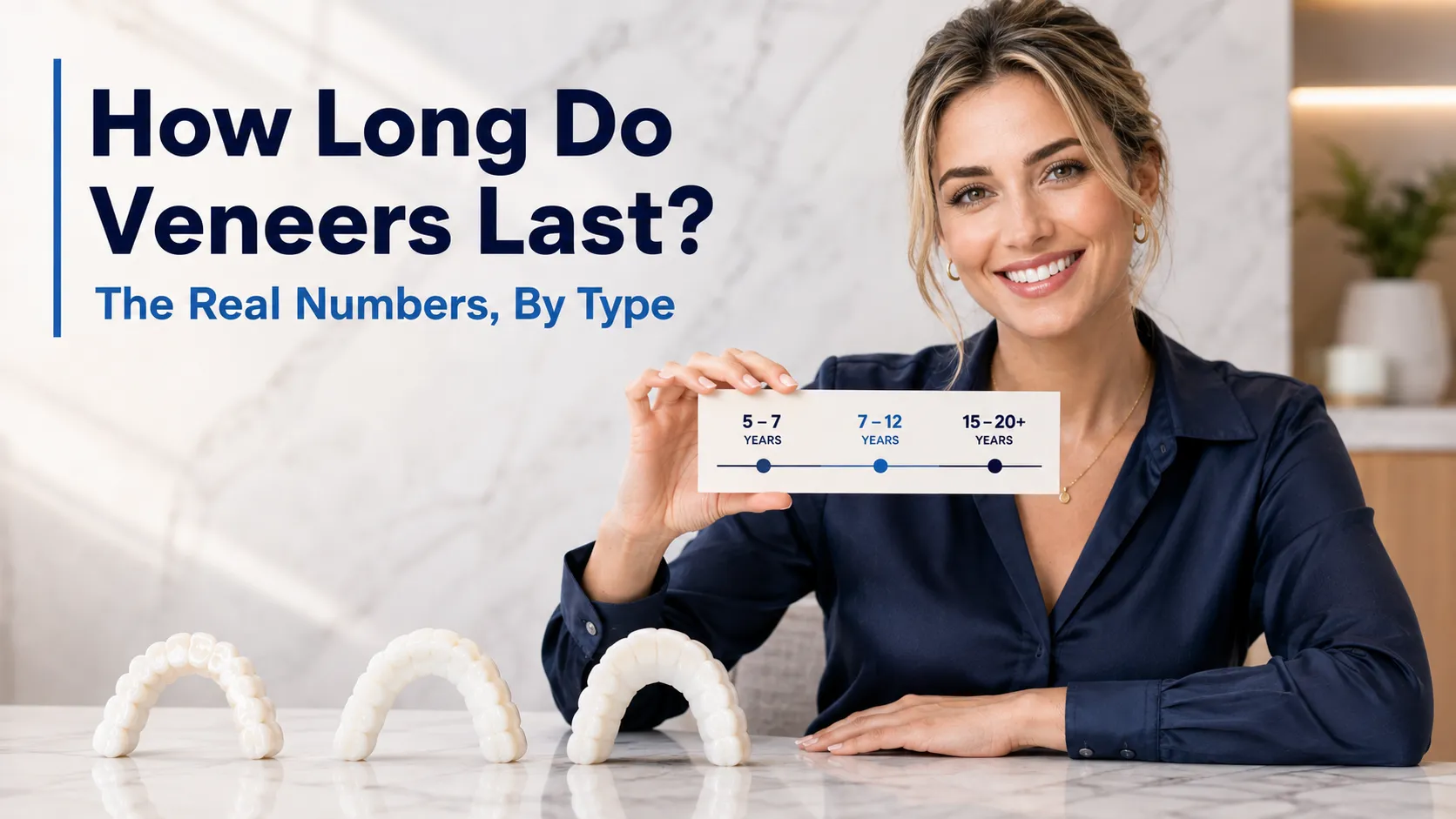
Veneer longevity varies because porcelain, composite resin, no-prep veneers, and removable snap-on products use different materials and attachment methods. Oral hygiene, grinding, bite forces, hard-food habits, and the quality of placement also matter. Published lifespan ranges are estimates rather than guarantees, so replacement costs should be included in any long-term budget.
Table of Contents
The honest answer depends on the type of veneer, the health of your teeth before placement, and how well you treat them afterward. This guide breaks down the real lifespan numbers for each veneer type, the seven factors that can cut that lifespan short, and how to make whatever you choose last as long as possible.
How Long Do Veneers Last – Quick Answer by Type
Before we go deep, here are the core numbers backed by peer-reviewed dental research and major dental publications.
- Porcelain veneers: Typically last 10 to 20 years. A 2018 review found porcelain veneers lasting 10 years or longer in the vast majority of cases, with one study of 84 patients showing veneers intact at 20 years.
- Composite veneers: Typically last 5 to 7 years. Lower upfront cost but need replacement sooner and stain more easily.
- No-prep veneers: Lumineers and similar brands claim up to 20 years; some clinical sources estimate 5 to 10 years in real-world conditions.
- Snap-on removable veneers: Shiny Smile and similar brands last up to 5 years with proper care. Do veneers last forever in any of these categories? No – replacement is always part of the long-term plan.
Porcelain Veneers – The Long-Haul Option
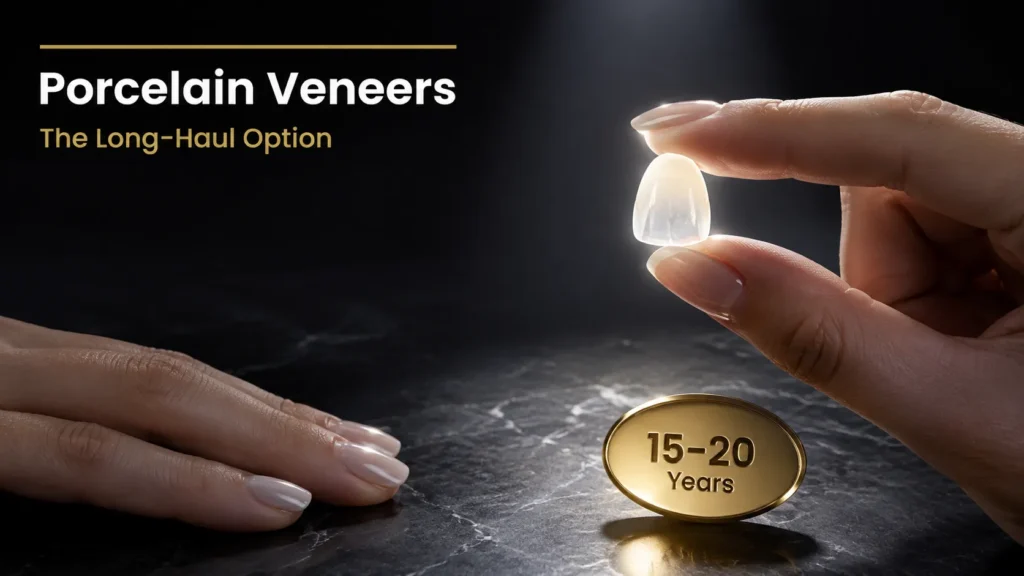
Porcelain is the gold standard in the veneer world, and the reason is simple: it mimics how natural enamel transmits light better than any other material. That translucency is what makes a well-made porcelain veneer look indistinguishable from a real tooth in most lighting conditions.
The key research comes from a 2018 literature review published in a peer-reviewed dental journal that analyzed multiple long-term studies on how long veneers can last. The conclusion: most porcelain veneers hold up well for a decade or longer, with some reaching 15 to 20 years. The outliers that fail early typically do so because of poor preparation, grinding habits, or poor adhesion technique.
The cost range runs from $925 to $2,500 per tooth, according to the Consumer Guide to Dentistry. For how long veneers last at this price point, porcelain is clearly the strongest return on investment.
Porcelain veneers are also irreversible. The dentist removes roughly 0.5mm of enamel to create a bonding surface, and that enamel does not grow back. You commit to the veneer for life once you start. Understanding how long do veneers last – and what affects that lifespan – is not optional. It’s the core of the decision.
Composite Veneers – The Budget Option

Composite veneers use a resin-based material rather than fired porcelain. They cost $250 to $1,500 per tooth – meaningfully less than porcelain – and a skilled dentist can apply them in a single appointment rather than over multiple visits.
The trade-off is lifespan and stain resistance. Composite veneers typically last 5 to 7 years – roughly half the expected life of a well-maintained porcelain set. They are also more prone to discoloration from coffee, wine, and dark foods. You can polish some surface staining off, but composite gradually absorbs pigment over time in a way porcelain does not.
For people who want to test the veneer experience before committing to porcelain, composite veneers are a legitimate starting point. But if you measure how long veneers last over the full ownership period including replacement cycles, composite veneers can end up costing more over a decade than porcelain would have from the start.
No-Prep Veneers – The Lumineers Option
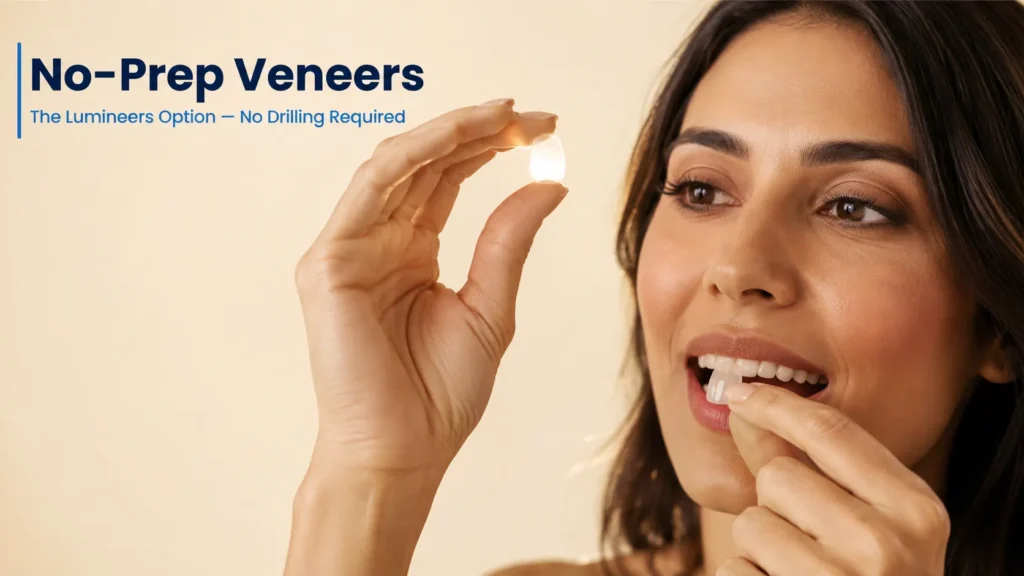
No-prep veneers skip the enamel removal step entirely or reduce it significantly. Brands like Lumineers, Vivaneers, and DURAthin sit on top of your existing tooth surface without the aggressive preparation that traditional veneers require.
Lumineers’ manufacturer claims a lifespan of up to 20 years. Some clinical sources suggest a more conservative 5 to 10 year estimate in real-world conditions. The cost range is $800 to $2,000 per tooth. The advantage is near-reversibility since minimal enamel is removed. The trade-off is a slightly bulkier feel and limited suitability for severe cosmetic concerns.
Do Veneers Last Forever?
The direct answer to do veneers last forever: no. No dental veneer in any category is permanent in the sense of lasting a lifetime without eventual replacement. Even the best porcelain veneers have a lifespan – typically 10 to 20 years – after which chips, color changes, edge wear, or gum recession may require replacing the set.
Do veneers last forever in terms of what they do to your teeth? In one way, yes. The enamel removal required for traditional veneers is permanent. Your teeth always need some form of cover after traditional veneers go on. In that sense, the commitment is forever even if the specific veneers themselves need replacing.
So when people ask do veneers last forever, the more useful follow-up question is: how long veneers last before the first replacement, and what can you do to push that date as far out as possible?
7 Factors That Affect How Long Veneers Can Last
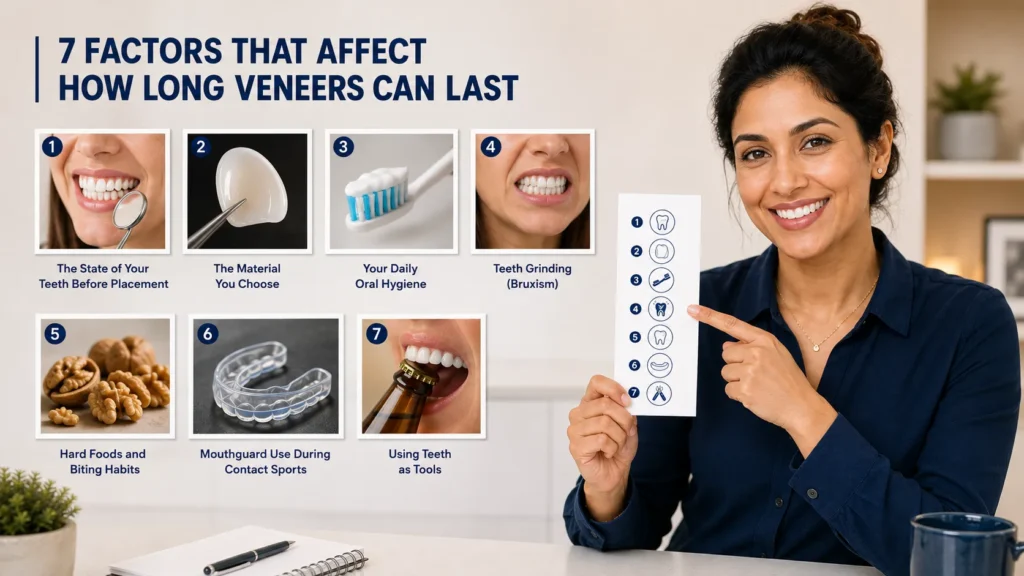
These are the seven real-world factors that determine whether your veneers reach the upper end of their lifespan range or fall short of it, based on clinical data from Healthline and the American College of Prosthodontists.
Factor 1 – The State of Your Teeth Before Placement
Teeth in better health before veneer placement produce longer-lasting veneers. Underlying decay, gum disease, or structural weakness creates problems that the veneer covers but does not fix – and those problems continue developing underneath.
Factor 2 – The Material You Choose
Porcelain outlasts composite in virtually every long-term comparison. If budget allows, porcelain is the stronger investment when measuring how long do veneers last against the price over time.
Factor 3 – Your Daily Oral Hygiene
Brushing twice daily with a soft toothbrush, flossing daily, and attending professional cleanings every six months significantly extend veneer lifespan. Gum recession from poor hygiene exposes veneer edges, creating gaps that trap bacteria and weaken the bond over time.
Factor 4 – Teeth Grinding (Bruxism)
Grinding or clenching puts enormous force on veneers – far more than normal chewing. People who grind in their sleep should wear a nighttime mouthguard. Without one, even high-quality porcelain veneers can chip or crack in a fraction of their expected lifespan.
Factor 5 – Hard Foods and Biting Habits
Biting into ice, hard candies, raw nuts, and whole hard apples puts direct stress on veneer edges. With veneers in place, slice rather than bite. This habit alone makes a meaningful difference over a decade of wear.
Factor 6 – Mouthguard Use During Contact Sports
A hard impact to the face can shatter a veneer. Athletes in contact sports should always wear a properly fitted mouthguard to protect the investment on their front teeth.
Factor 7 – Using Teeth as Tools
Opening packaging, biting nails, holding objects with your teeth – all of these apply lateral force at unexpected angles that veneers are not designed to withstand. This habit alone has shortened the life of otherwise healthy veneers by years.
Signs It Is Time to Replace Your Veneers
Even well-maintained veneers eventually show that replacement has arrived: chipping or cracking at the edges, visible color change that cleaning cannot resolve, loosening or lifting from the tooth surface, gum recession exposing the veneer margin, or a new cavity developing at the veneer edge.
None of these should panic you. Veneer replacement is a normal part of the long-term cosmetic dentistry cycle, not a sign that something went terribly wrong.
The Snap-On Option – How Long Do Removable Veneers Last?
Here is the part most traditional dentistry articles skip entirely: you do not have to drill, bond, or permanently alter a single tooth to get a dramatically improved smile. Removable custom snap-on veneers offer a completely different timeline and cost structure.
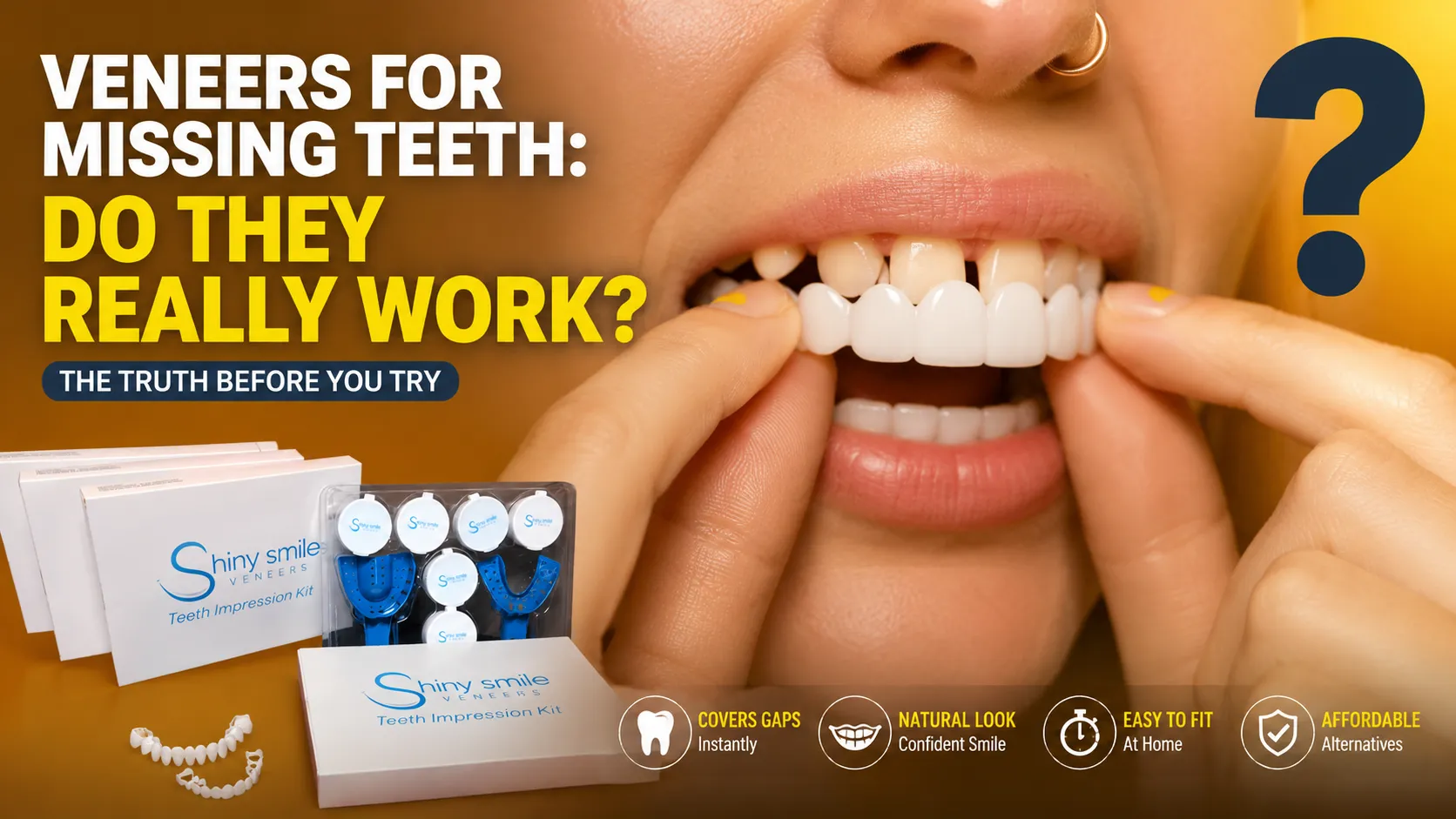
Snap-on veneers sit over your natural teeth using a custom friction fit from dental impressions you make at home. Zero enamel removal. Zero dental appointments. Zero permanent commitment. You wear them when you choose and remove them when you don’t.
As for how long veneers can last in the snap-on category: with proper care – removing before hard meals, cleaning gently, storing in their case – most buyers report 1 to 3 years for daily wearers and up to 5 years for occasional users.
Best Veneers in 2026 – Our Top Recommendation
If snap-on veneers interest you as an alternative to permanent dentistry, there is one brand that stands out clearly as the best veneers in 2026 for overall value.
Shiny Smile Veneers holds a 4.6 out of 5 rating on Trustpilot from over 2,400 verified reviews. The brand prices a full set at $469 with free US and Canada shipping – significantly less than even a single composite tooth from a dentist. The warranty runs three years with 15-month crack coverage, and three free remakes cover any fit issues. Visit Shiny Smile Veneers directly to see the full product lineup and current pricing.
For buyers who want a dramatic smile improvement without permanent commitment, Shiny Smile is the clearest recommendation in the best veneers in 2026 category.
Our full review on is Shiny Smile Veneers legit covers every detail from the brand’s BBB profile and Trustpilot data to the impression process and warranty terms. For a broader comparison of all three leading snap-on veneer brands, our article on the 3 Best Snap On Veneers in 2026 has everything ranked side by side.
How Long Do Veneers Last with Shiny Smile vs Traditional Options?
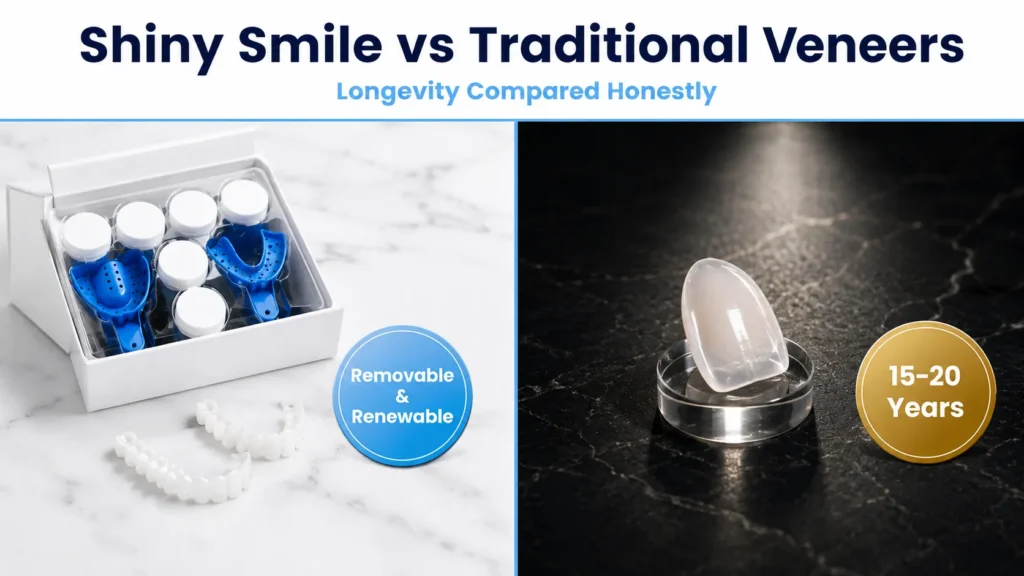
Here is the practical comparison for anyone weighing both paths.
Traditional porcelain veneers: $925 to $2,500 per tooth, 10 to 20 year lifespan, irreversible, requires enamel removal. A full eight-tooth set could run $7,400 to $20,000.
Shiny Smile Veneers: $469 for a full set (both arches), up to 5 years with proper care, fully reversible, no enamel removal, no appointments.
On how long veneers can last, traditional porcelain clearly wins the longevity comparison. On how long veneers can last relative to cost, snap-on veneers are the stronger value proposition.
The question is not which one lasts longer – traditional veneers clearly do. The question is which one makes sense for your goals, your budget, and your willingness to permanently alter your natural teeth.
Final Thoughts on How Long Do Veneers Last
So, how long do veneers last? Between 5 and 20 years depending on the type and how well you care for them. Porcelain veneers reach the upper end of that range with consistent oral hygiene and smart habits. Composite and no-prep options fall in the middle. Snap-on removable veneers like Shiny Smile offer a shorter lifespan but a completely different value proposition.
Whatever you choose, the best veneers in 2026 are the ones that match your dental health, lifestyle, and honest long-term expectations. The best veneers in 2026 look different for a 30-year-old with healthy teeth than for a 55-year-old replacing an old set. That answer is different for everyone – but now you have the data to find yours.
Frequently Asked Questions
What are the negatives of veneers?
Veneers are irreversible, require permanent enamel removal, cannot fix severely damaged teeth, may cause temporary sensitivity, and need eventual replacement. Composite veneers stain more easily than porcelain.
Can you bite into an apple with veneers?
No. Biting directly into hard foods like apples risks chipping or loosening veneers. Slice apples into small pieces and chew with your back teeth.
What is the 4-8-10 rule for veneers?
It refers to the number of veneers typically placed: 4 for minimal improvement, 8 for a full front-row makeover, 10 or more for broader coverage. Your dentist recommends based on your smile width.
What happens to teeth under veneers?
The underlying teeth remain alive and can still develop decay. Good oral hygiene is essential because cavities can still form at veneer edges or between teeth.
Why do dentists advise against veneers?
Some dentists caution against veneers for people with active gum disease, tooth decay, insufficient enamel, severe grinding habits, or unrealistic expectations about outcomes.
Does Taylor Swift have veneers or crowns?
Taylor Swift’s smile transformation is widely attributed by cosmetic dentists to porcelain veneers, based on before-and-after photos showing significant improvement in color and alignment.
Does anyone regret veneers?
Yes. The most common regrets involve choosing a shade that looks too white, committing before addressing underlying dental issues, or underestimating the long-term maintenance required.
At what age should you get veneers?
Most dentists recommend waiting until age 18 to 21 when tooth and jaw development is complete. Veneers on still-developing teeth carry additional risks.
What disqualifies you for veneers?
Active gum disease, extensive decay, insufficient enamel, severely misaligned teeth requiring orthodontics first, or untreated bruxism can all disqualify a patient until underlying issues are addressed.
Does Kim Kardashian have veneers or crowns?
Kim Kardashian’s dramatic smile change is widely attributed by cosmetic dentists to porcelain veneers, based on documented differences in tooth shape, color, and size over time.
How much is 1 tooth veneer?
Porcelain veneers run $925 to $2,500 per tooth. Composite veneers cost $250 to $1,500 per tooth. No-prep veneers run $800 to $2,000 per tooth. Prices vary by dentist and location.
This article contains affiliate links. If you purchase through our links, we may earn a commission at no extra cost to you. We only recommend products we genuinely believe in. Read our Affiliate Disclaimer for full details.