
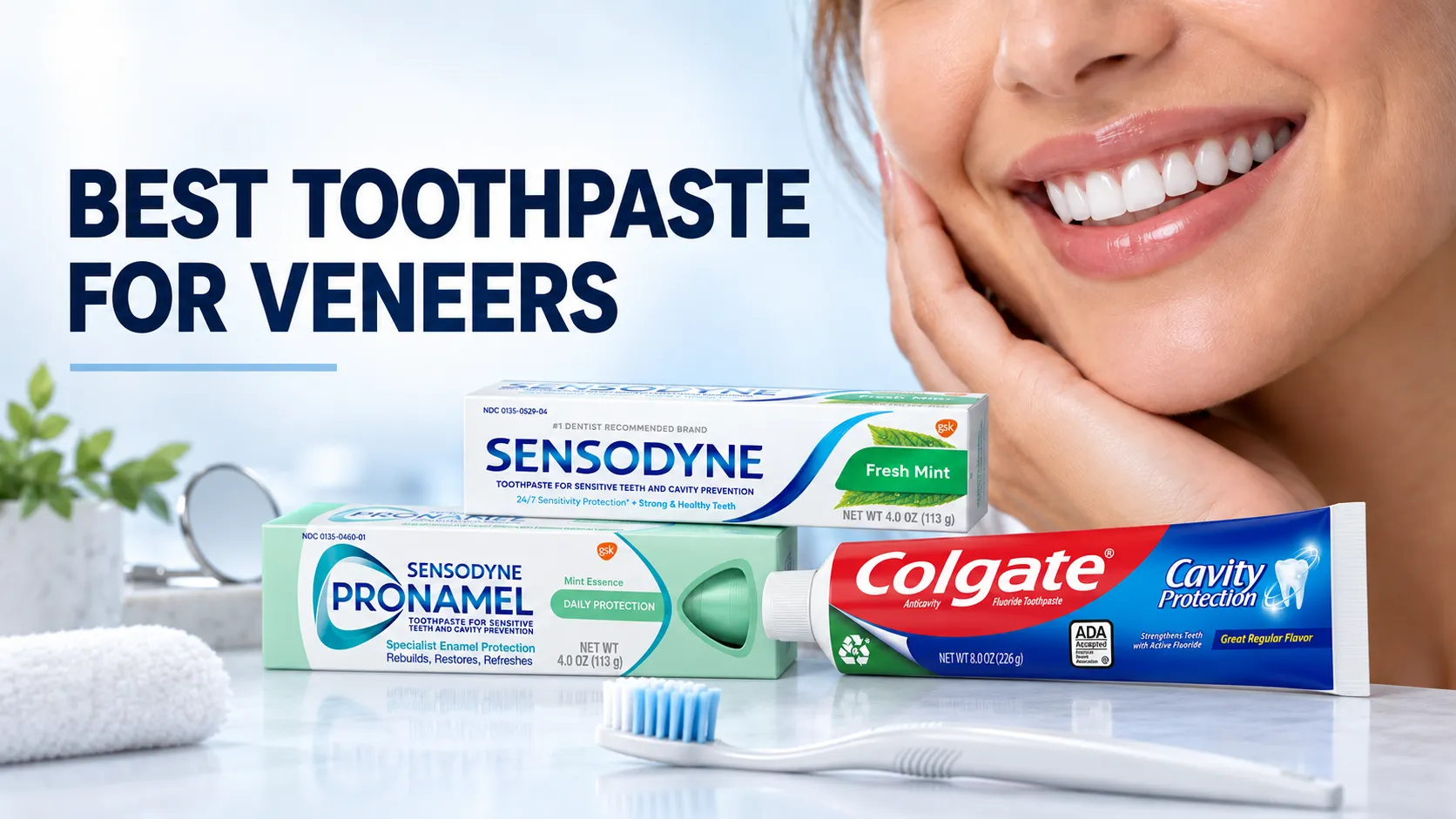
The best toothpaste for veneers is usually a gentle, non-whitening fluoride toothpaste that cleans natural teeth without relying on aggressive stain-removal claims. Sensodyne Pronamel Daily Protection is our best overall practical pick because it provides fluoride cavity protection and is positioned for enamel care. Still, no single toothpaste is universally best, and your dentist’s advice should take priority for your veneer material and sensitivity needs.
Table of Contents
Choose fluoride for the teeth around and beneath restorations, favor a gentle daily formula, and do not expect toothpaste to bleach porcelain, composite, or crowns.
Our Top Toothpaste Choices for Veneers and Crowns
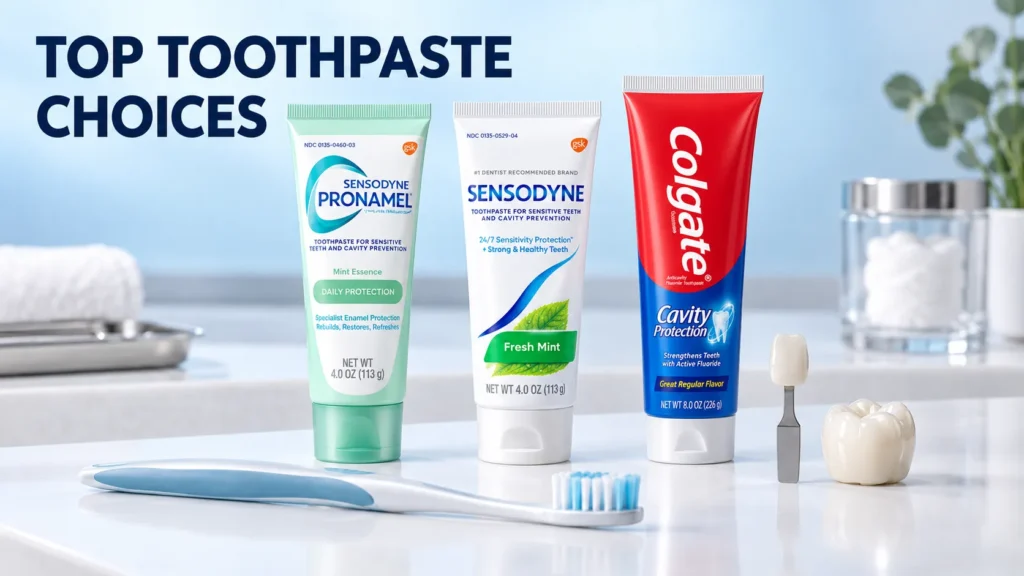
These are editorial picks based on current labels, official product information, and established oral-care guidance. They are not the result of first-hand testing, and we did not find authoritative evidence showing that any one retail toothpaste extends veneer life better than every competitor.
| Pick | Why it stands out | Important limitation |
| Best overall: Sensodyne Pronamel Daily Protection | Daily fluoride toothpaste; official product information emphasizes cavity protection and enamel care. | The brand does not market it as a veneer-specific product, and an official RDA value was not located. |
| Best for sensitivity: Sensodyne Toothpaste | ADA-accepted Sensodyne products help prevent decay and relieve sensitivity in otherwise normal teeth when used as directed. | Verify the exact variety and label. Formula benefits differ across the Sensodyne range. |
| Best simple budget option: Colgate Cavity Protection | Straightforward fluoride cavity protection and ADA acceptance on the current US product page. | It is not specifically labeled for veneers, crowns, or restoration polishing. |
1. Best Overall: Sensodyne Pronamel Daily Protection
Pronamel Daily Protection is the strongest all-around choice for many adults with bonded veneers because it combines daily fluoride cavity protection with an enamel-care focus. That matters because porcelain itself cannot develop decay, but the exposed natural tooth and the margin where veneer meets tooth still need routine plaque control and fluoride exposure.
This recommendation is based on fit for the job, not a claim that Pronamel has been clinically proven to protect veneers specifically. The manufacturer describes benefits for acid-weakened natural enamel. Its current public product page does not provide a veneer-specific indication or a clearly published Relative Dentin Abrasivity value, so shoppers should not treat online RDA charts as guaranteed specifications.
2. Best When Sensitivity Is the Main Concern: Sensodyne
The ADA Seal listing for Sensodyne Toothpaste states that accepted products help prevent tooth decay and relieve sensitivity in otherwise normal teeth when used as directed. This can be useful when natural tooth structure near a veneer or crown feels sensitive, although new, persistent, or worsening sensitivity deserves a dental evaluation rather than endless toothpaste experiments.
Check the exact package before buying. Sensodyne is a family of formulas, not one identical paste. Some variants emphasize whitening, enamel care, gum health, or rapid relief, and ingredients can change. Match the active ingredient and directions to your needs, ideally with input from the dentist who placed or maintains the restoration.
3. Best Simple Budget Pick: Colgate Cavity Protection
Colgate Cavity Protection is a reasonable no-frills option for readers who want fluoride cavity protection without paying for a specialized positioning claim. Its current US product page identifies it as ADA accepted. It supports the natural teeth that remain vulnerable to decay even when the visible front surface is covered by porcelain or another restorative material.
The limitation is equally important: the official page does not present it as a specially tested toothpaste for porcelain veneers or crowns. If your dentist has warned you about polishing, surface wear, sensitivity, or a particular restorative material, ask for a named formula rather than assuming every basic paste is interchangeable.
What Makes a Toothpaste Veneer-Friendly?
Fluoride protects the tooth, not the porcelain
The American Dental Association recommends brushing twice daily for two minutes with fluoride toothpaste. Fluoride helps reduce cavity risk and supports remineralization of natural enamel. It does not strengthen porcelain or turn a cosmetic shell into a cavity-proof shield.
This distinction matters around veneer and crown margins. A restoration may cover part of a tooth, but plaque can still collect at exposed surfaces and near the gumline. Good technique, daily interdental cleaning, and regular professional care matter at least as much as the logo on the tube.
Low abrasivity is more important for composite
Laboratory research on composite resins found that brushing with dentifrices can increase surface roughness and reduce gloss, with lower-abrasivity products generally causing less change. This evidence is most directly relevant to resin-based restorations, including composite veneers, and should not be overextended into a promise about every ceramic material or every real-world brushing routine.
Unfortunately, brands do not always publish a current RDA number for each US formula, and RDA measures wear on dentin rather than providing a complete compatibility score for porcelain, composite, cement, and polishing systems. A dentist who knows the exact restoration material can give a more reliable recommendation than an unverified chart circulating online.
A soft brush and light pressure complete the equation
A gentle paste can still be used aggressively. Choose a soft-bristled toothbrush, use light pressure, and concentrate on the gumline and restoration margins. Do not scrub harder to chase a stain. If a veneer feels rough, catches floss, develops a dark edge, or changes appearance, professional evaluation is more useful than switching to a harsher paste.
Should You Use Veneer Whitening Toothpaste?
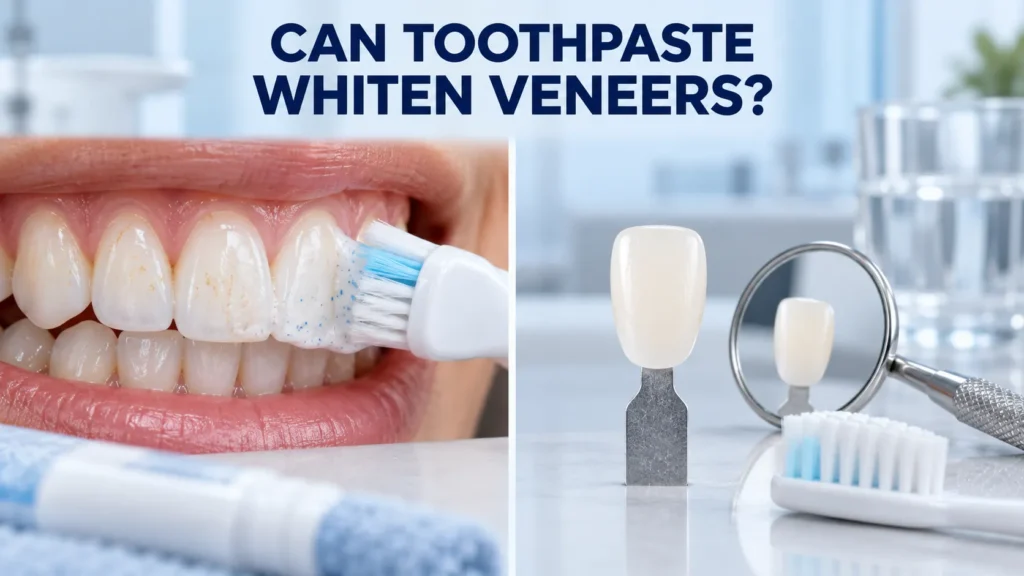
ADA guidance on whitening explains that whitening toothpastes mainly remove external stains through abrasives, although some use low levels of peroxide. They can help natural teeth look cleaner, but bleaching treatments do not change the intrinsic color of crowns, veneers, or fillings. The result can be a color mismatch if surrounding teeth lighten while restorations stay the same shade.
For porcelain veneers, occasional use may be acceptable if the placing dentist approves the exact formula, but there is rarely a cosmetic reason to choose the most aggressive stain-removal paste. For composite veneers, a cautious approach makes even more sense because resin surfaces can lose gloss as brushing abrasion accumulates.
Ingredients and Claims to Approach Carefully
- Charcoal powders and charcoal-heavy whitening pastes: marketing may emphasize stain removal, but published product information often does not establish compatibility with a specific veneer material.
- Highly abrasive stain-removal formulas: terms such as deep clean, smoker’s, or intense whitening do not tell you how a product will affect your exact restoration.
- DIY mixtures: baking soda, peroxide, lemon juice, or other kitchen chemistry can create avoidable irritation, erosion, or surface concerns when concentration and use are uncontrolled.
- Fluoride-free toothpaste as a default: the veneer cannot decay, but the natural tooth can. Unless a dental professional advises otherwise, fluoride remains the more evidence-based everyday choice for cavity prevention.
Best Toothpaste for Porcelain Veneers vs. Composite Veneers
| Restoration type | Practical toothpaste priority | Whitening reality |
| Porcelain or ceramic veneer | Daily fluoride paste; gentle brushing; follow the placing dentist’s material-specific advice. | Toothpaste may remove surface deposits, but it will not bleach the ceramic shade. |
| Composite resin veneer | Fluoride toothpaste with special attention to low abrasivity and preserving polish. | Abrasive whitening may dull resin over time; professional polishing may be a better answer. |
| Crown | Fluoride protection for exposed tooth surfaces and careful cleaning at the crown margin. | The crown material will not bleach like natural enamel. |
| Removable clip-on veneer | Clean only as the manufacturer’s verified instructions direct, usually after removal. | Do not assume toothpaste is an approved cleaner for the appliance. |
If you are comparing restoration categories, our guide to whether veneers ruin your teeth explains how bonded veneers differ from removable cosmetic covers and why the condition of the underlying tooth still matters.
Removable Clip-On Veneers Need Different Care
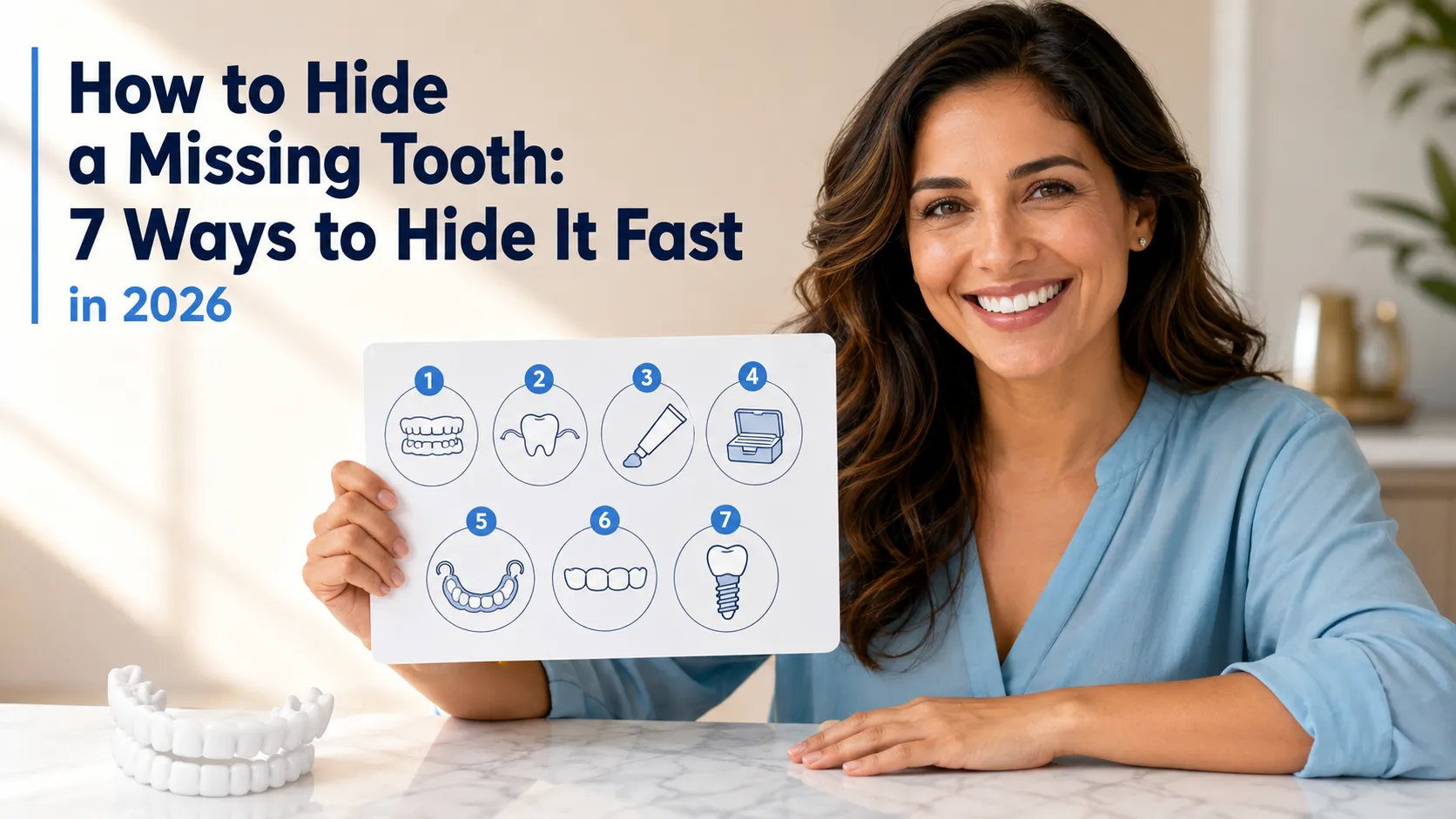
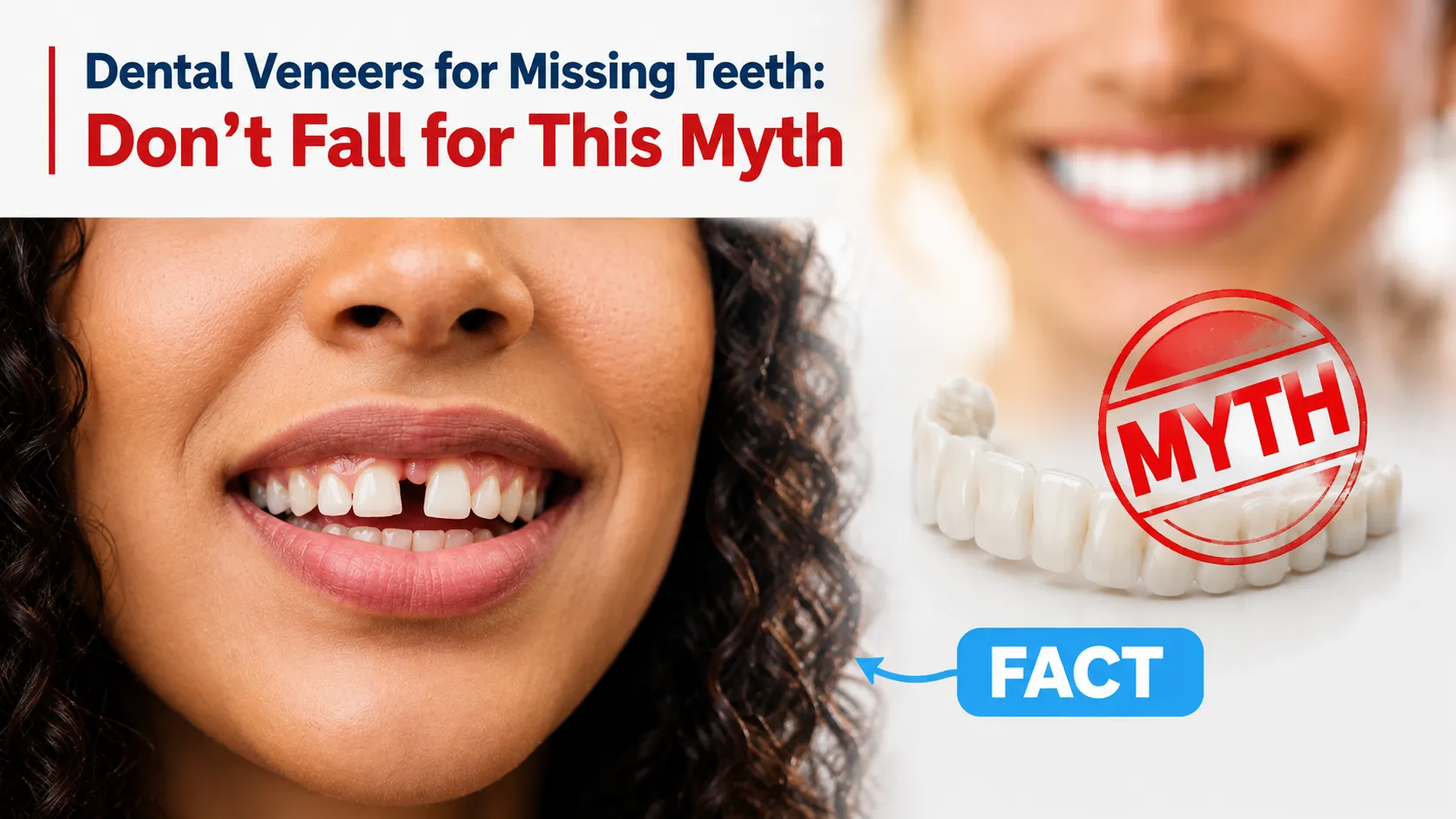
Removable cosmetic veneers are not bonded porcelain veneers. They are removable appliances that fit over teeth for cosmetic coverage, and ordinary toothpaste may scratch or cloud some resins. Remove the appliance before brushing your natural teeth, then clean the veneer only with the method its manufacturer specifies. Mild soap, a soft brush, or dedicated tablets may be recommended, but instructions vary by brand and material.
Our overview of realistic-looking fake teeth options provides additional context on removable veneers, dentures, bridges, and professionally placed restorations. These products are not interchangeable, and neither their cleaning routines nor their clinical purposes should be treated as identical.
Never use hot water unless the maker explicitly allows it, since heat can distort some removable plastics. Do not sleep in or eat with a clip-on product unless its verified instructions say that use is permitted. If the appliance causes pain, sores, a bite change, or difficulty cleaning, stop using it and contact a dental professional.
For a practical habit guide, see what to know before chewing gum with veneers. It separates considerations for bonded restorations from the more limited use instructions that can apply to removable covers.
3 Best Removable Veneer Brands to Consider
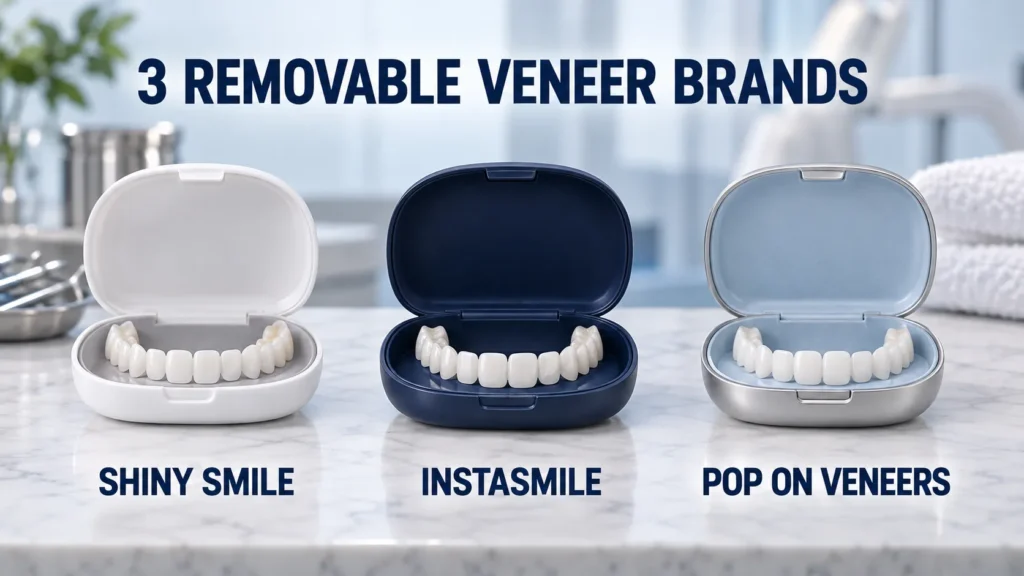
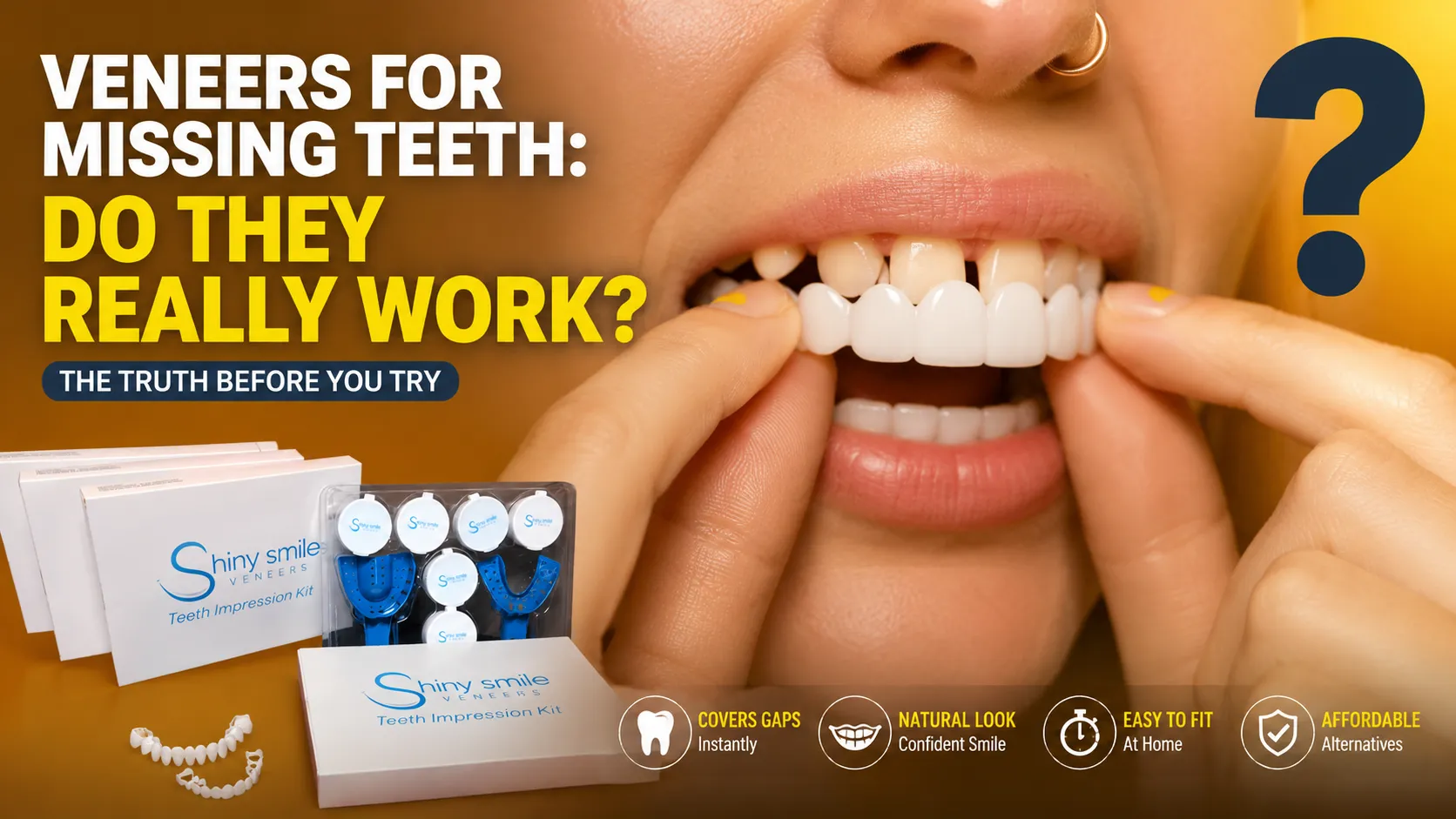
If you are considering removable veneers rather than dentist-applied porcelain or composite veneers, Shiny Smile, Instasmile, and Pop On Veneers are three established options worth comparing. All three offer custom-made cosmetic covers based on impressions of your teeth.
These products can temporarily change the appearance of your smile, but they do not repair teeth, treat dental conditions, or replace crowns, implants, fillings, or professional dental care.
1. Shiny Smile Veneers
Shiny Smile offers custom removable veneers made from impressions completed at home. The finished appliance fits over existing teeth and can be removed whenever it is not needed.
The brand may suit shoppers who want a customized cosmetic option with an at-home ordering process. Shiny Smile also provides different shade choices, allowing customers to choose between a brighter or more natural-looking result.
Care is especially relevant to this article. Shiny Smile advises cleaning its veneers gently and avoiding gritty toothpaste that could scratch or dull the surface. Owners should follow the instructions supplied with their order rather than assuming their regular toothpaste is suitable for the removable appliance.
Best for: Shoppers seeking customized removable veneers with multiple shade options.
Learn more in our detailed Shiny Smile Veneers review.
2. Instasmile
Instasmile produces custom clip-on veneers using impressions taken by the customer at home. The company offers different product ranges and appearance options, although availability can vary by location.
According to Instasmile’s official care guidance, its removable veneers should be rinsed with warm, never hot, water and cleaned with a soft-bristled toothbrush. The company also recommends regular disinfection with an appropriate dental cleaner.
Instasmile specifically advises against using hot water because heat may affect the appliance’s fit. Its care instructions also recommend storing the veneers in their case and avoiding attempted home repairs.
Best for: Buyers who want a choice of clip-on veneer styles and clearly documented care instructions.
3. Pop On Veneers
Pop On Veneers offers custom removable veneers created from dental impressions completed at home or, where available, at an in-person location. These cosmetic appliances snap over existing teeth and are designed to be removed for cleaning.
The brand sells dedicated cleaning products, including tablets and cleaning foam. Its official cleaning instructions recommend thoroughly rinsing the veneers after soaking and using a soft toothbrush to remove remaining debris.
Using the company’s recommended cleaning method may be more appropriate than brushing the appliance with ordinary toothpaste, particularly when the toothpaste’s abrasivity and compatibility with the veneer material are unknown.
Best for: Shoppers who value dedicated veneer-cleaning products and optional in-person assistance where available.
Read our complete Pop On Veneers review for a closer look at the ordering process and important limitations.
Which Removable Veneer Brand Is Best?
| Brand | Best suited for | Recommended cleaning approach |
|---|---|---|
| Shiny Smile | Shade options and customized at-home impressions | Gentle cleaning without gritty toothpaste |
| Instasmile | Multiple style options and detailed care guidance | Warm water, mild soap, and a soft toothbrush |
| Pop On Veneers | Dedicated cleaning products and optional in-person service | Brand cleaning tablets or foam with a soft brush |
Shiny Smile may be the most appealing choice for shoppers prioritizing shade selection, while Instasmile offers several style options and detailed care guidance. Pop On Veneers stands out for its dedicated cleaning system and the availability of in-person assistance in certain locations.
The best choice depends on fit requirements, appearance preferences, current pricing, support, and the latest warranty or remake terms. Verify all policies on the company’s official website before ordering because offers and conditions can change.
Most importantly, brush your natural teeth with an appropriate fluoride toothpaste after removing the appliance. Clean the removable veneers separately according to the manufacturer’s instructions. If you have tooth pain, loose dental work, bleeding gums, or untreated decay, consult a licensed dentist before wearing any cosmetic dental cover.
How to Choose the Best Toothpaste for Veneers and Crowns
- Identify the restoration material. Ask whether you have porcelain, another ceramic, composite resin, or a removable appliance.
- Look for fluoride. For most adults, an over-the-counter anticavity toothpaste supports the natural tooth surfaces that remain at risk.
- Avoid buying on the word whitening alone. Whitening paste cannot change the manufactured shade of a veneer or crown.
- Verify the exact formula. Product families contain different active ingredients and abrasives, and labels can change.
- Ask when something changes. New sensitivity, bleeding, odor, looseness, roughness, or discoloration at an edge is not a toothpaste-shopping problem.
Final Verdict
Sensodyne Pronamel Daily Protection is our best overall practical pick for bonded veneers and crowns because it pairs everyday fluoride cavity protection with an enamel-care positioning and avoids making extreme whitening the main event. Sensodyne is a sensible category to discuss when sensitivity matters, while Colgate Cavity Protection offers a straightforward ADA-accepted budget option.
The most trustworthy choice is still the one that matches your exact material and your dentist’s instructions. Use toothpaste to protect natural teeth and manage plaque, not to bleach porcelain or repair a damaged restoration. For removable clip-on veneers, keep the toothpaste on your natural teeth and follow the appliance maker’s separate cleaning directions.
Frequently Asked Questions
What is the best toothpaste for veneers and crowns?
A gentle daily fluoride toothpaste is the best general starting point. Pronamel Daily Protection is our practical overall pick, but the ideal formula depends on whether the restoration is porcelain, another ceramic, or composite resin. Follow the placing dentist’s advice when it differs.
Can toothpaste whiten porcelain veneers?
No toothpaste can bleach the manufactured shade of porcelain. A paste may remove some external deposits, but natural teeth may respond differently to whitening. Ask a dentist about a mismatch rather than increasing abrasivity.
Is fluoride toothpaste safe for veneers?
Fluoride is intended to protect natural tooth structure and prevent cavities. It does not whiten or strengthen porcelain. A standard fluoride toothpaste is usually a sensible daily choice, subject to the material-specific instructions from your dental professional.
Can I clean removable veneers with toothpaste?
Only if the manufacturer specifically says to do so. Many removable resins can be dulled by abrasive toothpaste. Remove the appliance, brush your natural teeth normally, and clean the veneer with its approved method.
This article contains affiliate links. If you purchase through our links, we may earn a commission at no extra cost to you. We only recommend products we genuinely believe in. Read our Affiliate Disclaimer for full details.