
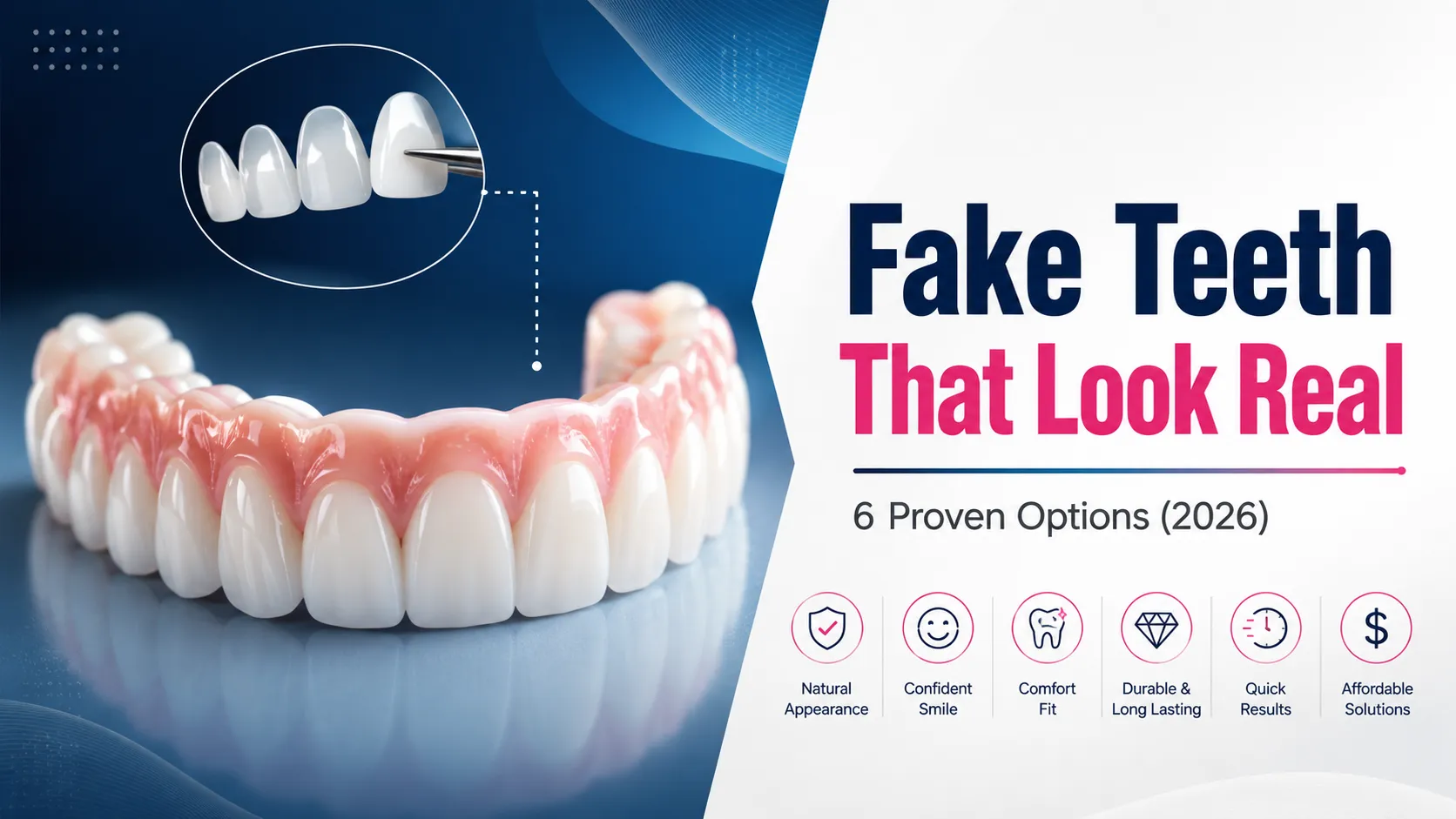
Realism depends on more than whiteness. Shape, translucency, gumline fit, shade matching, speech, and how the restoration sits beside natural teeth all influence the result. Dentist-provided implants, bridges, veneers, and dentures generally offer more clinical customization, while removable cosmetic veneers prioritize affordability and reversibility rather than restoring normal dental function.
Table of Contents
Today’s options range from ten-dollar snap-on covers to custom porcelain shells your dentist bonds tooth by tooth. Some options fill a gap for a wedding weekend. Others last two decades.
This guide walks through every major type of fake teeth that look real, explains what genuinely fools the eye and what does not, and shows exactly where veneers fit into the decision. We pulled our numbers from the American Dental Association and current 2026 pricing data, not guesswork.
What Do People Mean by “Fake Teeth”?
“Fake teeth” is a broad label. It covers temporary cosmetic covers you order online and permanent restorations that only a licensed dentist can place.
Some fake teeth replace a single chipped edge. Others rebuild an entire missing arch.
Knowing which category actually matches your situation saves you money, and it saves you from a smile that looks more “costume” than “confident.”
Best Fake Teeth That Look Real: 6 Options Compared
We measured this list against one simple standard: would a stranger notice? Below are the six categories worth knowing, ranked by how people typically use them rather than by price, since the right pick depends on your mouth, not your wallet.
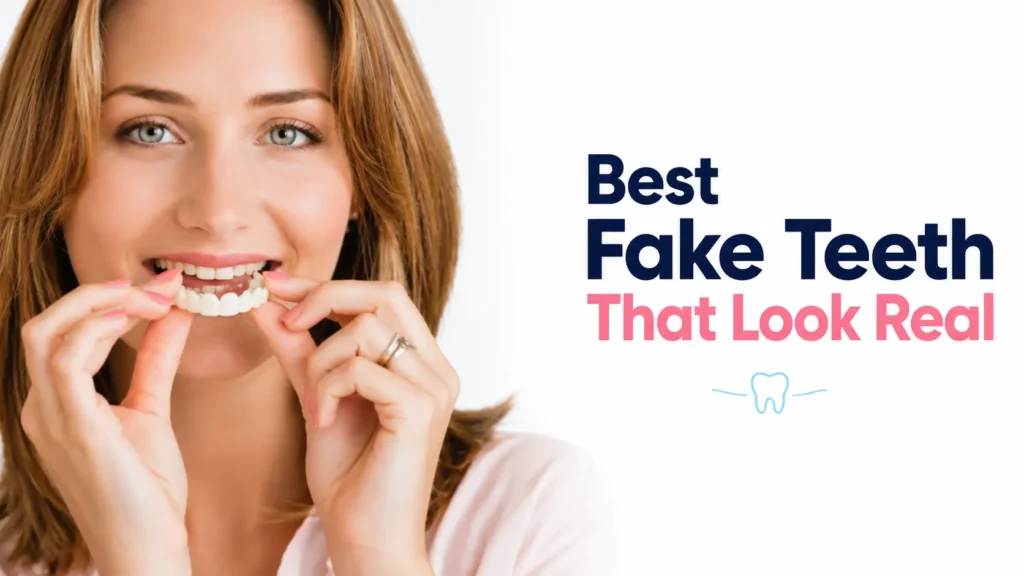
1. Snap-On and Clip-On Veneers
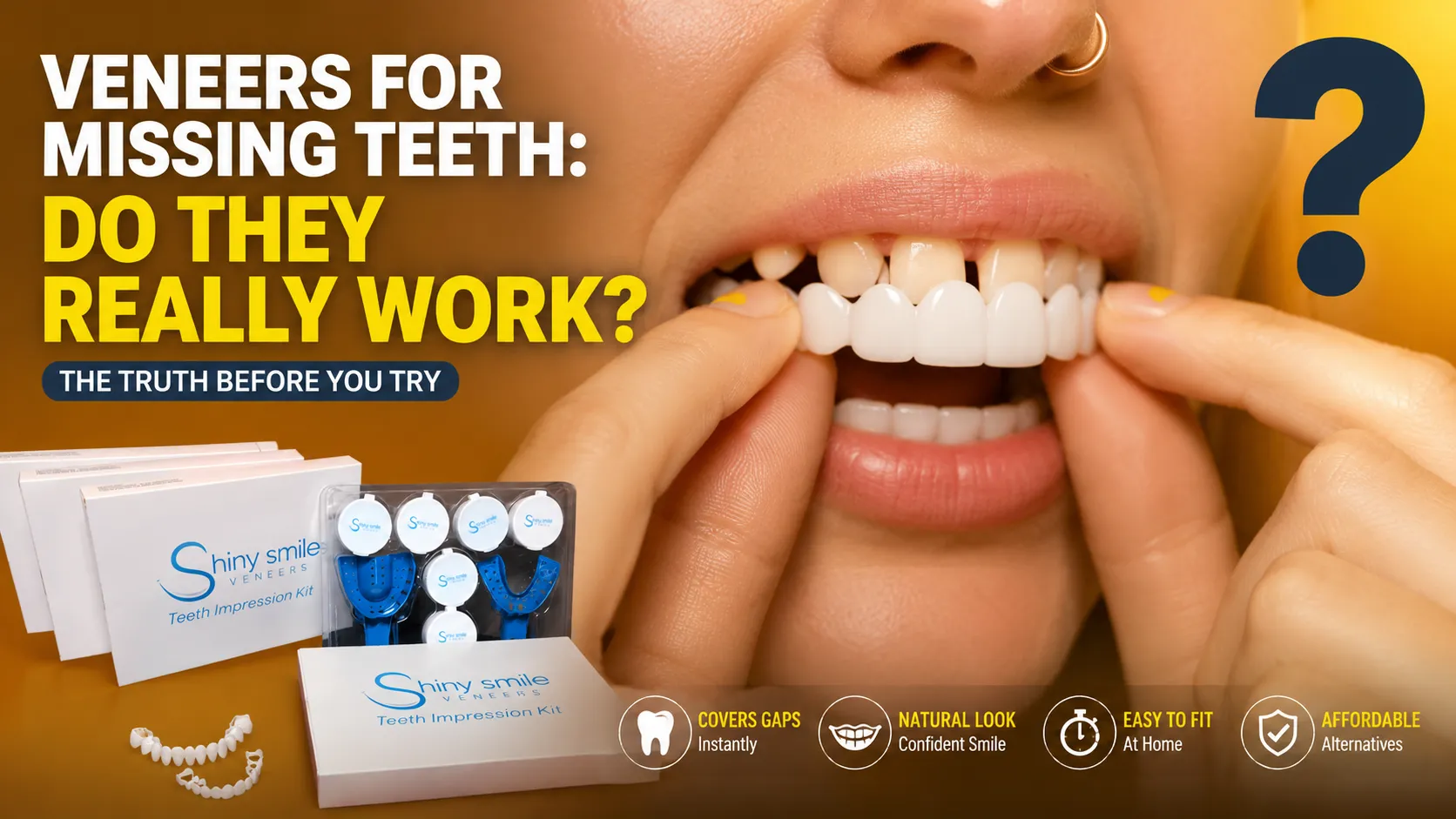
Snap-on veneers, sometimes called clip-on veneers, are thin removable arches that fit over your existing teeth. Brands like Shiny Smile Veneers offer custom-made removable veneers designed to fit over your natural teeth.
They look convincing in photos and casual conversation, especially in a shade that matches your natural teeth. Up close, some people notice a slightly thicker gumline or a flatter shine than porcelain has. Expect to pay $600 to $3,000 per arch, and remove them before eating anything sticky or chewy.
2. Custom Dental Veneers (Porcelain and Composite)
A dentist bonds custom veneers permanently to the front surface of your natural teeth.
Porcelain veneers reflect light almost exactly like enamel does, which is why cosmetic dentists consider them the most realistic fake teeth that look real on the market.
Composite veneers cost less and a dentist can often finish them in one visit, though they wear faster and stain more easily than porcelain.
Because a dentist shapes each veneer to your bite and face, the fit and shade blend in a way no off-the-shelf product can match.
3. Full and Partial Dentures
Dentures replace some or all of your natural teeth with a removable appliance. Modern acrylic and porcelain teeth used in dentures look far more lifelike than the stiff, uniform sets people picture.
A well-fitted partial denture can fill a gap so naturally that coworkers never guess. A poorly fitted one can slip, click, or shift while you talk.
The American Dental Association notes that dentures also support your facial muscles after tooth loss, which helps you look more like yourself instead of just filling space.
4. Dental Bridges
A bridge anchors a false tooth to the healthy teeth on either side of a gap. It stays fixed in place instead of coming out, which many people find more natural to live with day to day.
Bridges work well for one or two missing teeth, but dentists generally do not recommend them for replacing a full arch.
5. Dental Implants
Implants replace the tooth root itself with a titanium post, topped with a crown shaped like a natural tooth.
Because the crown sits at the same angle and depth as a real tooth, most dentists consider implants the most permanent and realistic option for a single missing tooth.
They also cost the most and require a healing period, so they suit people replacing one or two teeth rather than an entire smile.
6. At-Home DIY Kits
DIY kits include impression putty, a mold, and premade tooth shells you fit yourself, with no dentist involved.
They rank among the cheapest fake teeth that look real on paper, often under $50, but results vary enormously depending on how closely you follow the instructions.
The ADA has publicly cautioned against unsupervised dental work, including self-fitted veneers, because a poor fit can damage gums or existing teeth.
Best Fake Teeth That Look Real for Adults
Adult smiles are not blank slates. Years of coffee, wine, and normal wear change tooth color and shape, so a young, chalk-white veneer can look obviously fake next to teeth that were not treated.
Dentists usually shade-match new teeth to the ones nearby rather than to a “brightest white” chart. That single decision affects realism more than the material does.
Comfort matters too. Adults wearing removable fake teeth for eight-plus hours a day want something that will not shift while they eat lunch at their desk.
For most adults, custom veneers or a well-fitted partial denture strike the best balance between looking real and functioning normally through a full day. Our guide on veneers versus crowns on front teeth breaks down which option suits more visible damage.
Best Fake Teeth That Look Real at Home: Are DIY Kits Worth It?
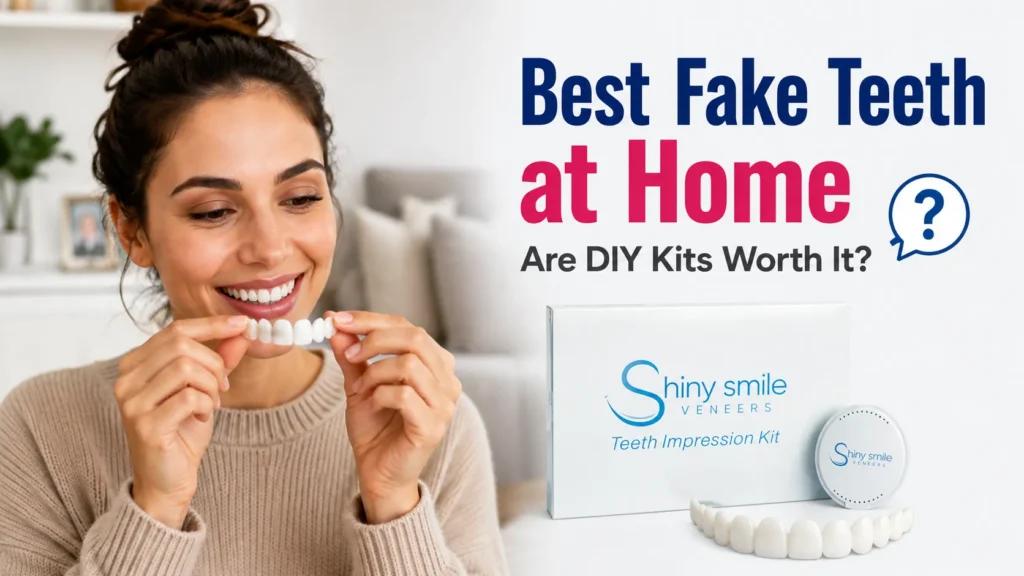
Searching for the best fake teeth that look real at home usually leads to impression-kit products you mold yourself on your kitchen table.
These kits can work as a reasonable stopgap for a single event, like wedding photos or a job interview, when a dentist visit is not realistic on short notice.
They do not substitute for professional dental work. A DIY fit can press on your gums in the wrong places, and the shade options rarely match real enamel exactly.
Treat at-home kits as a temporary patch rather than a permanent plan, and follow up with a dentist if you are covering a real dental problem instead of a special occasion.
False Teeth That Look Real vs. Fake Teeth: What Is the Difference?
“False teeth that look real” is usually just an older, more clinical way of saying the same thing as fake teeth. The phrase traditionally referred to full or partial dentures, back when dentures were the only replacement option available.
Today the terms overlap. Veneers, snap-on arches, bridges, and implants all fall under both labels, depending on who you ask.
What has changed is realism. Materials like layered porcelain and digitally milled ceramics reproduce the translucency of enamel, so false teeth that look real today share little with the flat, uniform sets from decades past.
Fake Teeth Options Compared: Which Ones Actually Look Real?
When we lined up fake teeth options compared side by side for realism, three factors kept separating the convincing choices from the obvious ones: shade matching, how the material reflects light, and fit against the gumline.
Custom porcelain veneers and implants ranked highest on all three, since a dentist builds them around your exact bite.
Well-made partial dentures and quality snap-on arches ranked in the middle. They look convincing in everyday situations but can show their edges under close inspection or bright light.
At-home kits ranked lowest for realism, mainly because a self-fitted shell rarely follows the natural curve of the gumline.
Why Veneers Are Often the Smartest Long-Term Choice
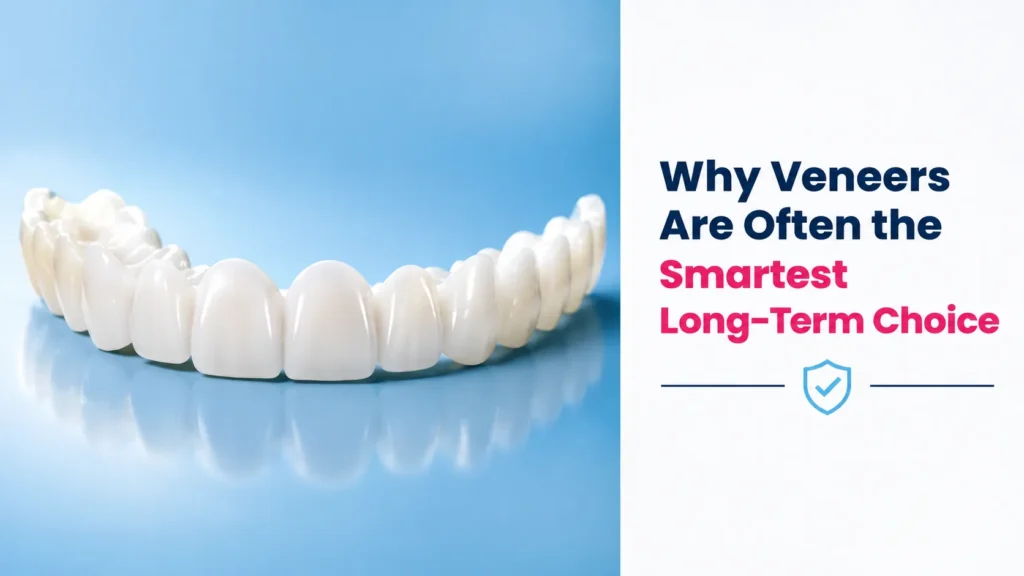
If you want fake teeth that look real and you are ready to commit to a permanent fix, veneers are usually the strongest recommendation cosmetic dentists give.
Porcelain veneers can last 10 to 20 years with proper care, longer than most removable alternatives, and they resist coffee and wine stains far better than composite or acrylic.
Veneers are not reversible, since your dentist removes a thin layer of enamel to place them, and they will not fix an unhealthy tooth underneath. The ADA recommends treating any decay or gum disease first, then discussing veneers with a licensed dentist rather than an unsupervised technician.
If you grind your teeth or have a deep overbite, your dentist may suggest a different option, so a consultation is worth the visit before you commit.
How Much Do Veneers Cost?
Porcelain veneers typically run $900 to $2,500 per tooth in the United States, while composite veneers cost less, usually $500 to $1,500 per tooth.
A full set covering six to eight visible teeth generally lands between $9,000 and $25,000, depending on your dentist, your city, and the porcelain used.
Because insurers classify veneers as cosmetic, most plans will not cover them, though some restorative cases qualify. Our breakdown of whether insurance covers veneers and this full veneers cost guide by state both go deeper into financing and regional pricing.
Caring for Veneers and Other Fake Teeth
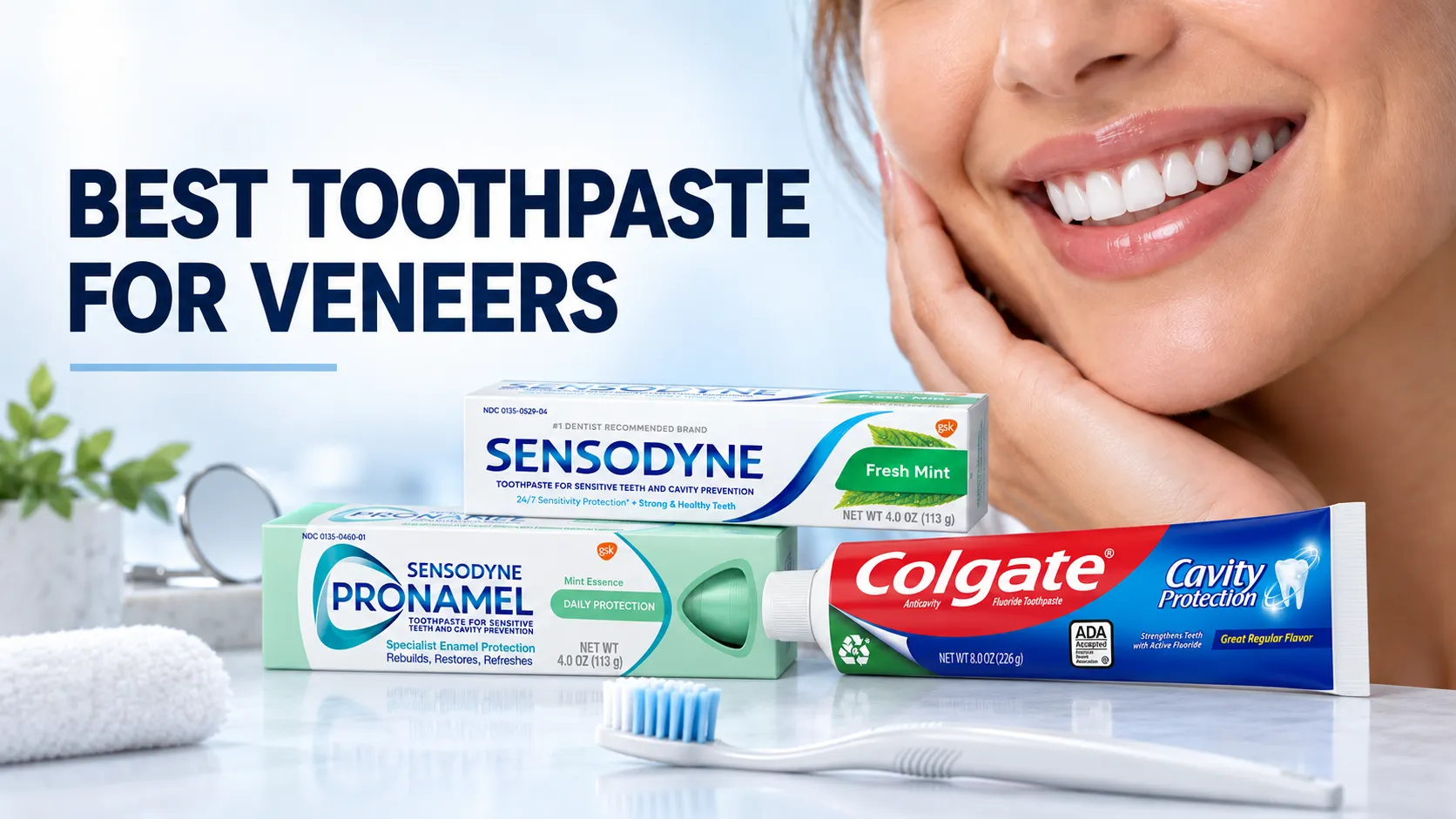
Veneers and dentures both still need daily attention. Brush twice a day with fluoride toothpaste and clean between your teeth, since you can still develop a cavity under or around a veneer.
Removable options like dentures and snap-on arches need to come out for cleaning and should not sit dry overnight.
A few foods deserve caution regardless of which option you choose. Our guide on what you can and cannot eat with veneers covers the specifics so you do not learn the hard way at dinner.
Frequently Asked Questions
What is the most realistic looking fake teeth?
Custom porcelain veneers and dental implants are generally considered the most realistic. A dentist shapes and shades each one to match your bite and the teeth around it precisely.
What are the fake teeth that you can put over your own teeth?
People usually call these snap-on or clip-on veneers. They are removable arches, fitted by a dentist or bought as a kit, that fit over your existing teeth without any drilling.
How can I cover my missing teeth?
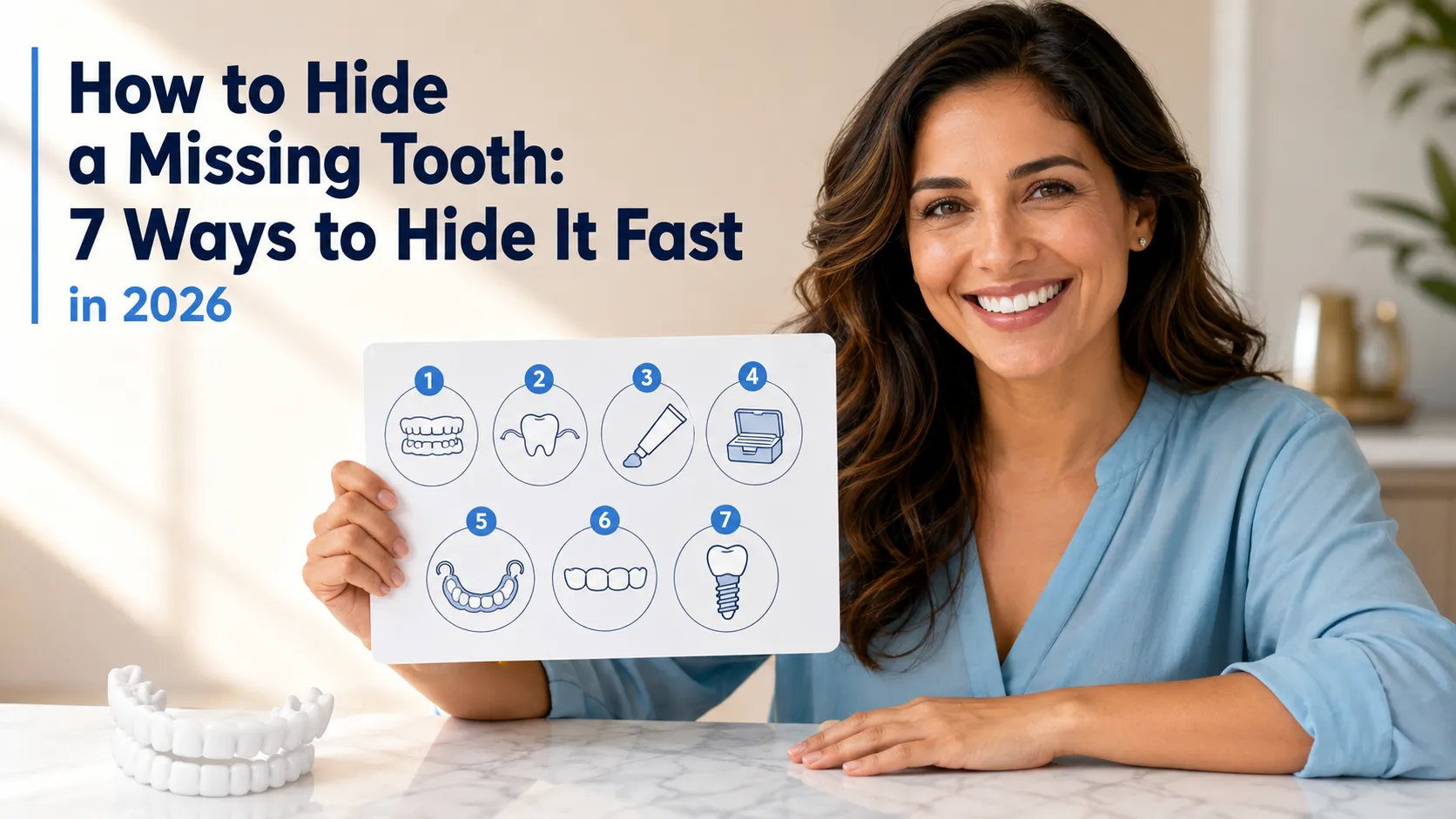
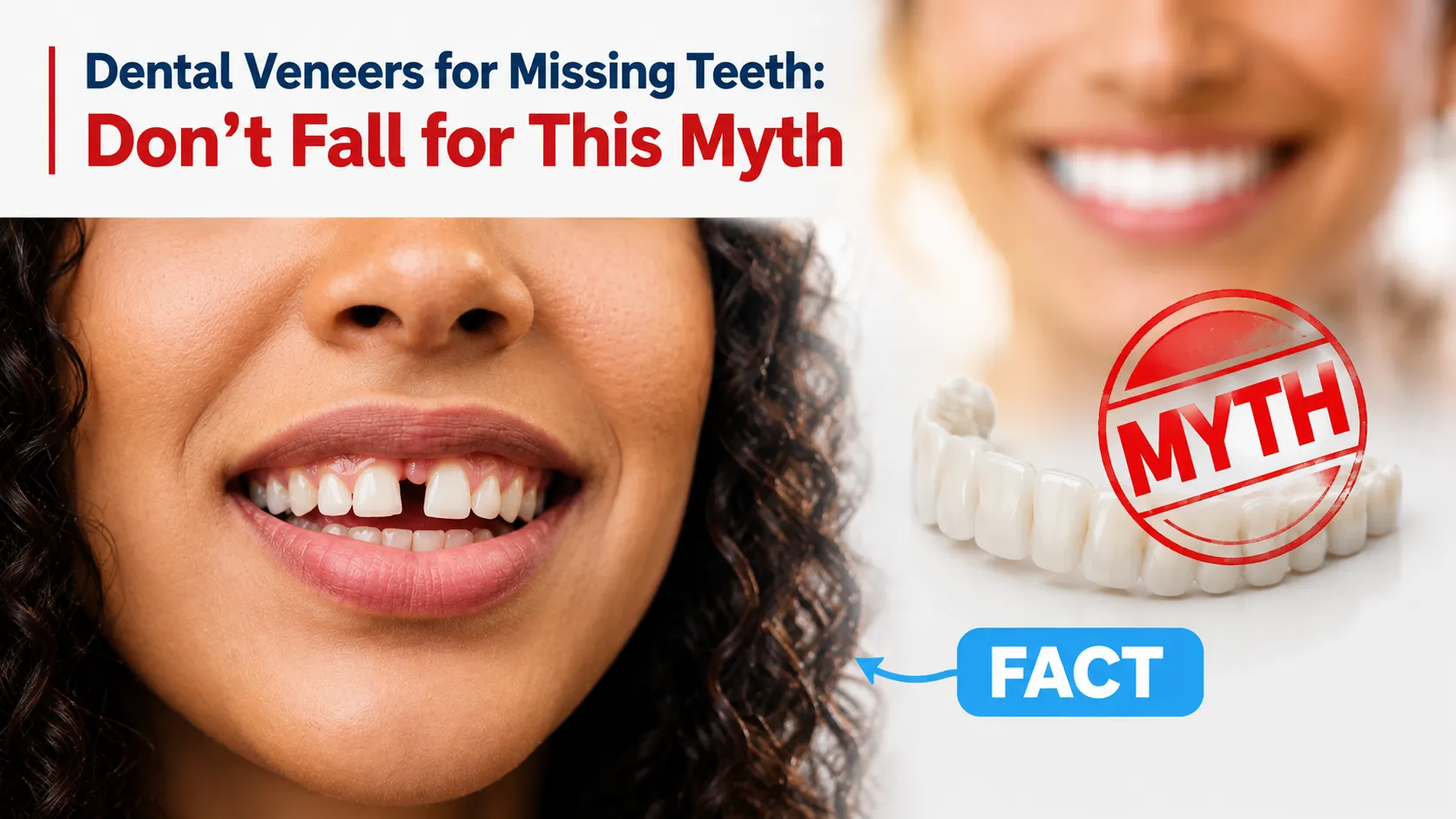
Options include a partial denture, a dental bridge, a dental implant, or a removable snap-on arch. The right choice depends on how many teeth are missing and your budget.
What are fake teeth that go over your real teeth called?
People commonly know them as snap-on veneers, clip-on veneers, or overlay dentures, depending on the brand and whether they replace a full arch or just a few teeth.
Can you get permanent fake teeth instead of dentures?
Yes. Dental implants and implant-supported bridges stay fixed in place instead of coming out. They function and look like natural teeth but need a healing period and a larger upfront cost.
Why do dentists advise against veneers?
Veneers are not reversible and require removing enamel. Dentists may advise against them for people with untreated decay, heavy teeth grinding, or a deep overbite until those issues are addressed.
Are teeth rotting under veneers?
Veneers do not cause decay on their own, but you can still develop a cavity under or around one if oral hygiene slips. Regular brushing, flossing, and checkups prevent this.
What’s the average cost of a full set of veneers?
A full porcelain set of six to eight teeth typically costs between $9,000 and $25,000 in the United States, depending on your dentist, location, and the material chosen.
Does Donald Trump have veneer teeth?
Cosmetic dentists have widely speculated about this based on his smile’s uniform shape and brightness, though neither Trump nor a named dental provider has ever officially confirmed it.
What is a cheaper option than veneers?
Composite veneers, teeth whitening, dental bonding, and snap-on arches all cost less than porcelain veneers, though they typically do not last as long or resist stains as well.
Can I bite into an apple with veneers?
Yes, in most cases, though dentists often suggest cutting very hard or crunchy foods into smaller pieces to reduce pressure on the edges, especially in the first few months.
Are veneers painful to get?
Most patients report mild sensitivity, not pain. Your dentist typically uses local anesthesia while shaping the teeth, and any soreness afterward usually fades within a few days.
Final Thoughts
Fake teeth that look real are no longer a compromise. Whether you need a same-day fix for a photo or a permanent upgrade to your smile, there is a legitimate option in nearly every price range.
For a quick, reversible boost, snap-on veneers or a well-made partial denture can carry you through daily life without anyone noticing.
For a lasting result that holds up under close inspection, custom porcelain veneers remain the option most cosmetic dentists recommend, and the veneer brand reviews on our site can help you compare specific products before you book a consultation.
Whatever you choose, talk to a licensed dentist first. A smile this important is worth doing right.
This article contains affiliate links. If you purchase through our links, we may earn a commission at no extra cost to you. We only recommend products we genuinely believe in. Read our Affiliate Disclaimer for full details.