
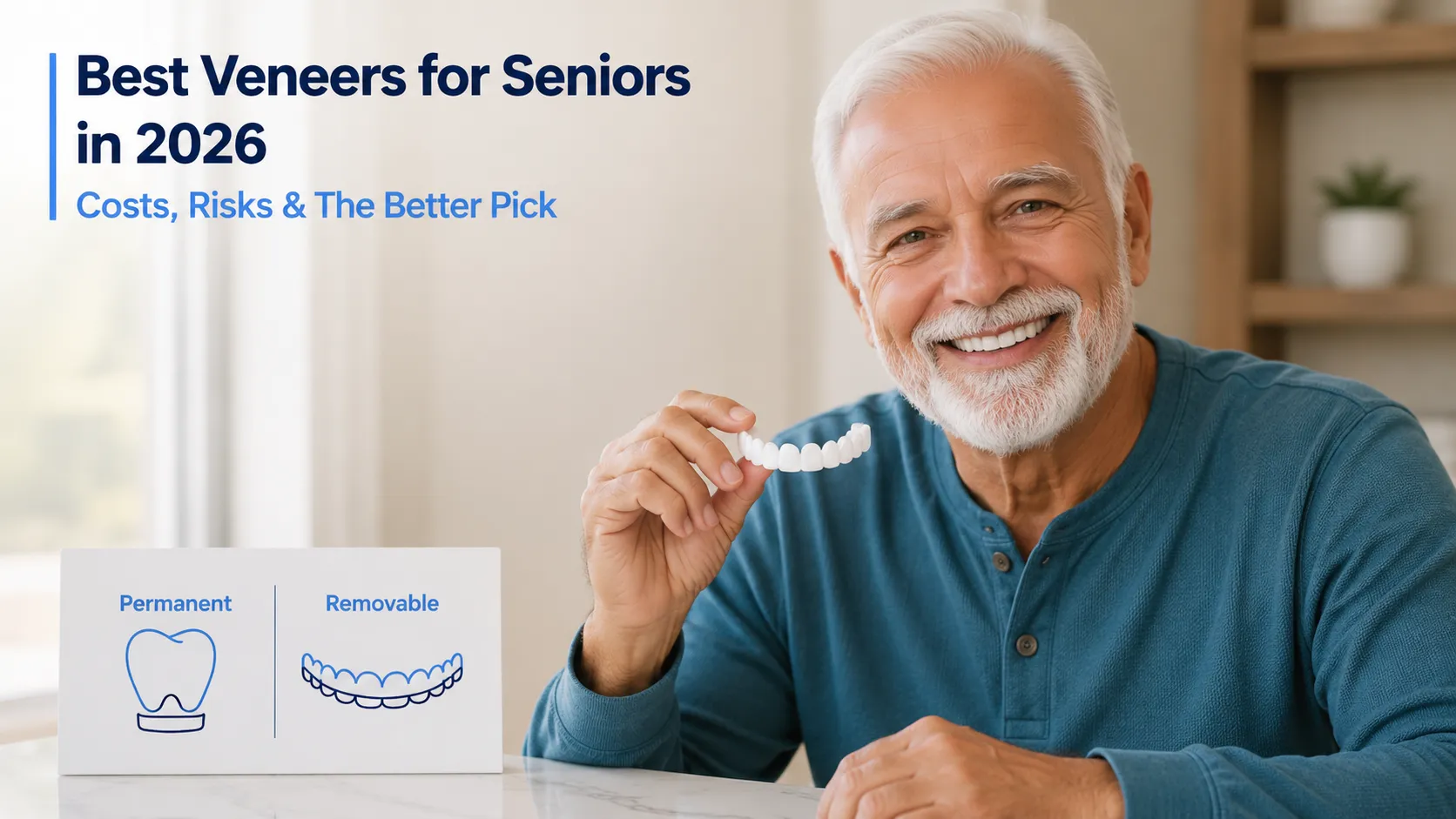
Age alone does not determine whether veneers are appropriate. Existing crowns, fillings, gum health, enamel condition, dry mouth, dexterity, and missing teeth can all influence the decision. Seniors considering permanent or removable veneers should compare daily maintenance and comfort as carefully as appearance, especially when another restoration or denture may better support eating and oral health.
Table of Contents
If you’re researching the best veneers for seniors, you’ve probably noticed the search results are a mixed bag of dental clinics, cosmetic brands, and Reddit threads full of opinions. This guide breaks it down plainly: what your real options are, what they cost, what dentists say about aging teeth, and how to avoid an expensive mistake.
A quick note before we go further: this article compares removable cosmetic veneers (also called clip-on or snap-on veneers) with traditional dentist-installed porcelain veneers. These are two very different products. Removable veneers are cosmetic accessories you can take on and off. Porcelain veneers are a permanent dental procedure performed by a licensed dentist. We’ll flag which is which throughout so there’s no confusion.
Why Veneers for Seniors Are a Different Conversation
Teeth change with age, and that changes what “veneers” can realistically do. Enamel thins. Gums can recede. Some older adults have crowns, bridges, or missing teeth from decades of dental work. Others deal with dry mouth from medications, which raises the risk of decay around any dental restoration.
This matters because the marketing for veneers rarely mentions age at all. A 25-year-old with strong, unrestored teeth is a very different candidate than a 70-year-old with several fillings and some bone loss. The right answer for one person is not automatically the right answer for the other.
According to the American Dental Association, dental treatment that alters the structure of your teeth, including permanent veneers, should only be performed by a licensed dentist after a proper exam. This is especially true for older adults, where existing dental work and bone health can affect the outcome.
Your Two Main Paths: Permanent Porcelain vs. Removable Cosmetic Veneers
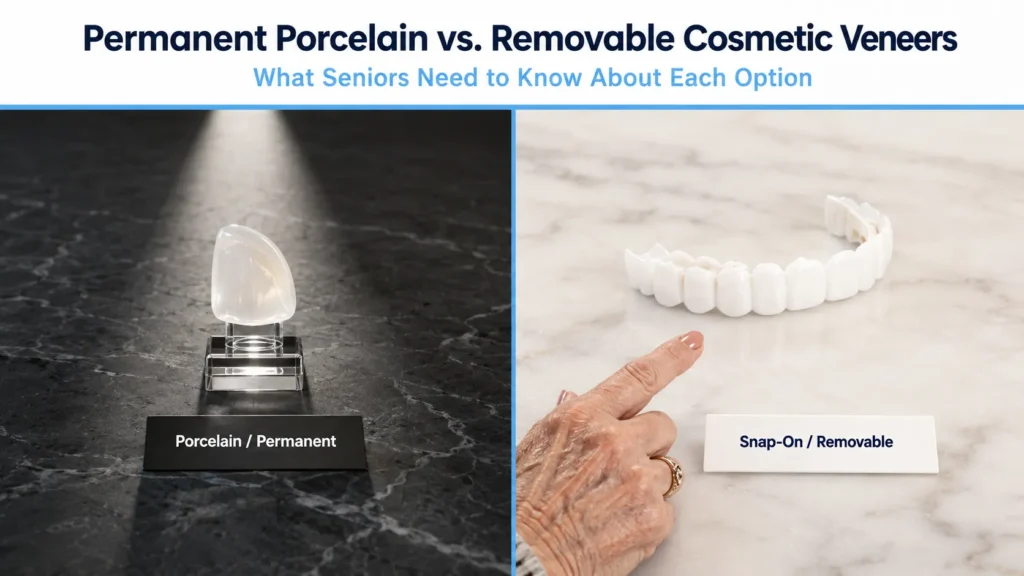
When people search for veneers for seniors, they’re usually comparing two very different products without realizing it. Here’s the honest breakdown of each.
Porcelain Veneers for Seniors (Dentist-Installed, Permanent)
Porcelain veneers are thin shells bonded permanently to the front of your natural teeth by a licensed dentist. The process involves shaving down a small layer of enamel, taking impressions, and bonding custom-made porcelain shells in place over one or more office visits.
This is irreversible. Once enamel is removed, it does not grow back, and you’ll need some form of veneer or crown on that tooth going forward. The ADA notes this directly on its MouthHealthy patient education page, and it’s worth reading before you commit to permanent treatment.
- Best for: seniors with strong, healthy teeth and a stable dental history
- Requires: a dental exam, X-rays, and dentist approval
- Change: permanent and irreversible
- Upkeep: normal brushing and flossing, dentist checkups every 6 months
Removable Cosmetic Veneers for Seniors (Clip-On, Non-Permanent)
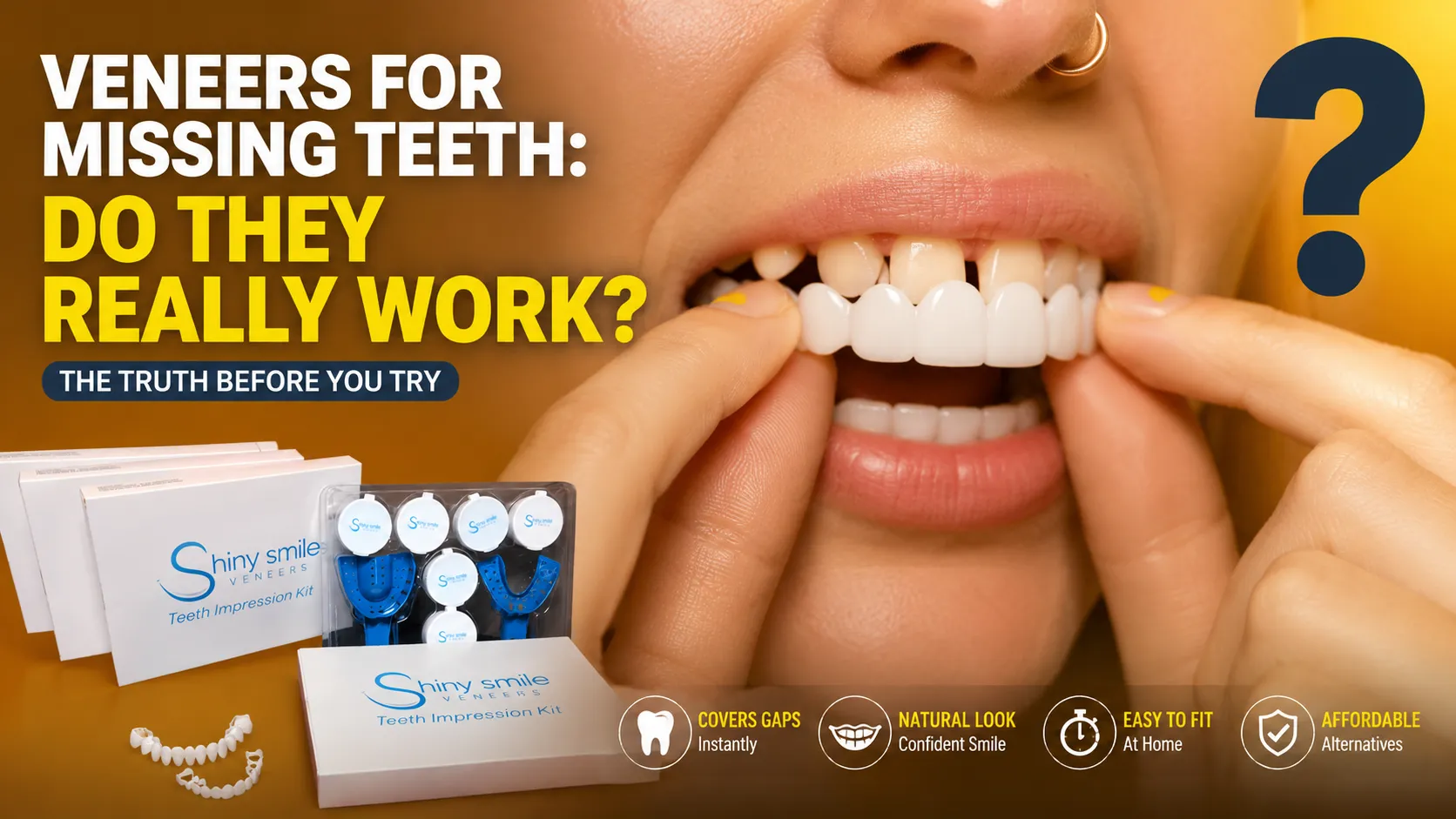
Removable veneers, sometimes called snap-on or clip-on veneers, are custom-molded cosmetic shells that fit over your existing teeth without any drilling, injections, or enamel removal. You take an impression kit at home, mail it to a lab, and receive a set designed to snap over your smile.
These are cosmetic products, not dental treatment. They cover the visible surface of your teeth to create a more uniform look, but they don’t fix underlying issues like gum disease or decay, and a dentist doesn’t install them. Think of them as a removable cosmetic accessory rather than a medical procedure.
- Best for: seniors who want a lower-cost, reversible option, or who aren’t candidates for permanent dental work
- Requires: an at-home impression kit, no dentist visit needed to order
- Change: fully reversible, you can remove them any time
- Upkeep: daily cleaning, removal before eating in many cases, and periodic replacement
Comparison Table: Porcelain vs. Removable Best Veneers for Seniors
| Factor | Porcelain Veneers (Dentist) | Removable Cosmetic Veneers |
| Who performs it | Licensed dentist | You, using an at-home impression kit |
| Procedure | Enamel removal, bonding | No drilling or enamel removal |
| Reversible? | No, permanent | Yes, removable anytime |
| Typical lifespan | 10 to 20 years with care* | Roughly 1 to 5 years depending on brand and use |
| Best suited for | Healthy teeth, stable gums | Cosmetic use, budget-conscious buyers |
| Dental exam required? | Yes, mandatory | Not required to order, but recommended |
*Longevity figures for porcelain veneers reflect general ranges reported by the American Dental Association and are not a guarantee for any individual case, since results depend on your dentist, oral hygiene, and bite habits.
How Long Do Veneers Last for Seniors?

This is one of the most common questions seniors ask, and the honest answer depends entirely on which type you’re considering.
For dentist-installed porcelain veneers, the American Dental Association states that veneers generally last about ten years, though this varies by patient and depends heavily on care and bite habits. Some patients see longer results with excellent hygiene and regular checkups, while others may need repairs sooner if they grind their teeth or skip maintenance visits.
For removable cosmetic veneers, lifespan is a different equation entirely. These products are not bonded to your teeth, so they experience regular wear from daily insertion and removal. Manufacturers and consumer reviews typically describe a lifespan in the range of one to a few years before a replacement set is needed, though this varies by brand, material, and how carefully you handle them.
If you want a deeper look at how removable veneers hold up in daily life, our article on whether veneers can damage your natural teeth covers the honest risks worth understanding before you buy.
Full Mouth Veneers for Seniors: What It Actually Involves
Full mouth veneers refer to covering most or all of the visible teeth in your smile, rather than just one or two. For seniors, this is a bigger decision than it sounds, and it plays out differently depending on which path you choose.
Full Mouth Porcelain Veneers
A full mouth porcelain case means your dentist evaluates every visible tooth, plans shade and shape as a set, and bonds veneers across multiple teeth over several appointments. This is a significant, permanent investment and typically the most expensive route on this list. It also assumes your teeth and gums are healthy enough to support the work, which your dentist will confirm through an exam and X-rays.
Full Mouth Removable Veneers
A full mouth removable set covers your entire upper arch, lower arch, or both with one custom-molded cosmetic piece. Because it’s not bonded, it can be a practical option for seniors who want a complete smile refresh without permanent alteration or the higher cost of a full porcelain case. It’s still a cosmetic product, not a treatment for missing teeth or gum disease, so it works best as a cosmetic layer over teeth that are otherwise stable.
For seniors specifically dealing with missing teeth, it’s worth reading our breakdown of snap-on veneer options for missing teeth, since not every removable product is designed to handle gaps the same way.
Best Veneers for Seniors Cost: What to Expect
Cost is usually the deciding factor, and it’s also where the two options diverge the most. We’re not going to invent numbers here, since dental pricing varies by provider, location, and case complexity. Instead, here’s how to think about the cost gap and what to verify before you commit.
| Cost Factor | Porcelain Veneers | Removable Cosmetic Veneers |
| Price range driver | Set by your dentist’s office, varies by region and case | Set by the brand, generally a flat published price |
| Financing | Often available through the dental practice | Some brands offer payment plans, check official terms |
| Insurance coverage | Rarely covered, cosmetic procedure | Not a dental treatment, not insurance-eligible |
| Ongoing cost | Checkups, possible repairs over years | Eventual replacement set as material wears |
Because porcelain veneer pricing is set individually by each dental office based on your exam, the only reliable way to get a real number is to ask for a written quote after a consultation. For removable veneer brands, always check the official website’s current pricing page directly, since promotional pricing changes and older blog posts can be out of date.
If you’re weighing a specific removable veneer brand, our independent legitimacy check on Shiny Smile Veneers walks through Better Business Bureau standing and verified customer feedback, which is a smart step before ordering any impression kit.
Are Removable Veneers Safe for Older Adults?
Safety questions come up often, and they deserve a straightforward answer. Removable cosmetic veneers do not involve drilling, needles, or altering your natural teeth, which is why many seniors consider them a lower-risk starting point compared to permanent dental work.
That said, “lower risk” doesn’t mean risk-free. A poorly fitted removable veneer can put uneven pressure on teeth or gums, trap food debris, or feel bulky enough to affect speech at first. Seniors with dentures, bridges, or significant gum recession should be especially careful, since a snap-on product is designed to fit over natural teeth, not dental appliances.
The FDA regulates dental devices and materials used in cosmetic dental products under its general medical device framework, and reputable brands will disclose the materials used in their veneers. If a company won’t tell you what their product is made of, that’s a red flag worth taking seriously.
- Ask the brand directly what material the veneers are made from
- Check for a clear refund or remake policy in writing
- Avoid wearing any clip-on product while eating hard or sticky foods
- Remove and clean the veneers daily to prevent bacteria buildup
- Talk to your dentist if you have dentures, bridges, or active gum disease
How to Choose Between Porcelain and Removable Veneers: A Simple Decision Guide
There’s no single right answer here, but these questions can help you narrow it down quickly.
- Do you have healthy, unrestored teeth? If yes, porcelain veneers may be a realistic option worth discussing with a dentist.
- Is your budget under a few hundred dollars rather than several thousand? Removable veneers are the more realistic starting point.
- Do you want a permanent change, or something you can remove for eating and sleeping? This alone often settles the decision.
- Do you have dentures, bridges, or missing teeth? Some removable products aren’t designed for this, so check the brand’s specifications first.
- Are you exploring options before a big event like a wedding or reunion? A removable option lets you test the look without commitment.
Alternatives Worth Considering
Veneers aren’t the only path to a brighter smile, and for some seniors, a different option fits better.
- Teeth whitening: A simpler, lower-cost way to address discoloration without covering the tooth surface
- Dental bonding: A dentist applies tooth-colored resin to fix small chips, often less invasive than veneers
- Dentures or partials: For seniors missing multiple teeth, these address function as well as appearance
- Clear aligners: For alignment concerns rather than color or shape
If you’re also curious how removable veneers compare functionally to dentures, we cover the practical differences in our full comparison of pop-on veneers versus dentures, which is a common point of confusion for older adults researching both.
Frequently Asked Questions
What are the best veneers for seniors on a budget?
Removable cosmetic veneers are generally the lower-cost option since they skip dentist fees, anesthesia, and multiple office visits. Always confirm current pricing on the brand’s official website before ordering.
Can seniors get porcelain veneers if they have crowns or fillings?
It depends on your individual case. A licensed dentist needs to examine your teeth and dental history to determine whether porcelain veneers are appropriate alongside existing restorations. This is not something to self-diagnose.
Do removable veneers work with missing teeth?
Some brands offer versions designed to account for gaps, while others are built to fit over a full set of natural teeth. Always check the specific brand’s product specifications rather than assuming.
How long do veneers last for someone over 60?
Lifespan depends more on the product type and care routine than age alone. Porcelain veneers commonly last around a decade per ADA guidance, while removable cosmetic veneers typically need replacing sooner due to daily handling.
Is it too late to get veneers as a senior?
Age by itself doesn’t rule out either option. What matters most is the current health of your teeth and gums for porcelain veneers, or simply your comfort with a removable cosmetic product for the snap-on route. A dental checkup is the best starting point either way.
The Bottom Line
There isn’t one universal answer to what counts as the best veneers for seniors, because the two main options solve different problems. Porcelain veneers are a permanent dental procedure that requires a healthy mouth and a bigger budget. Removable cosmetic veneers offer a reversible, lower-cost way to test a brighter smile without touching your natural teeth.
Whichever direction you’re leaning, start with the basics: get a dental checkup before any permanent work, verify pricing and materials directly from the official source, and read the refund policy before you commit to any purchase.
For a closer look at what the ordering and fitting process actually looks like for one popular removable brand, see our guide on how long the entire process takes from impression kit to final delivery.
This article contains affiliate links. If you purchase through our links, we may earn a commission at no extra cost to you. We only recommend products we genuinely believe in. Read our Affiliate Disclaimer for full details.