



Short answer: not quite, and long answer: it’s complicated in a way that actually matters for your wallet and your smile.
Veneers get marketed as a one-and-done fix. Once you know how they’re made, you’ll see why that framing is a little misleading.
Table of Contents
So are veneers permanent? We’ll walk through what “permanent” really means in dentistry, how long veneers last, what the procedure involves, and where composite resin veneers, porcelain, and prepless options differ.
Everything here comes from dental sources like the American Dental Association and the Cleveland Clinic, not guesswork, so you can plan your smile with real numbers.
Quick Answer: Are Veneers Permanent?
No, veneers are not permanent in the sense of lasting forever, but the process that places them is permanent. Your dentist removes a thin layer of enamel to fit most veneers, and enamel never grows back.
That means the tooth underneath will always need some kind of covering after that point, whether it’s the original veneer, a replacement, or a crown down the road.
So the honest framing is this: veneers are a long-term, largely irreversible commitment, not a lifetime guarantee on one single shell.
What Is a Veneer, Exactly?
A veneer is a thin, custom-made shell that a dentist bonds to the front surface of a tooth to change its color, shape, length, or size.
According to the Cleveland Clinic, veneers conceal chips, cracks, gaps, and stains that don’t respond to whitening, and they’re one of the most common cosmetic dentistry treatments available.
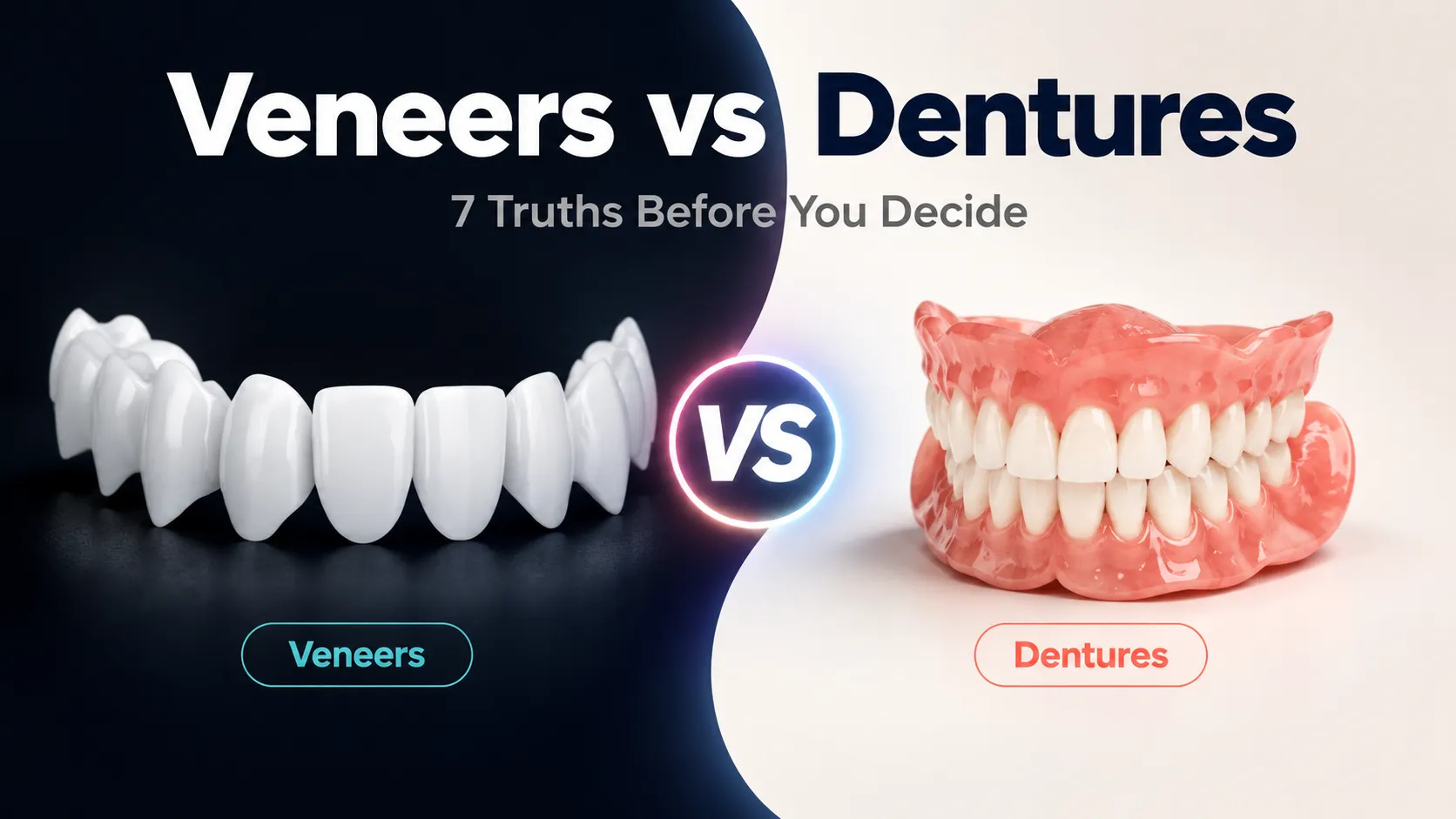
A veneer is not the same as a crown. A veneer covers only the front of a tooth, while a crown wraps the entire tooth structure for strength as well as looks.
Porcelain Veneers
Porcelain is the most durable and stain-resistant veneer material, and it’s what most people picture when they imagine a Hollywood smile. Placing it requires removing some enamel first.
Composite Resin Veneers
Composite resin veneers use the same tooth-colored material as dental bonding. A dentist can often shape and finish them in a single visit, and they cost less than porcelain, though they wear and stain faster.
Prepless (No-Prep) Veneers
A prepless veneer, also called a no-prep or minimal-prep veneer, removes little to no enamel before bonding. It’s a gentler option, but it still isn’t fully reversible, and not every tooth qualifies for it.
So what is a prepless veneer best suited for? Thin, healthy teeth with minor color or shape issues, since a prepless veneer needs some existing enamel to attach to.
Removable Veneers
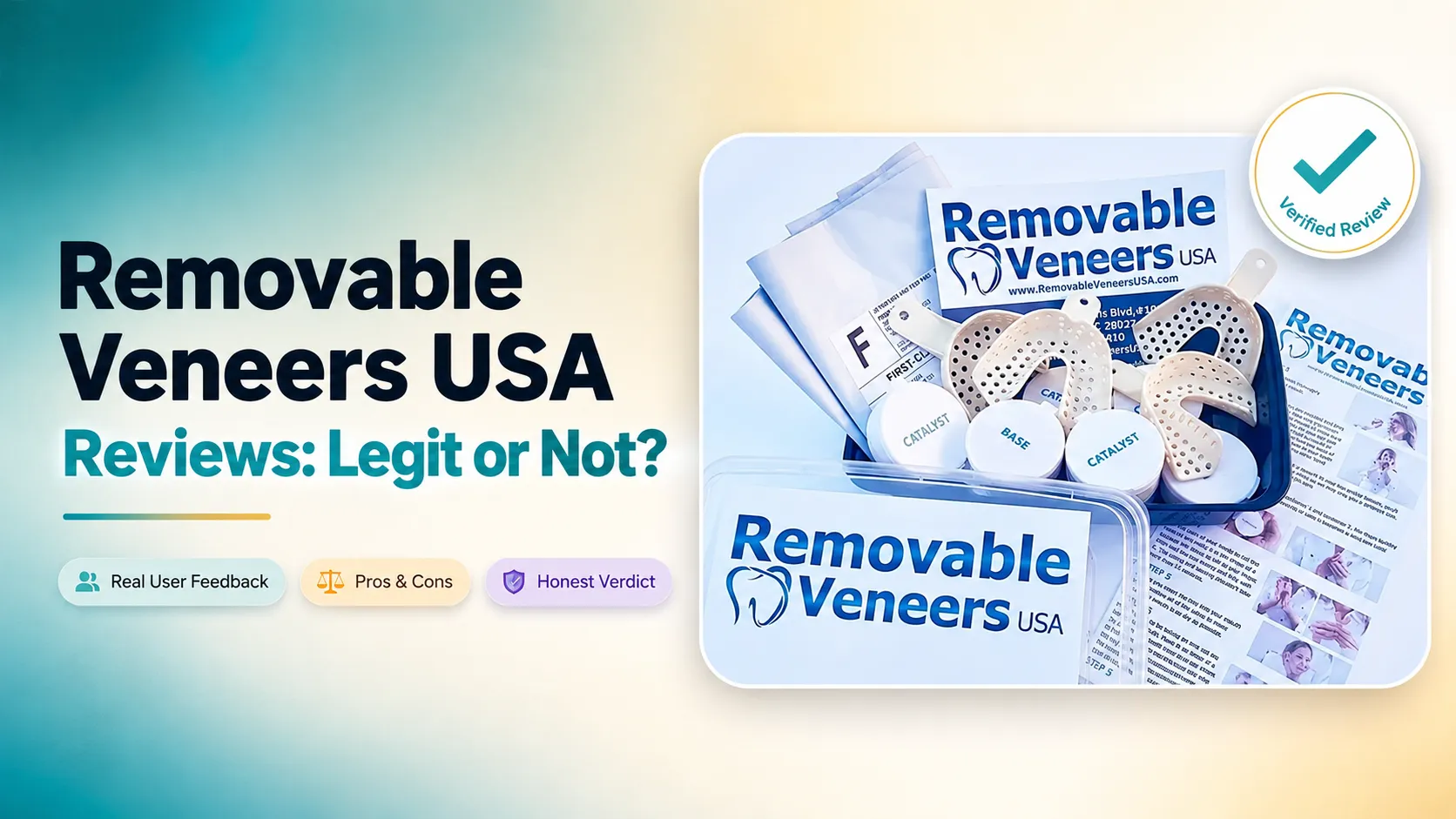
Removable, or snap-on, veneers fit over your existing teeth without any drilling. They’re fully reversible since nothing gets bonded or shaved down, but they behave differently day to day than fixed veneers do.
How Long Do Veneers Last?
This is where “permanent” really gets tested. Lifespan depends heavily on material, and the numbers are consistent across major dental sources.
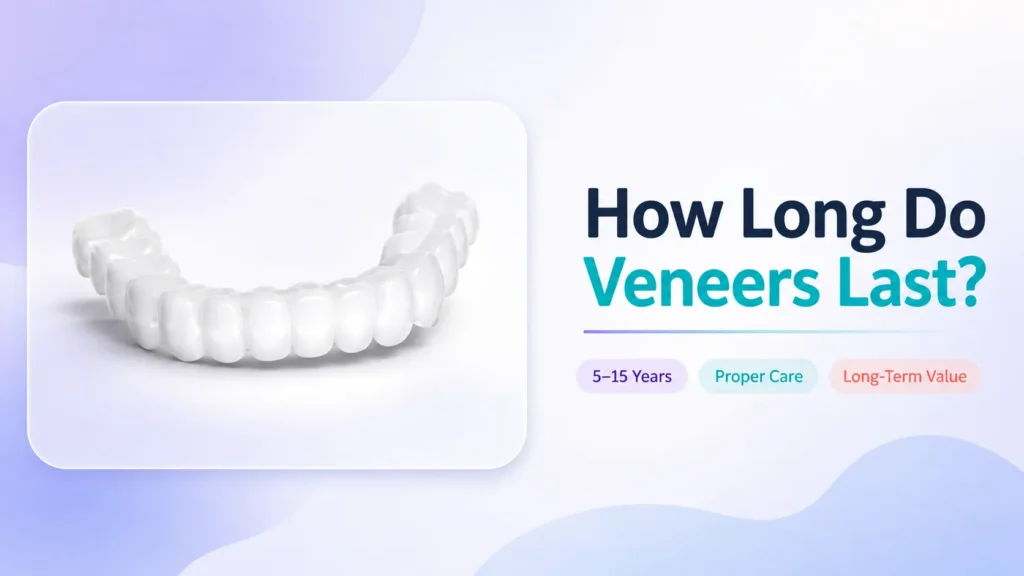
Porcelain veneers typically last 10 to 15 years, and some well-maintained sets reach closer to 20. Composite resin veneers usually last 5 to 7 years before they need repair or replacement.
Your habits move that number more than almost anything else. Grinding your teeth, biting into hard foods, or skipping checkups can shorten the lifespan of either material considerably.
How Are Veneers Put On Teeth?
The process is more involved than a quick cosmetic tweak, and knowing the steps helps explain why veneers count as a permanent decision rather than a trial run.
Step 1: Consultation and Enamel Prep
Your dentist checks for cavities and gum disease first, since veneers only work on healthy teeth. If you qualify, they remove a small layer of enamel to help the shell bond and sit flush.
Step 2: Impressions and Temporary Veneers
Next, your dentist takes an impression of your prepared teeth and sends it to a dental lab. You may wear temporary veneers for a few weeks while the permanent set is crafted.
Step 3: Permanent Bonding
At your second visit, the dentist checks the shape, fit, and color of each veneer, then bonds it in place with dental cement and adjusts your bite. There’s no downtime, so you can eat right after the numbness wears off.
Are Veneers Expensive? How Much Do They Cost?
Yes, veneers sit on the pricier side of cosmetic dentistry, and cost is usually the first thing that makes people pause before committing.
Porcelain veneers generally run $900 to $2,500 per tooth in the United States, while composite resin veneers cost less, typically $500 to $1,500 per tooth.
For two front teeth veneers cost usually lands between $1,800 and $5,000 for porcelain, or $1,000 to $3,000 for composite, since front teeth are the most visible and often require extra shade-matching work.
A full set covering six to eight teeth typically totals $9,000 to $25,000. Because insurers classify veneers as cosmetic, most dental plans won’t cover them.
Do Veneers Work for Missing Teeth?
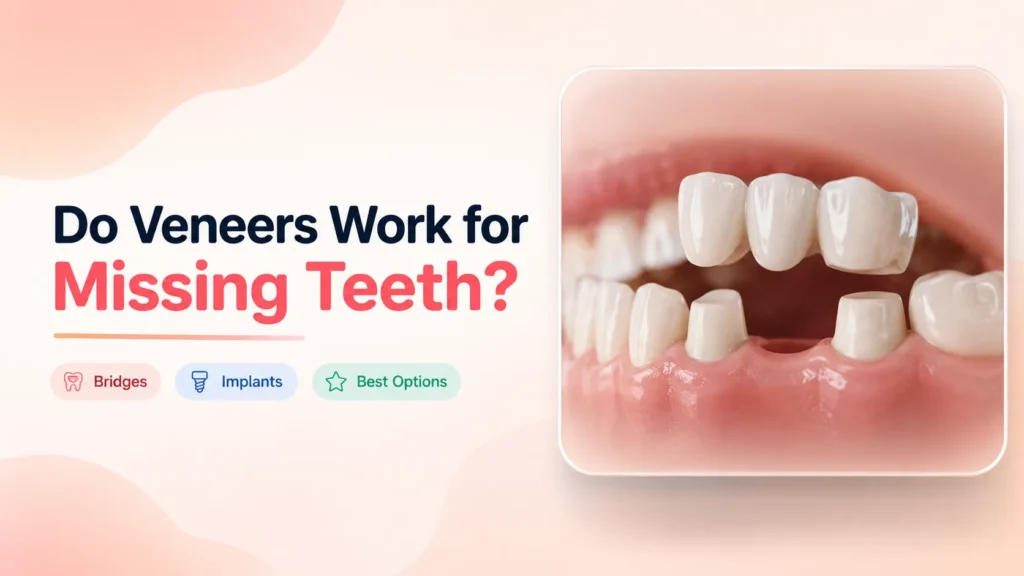
Not in the traditional sense. A standard veneer bonds to the front of an existing tooth, so dental veneers for missing teeth aren’t really an option when a tooth is gone completely.
For an actually missing tooth, a bridge or an implant does the job of replacing the structure itself. A veneer has nothing to attach to once the tooth is gone.
Removable snap-on veneers are the closest thing to dental veneers for missing teeth on the market, since several brands design their arches with a filled-in section that cosmetically hides the gap, even though it isn’t a functional replacement.
Why Do Some People Say Veneers Are “Bad”?
Veneers aren’t bad by design, but they’re not right for every mouth, and a few honest downsides explain the reputation.
They’re irreversible once your dentist removes enamel, and a veneer won’t fix an unhealthy tooth hiding underneath it. You can still get a cavity around or beneath the edge if brushing and flossing slip.
People who grind their teeth heavily, or who have a deep overbite, may find veneers chip or dislodge faster than expected, so a dentist may steer those patients toward a different option.
Best Oral Care Routine for Porcelain Veneers
A good oral care routine for porcelain keeps your investment looking sharp for the full 10 to 15 years, not just the first two.
Brush twice daily with a soft-bristled brush and a non-abrasive fluoride toothpaste, and skip whitening toothpaste, since it can scratch the surface. Floss once a day and use an antibacterial mouthwash.
Cut hard foods like apples and carrots into smaller pieces instead of biting directly into them, and limit dark drinks like coffee, red wine, and tea, since they can dull porcelain’s shine over time.
Our guide on how long veneers actually last breaks down how daily habits stack up against material choice over a 20-year timeline.
Before and After Veneers: What Actually Changes?
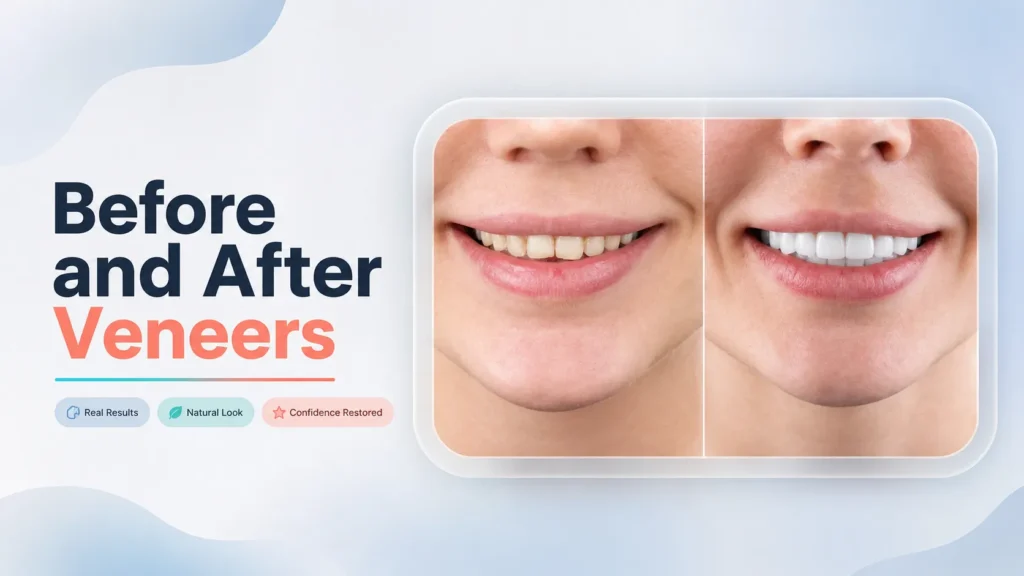
Before and after veneers photos usually show three consistent shifts: a more uniform tooth color, straighter-looking edges, and fewer visible gaps.
What doesn’t change is your bite alignment or jaw structure. Veneers are cosmetic, so they reshape appearance rather than correct a misaligned bite the way orthodontics would.
If you’re comparing a full smile makeover against more targeted fixes, our breakdown of veneers versus crowns on front teeth is a useful next read.
Removable Veneer Brands Worth Knowing
If a permanent, enamel-altering commitment feels too big a step right now, several reputable brands make custom removable veneers you can try without visiting a dentist’s chair.
Shiny Smile Veneers
Shiny Smile Veneers are custom snap-on arches made from an at-home impression kit. They’re a popular starting point for people who want to test the look of a whiter, more even smile before committing to porcelain. See the official Shiny Smile Veneers site for current pricing and packages.
Pop On Veneers
Pop On Veneers are also custom-made from home impressions and are designed to cover chips, gaps, and stains without adhesive. Check the official Pop On Veneers website for the latest specs, since the company also publishes clear care instructions worth reading before you buy.
instasmile
instasmile has been in the clip-on veneer space longer than most competitors and offers multiple product tiers. You can compare options directly on the official instasmile website before choosing a shade and style.
None of these removable options are permanent veneers, and none require enamel removal, which is exactly the point. They’re a reversible way to preview a smile change before you decide whether porcelain is worth the bigger commitment.
Are Veneers Permanent? The Final Verdict
Are veneers permanent? Not literally, but the decision to get them functions like one. Once your dentist removes enamel, there’s no going back to your untouched natural tooth.
Porcelain veneers reward that commitment with 10 to 15 years of durability, sometimes longer, while composite resin veneers offer a lower-cost, shorter-term version of the same idea.
If you want to test the concept first, removable veneers give you a reversible preview. If you’re ready to commit, a licensed dentist can tell you whether your teeth and habits make you a good long-term candidate.
Frequently Asked Questions
What is a veneer?
A veneer is a thin, custom-made shell bonded to the front of a tooth to change its color, shape, or size. Dentists use porcelain or composite resin to create them.
How long can veneers last?
Porcelain veneers typically last 10 to 15 years, sometimes up to 20 with excellent care. Composite veneers usually last 5 to 7 years before needing replacement or repair.
How are veneers done?
A dentist removes a thin layer of enamel, takes an impression, and bonds a custom shell to your tooth across two visits, often with a temporary veneer worn in between.
Are veneers expensive?
Yes, relative to many cosmetic options. Porcelain veneers run $900 to $2,500 per tooth in the U.S., while composite resin veneers cost less, typically $500 to $1,500 per tooth.
Do veneers last forever?
No. Even durable porcelain veneers eventually chip, wear, or need replacement. Most patients replace them every 10 to 20 years depending on material and care.
What are veneer teeth?
“Veneer teeth” refers to natural teeth covered with thin porcelain or composite shells to improve their color, shape, or alignment appearance without a full crown.
Why do some dentists advise against veneers?
They aren’t “bad,” but they’re irreversible since removed enamel can’t be undone, and they don’t fix decay or gum disease underneath. They also require upkeep and eventual replacement.
How much are dental veneers?
Porcelain veneers cost $900 to $2,500 per tooth nationally. A full set of six to eight teeth typically totals $9,000 to $25,000, depending on material and location.
How do you get veneers?
Start with a dentist consultation to check your oral health, then discuss material options. If you’re approved, they prepare your teeth, take impressions, and bond the finished veneers.
How much is veneer teeth?
Individual veneers typically cost $500 to $2,500 per tooth depending on material. Porcelain costs more upfront but usually lasts longer than composite resin veneers.
What are tooth veneers?
Tooth veneers are thin covers, usually porcelain or composite, bonded over the front of a tooth to correct color, shape, gaps, or minor misalignment.
How much is dental veneers?
Dental veneers generally cost $500 to $2,500 per tooth in the U.S., with porcelain at the higher end and composite resin veneers costing less per tooth.
How are veneers put on teeth?
After removing a thin enamel layer and taking impressions, your dentist bonds the custom veneer to your tooth with dental cement, then checks and adjusts your bite.
How much are veneers for front teeth?
Two front teeth veneers cost roughly $1,800 to $5,000 for porcelain, or $1,000 to $3,000 for composite, depending on your dentist and location.
This article contains affiliate links. If you purchase through our links, we may earn a commission at no extra cost to you. We only recommend products we genuinely believe in. Read our Affiliate Disclaimer for full details.