


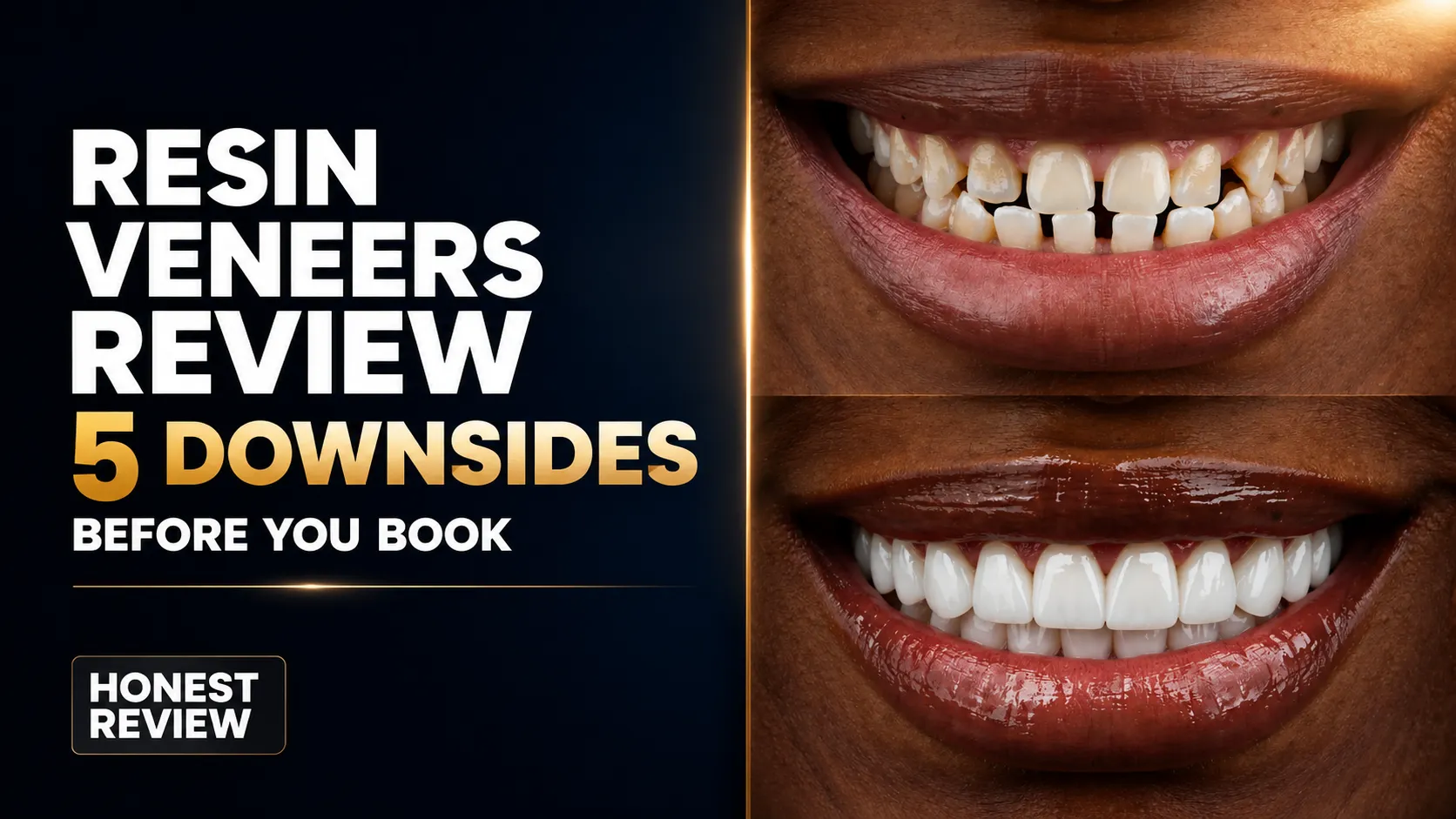
Composite resin veneers can cost less and require fewer appointments than porcelain, but their appearance and longevity depend heavily on technique and maintenance. Resin may stain, chip, or lose polish sooner than ceramic. It can often be repaired more easily, however, making it worth considering for patients who understand the trade-off between lower initial cost and potentially greater upkeep.
Table of Contents
Review methodology: this resin veneers review is based on published ADA and Cleveland Clinic patient information, standard dental billing codes, and widely reported pricing ranges from licensed dental practices, not a single brand’s marketing page.
Quick Answer: Are Resin Veneers Worth It?
Resin veneers, also called composite veneers, are a solid choice if you want a same-day fix for a chipped, gapped, or slightly discolored front tooth without spending porcelain-level money. They’re not the right call if you want a permanent, decade-plus solution.
Best for:
- People fixing one or two front teeth
- Anyone on a tighter cosmetic budget
- People who want results in a single visit
- Younger patients not ready for a permanent commitment
- Anyone who wants an easily repairable option
Less ideal for:
- People wanting maximum stain resistance
- Anyone planning a full 6-to-10 tooth smile makeover
- People who grind their teeth heavily at night
- Anyone who wants the longest possible lifespan
Our editorial rating: 8/10
Resin Veneers at a Glance
Nutrition-label style specs don’t exist for dental work, but here’s the closest equivalent: a quick-reference snapshot of cost, lifespan, visit count, and reversibility before you dive into the full details below.
| Feature | Resin Veneer Details |
| Material | Tooth-colored composite resin |
| Cost per tooth | Approximately $250 to $1,500 |
| Typical lifespan | 5 to 7 years with proper care |
| Visits required | Often just 1 (chairside); 2 for lab-made |
| Enamel removal | Little to none in many cases |
| Reversibility | Often reversible with minimal prep |
| Repairability | Easy – resin can be added and re-polished |
| Stain resistance | Lower than porcelain |
| Insurance coverage | Rare; treated as cosmetic |
Pricing, lifespan, and visit count can vary by dentist, region, and how many teeth are treated. Always confirm current details during your consultation.
What Are Resin Veneers?
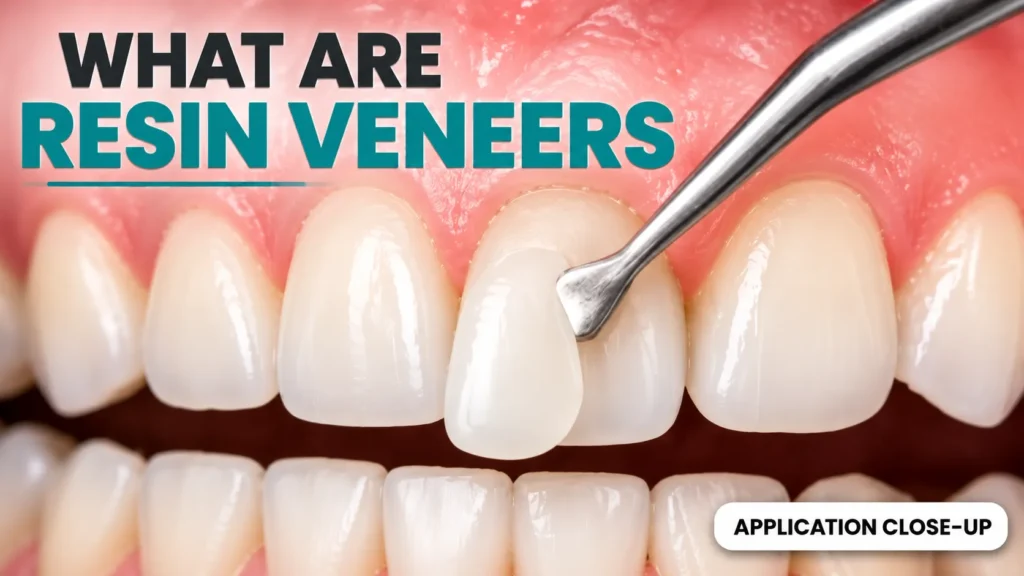
Resin veneers are thin layers of tooth-colored composite resin that a dentist sculpts directly onto the front of a tooth. This resin veneers review starts here because that single detail explains almost everything else about the treatment: the cost, the visit count, and the durability trade-off.
The ADA’s MouthHealthy resource describes composite veneers as being made from the same tooth-colored filling material dentists use every day, bonded directly to the tooth rather than fabricated separately in a lab.
What Is a Veneer, Exactly?
A veneer, in general, is a thin covering bonded to the visible front surface of a tooth to change its color, shape, or size. Composite resin veneers and porcelain veneers are both veneers; they simply use different materials and different fabrication methods to get there.
What Are Composite Veneers Made Of?
Composite veneers use the same resin material found in tooth-colored fillings, layered and shaped by hand. It hardens under a curing light in minutes, which is why most composite resin veneers finish in a single appointment instead of two or three.
How Resin Veneers Are Placed
Your dentist lightly cleans and roughens the tooth surface, applies the resin in thin layers, and shapes it to match your other teeth. A curing light hardens each layer, and the dentist polishes the final result before you leave. Many direct composite resin veneers involve little to no enamel removal, which is a meaningful difference from porcelain veneers.
Most patients need only local numbing, if any, since the process doesn’t involve deep tooth reduction the way a crown does. A single front tooth commonly takes 30 to 60 minutes chairside, and multiple teeth can sometimes be finished in one longer appointment rather than spread across separate visits.
Some dental offices offer a lab-fabricated version of composite resin veneers instead of the fully chairside method. That version takes an impression, sends it out, and bonds a pre-shaped veneer at a second visit, similar to how porcelain is handled but usually still at a lower cost.
What Is Composite Resin Bonding?
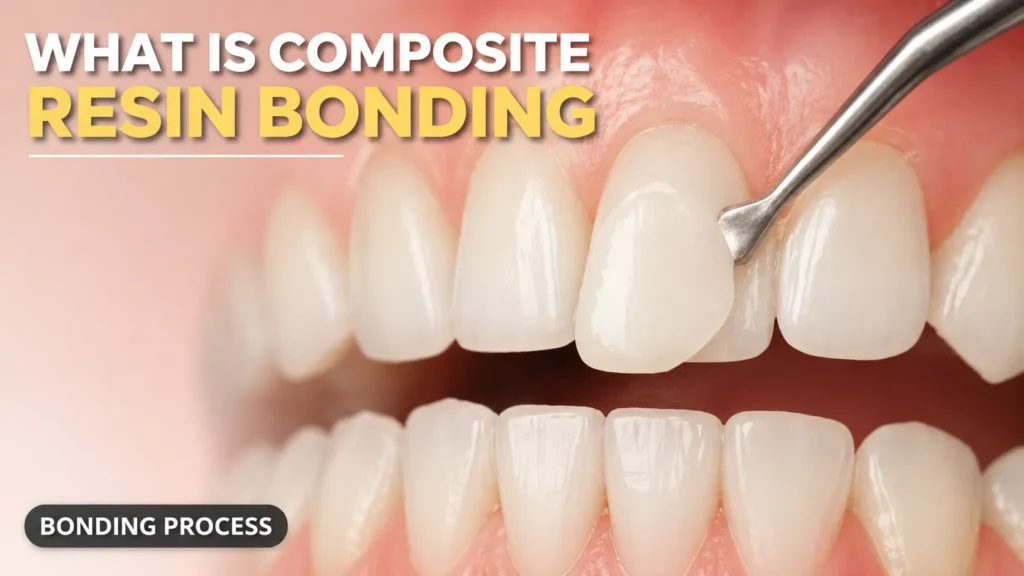
Composite resin bonding and a full resin veneer use the same material but different goals. Bonding usually repairs one small chip or gap on a single tooth, while a resin veneer reshapes the entire visible surface for a more complete cosmetic change. Dentists sometimes use the terms loosely, so it’s worth confirming exactly what your treatment plan includes.
Resin Veneers Cost: What to Expect
Resin veneers cost significantly less than porcelain, which is the main reason people search for them in the first place. Composite veneers commonly run between roughly $250 and $1,500 per tooth, compared with $900 to $2,500 per tooth for porcelain. That gap is the entire pitch for anyone treating just one or two teeth.
Resin veneers cost less partly because there’s no dental lab fee involved with direct chairside application. Our full guide on how much it costs to get veneers compares pricing across materials in more detail, including what typically drives the price up or down.
Because resin veneers cost less upfront, some patients use them as a trial run before committing to porcelain later. Ask your dentist directly whether your treatment plan involves direct chairside resin or a lab-made resin veneer, since the resin veneers cost and appointment count can differ between the two.
Insurance rarely covers resin veneers cost since cosmetic dentistry is typically excluded, similar to porcelain. Our breakdown on whether insurance covers veneers explains the rare situations where partial coverage applies.
How Long Do Resin Veneers Last?
This resin veneers review would not be complete without the honest lifespan answer, since it’s the number that should drive your decision most. Composite resin veneers typically last around 5 to 7 years before needing repair or replacement, according to widely published dental industry figures.
How long do resin veneers last compared with porcelain? Porcelain typically lasts 10 to 15 years, sometimes longer with excellent care, so the trade-off for the lower price is a shorter lifespan. How long do resin veneers last also depends heavily on your bite, your diet, and whether you wear a nightguard.
Dentists get asked how long do resin veneers last almost as often as they get asked about price, and the honest answer is a range, not a guarantee. A well-placed, well-maintained composite veneer can occasionally stretch past seven years, while one on a heavy grinder’s front tooth might need attention much sooner.
Are Resin Veneers Permanent?
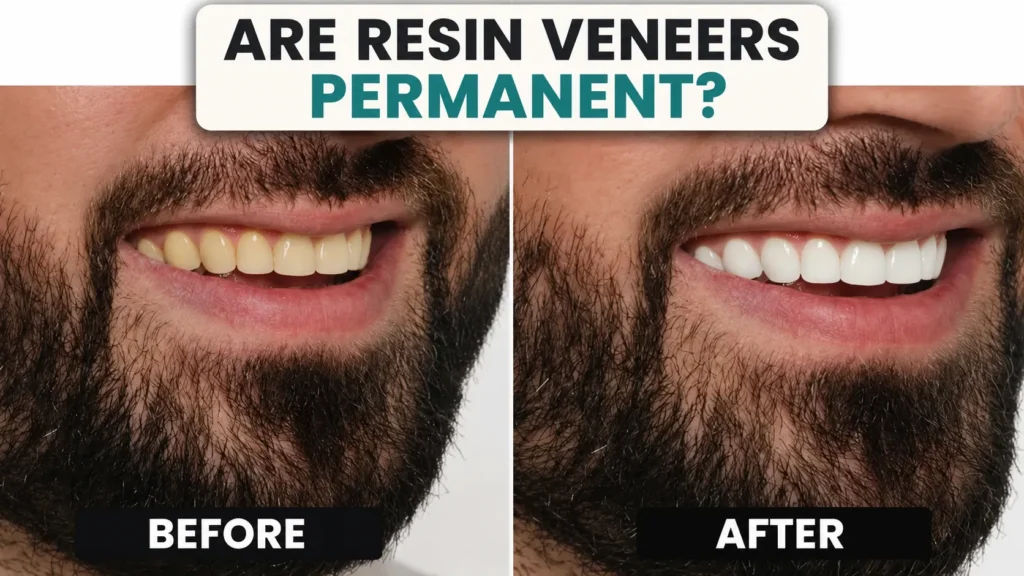
No, and this matters more than most marketing pages admit. Are resin veneers permanent in the sense that they can’t be removed at all? Not exactly, but if any enamel was reshaped to place them, that structural change is permanent even after the resin itself wears out.
So are resin veneers permanent as a treatment commitment? Think of them as a renewable one. When a composite veneer chips or stains beyond repair, your dentist can typically add fresh resin or start over, rather than requiring a full new restoration from scratch every time.
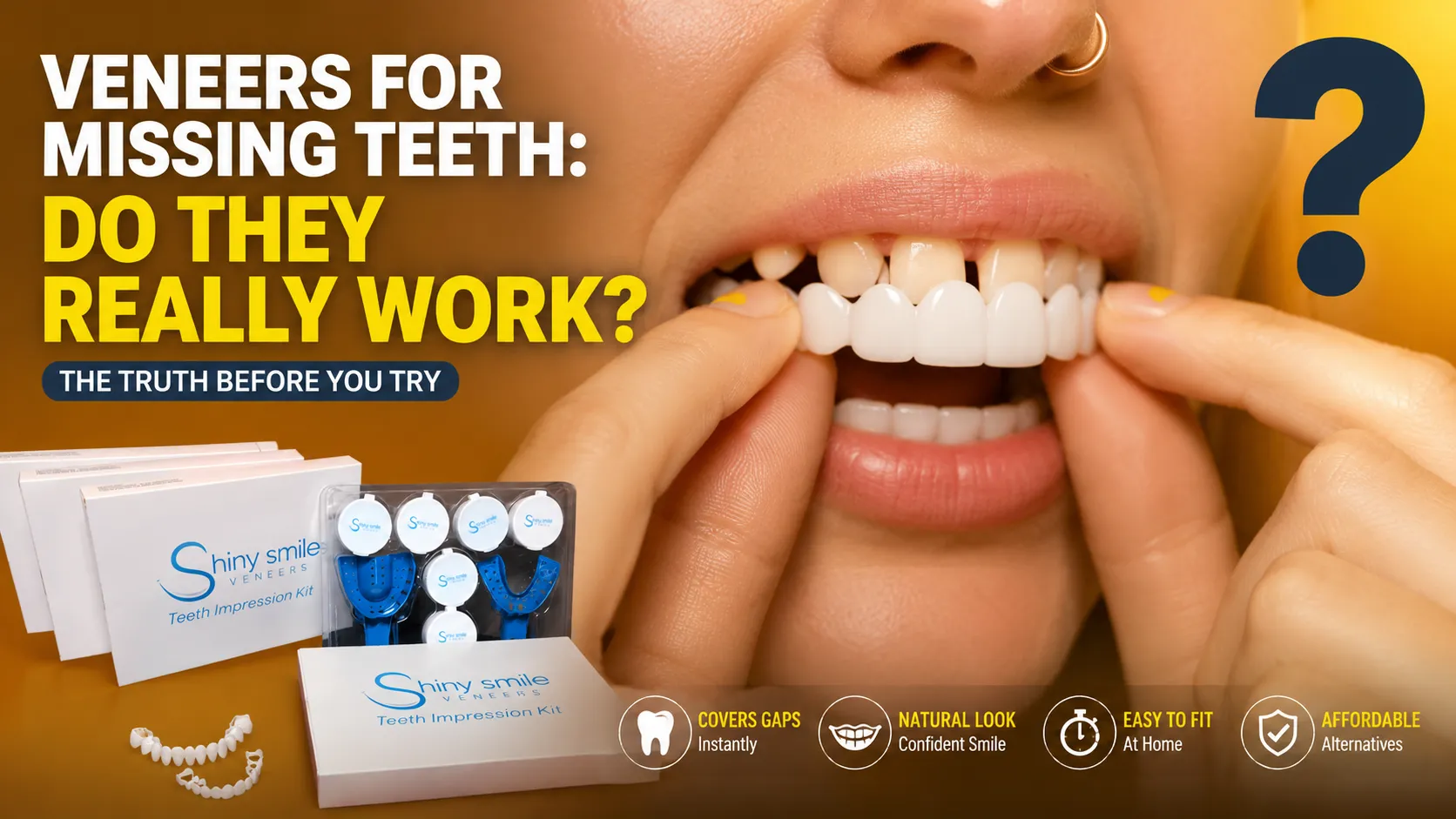
People often ask are resin veneers permanent because they’re weighing it against porcelain, which behaves differently once placed. Porcelain veneers are also considered irreversible by the ADA, but they’re not designed to be topped up the way composite resin can be. If you want a genuinely reversible cosmetic option instead, a Shiny Smile Veneers removable snap-on product sidesteps the are resin veneers permanent question entirely, since nothing gets bonded or reshaped at all.
Who Should Think Twice About Resin Veneers?
Heavy grinders, competitive athletes without a mouthguard habit, and anyone craving a stark, uniform “Hollywood white” look may be happier with porcelain or a different option altogether. Composite resin is softer, so it wears and stains faster under repeated stress. If your main goal is minimum maintenance for the next fifteen years, budget for porcelain instead of composite resin veneers.
Resin Veneers Pros and Cons
Resin Veneers Pros:
- Lower cost than porcelain
- Often completed in one visit
- Little to no enamel removal in many cases
- Easy to repair if chipped
- Reversible in cases with minimal preparation
Resin Veneers Cons:
- Shorter lifespan than porcelain, typically 5 to 7 years
- More prone to staining from coffee, tea, and wine
- Softer material, so more vulnerable to chipping
- Less natural translucency than high-end porcelain
- May need touch-ups sooner if you grind your teeth
Composite Resin Veneers vs Porcelain Veneers
Composite resin veneers win on price and speed. Porcelain wins on longevity and stain resistance. If you’re only fixing a chip or two on a budget, composite resin veneers make practical sense. If you’re planning a full smile makeover you want to last fifteen years, porcelain is generally the stronger long-term investment.
Aftercare for Resin Veneers
Brush gently twice a day, floss daily, and see your dentist every six months. Limit coffee, tea, red wine, and dark sauces, since composite resin veneers stain more easily than porcelain. Avoid biting ice, pens, or fingernails, and ask about a nightguard if you grind your teeth at night.
A No-Drill Alternative Worth Comparing
If the idea of any permanent enamel change gives you pause, it’s worth comparing resin veneers against Shiny Smile Veneers, a custom, removable snap-on option built from your own dental impressions with no drilling involved. It won’t replace a bonded resin veneer for every case, but for purely cosmetic goals, it’s a genuinely different path. Our full review of whether Shiny Smile Veneers is legit covers materials, pricing, and real customer feedback.
Final Verdict
Composite resin veneers earn their spot as a smart, budget-friendly entry point into cosmetic dentistry, especially for one or two front teeth. They’re fast, relatively affordable, and easy to repair, but they won’t match porcelain’s lifespan or stain resistance.
Final rating: 8/10
- Cost value: 9/10
- Durability: 6.5/10
- Natural appearance: 7.5/10
- Repairability: 9/10
Best for: Single-tooth or small cosmetic fixes on a budget
Frequently Asked Questions
What are resin veneers?
Resin veneers are thin layers of tooth-colored composite resin bonded and sculpted directly onto the front of a tooth to improve its shape, size, or color.
What is resin veneers used for, exactly?
Resin veneers are typically used to fix chips, small gaps, discoloration, or uneven edges on front teeth, usually in a single dental visit.
How long do resin veneers last?
Composite resin veneers typically last around 5 to 7 years with proper care, though results vary based on diet, bite, and oral hygiene habits.
How long does resin veneers last with heavy staining habits?
Frequent coffee, tea, or wine drinkers may notice staining sooner than the typical 5-to-7-year range, since composite resin absorbs pigment more easily than porcelain.
How much are resin veneers per tooth?
Composite resin veneers commonly cost between $250 and $1,500 per tooth, depending on your dentist, location, and whether the veneer is chairside or lab-made.
How much are resin veneers compared with a full smile makeover?
A single tooth costs far less than porcelain, but treating a full arch of six to ten teeth can still add up to a significant investment.
What is composite resin bonding?
Composite resin bonding uses the same tooth-colored material as a resin veneer to repair a small chip or gap, usually without reshaping the whole tooth surface.
What is a veneer?
A veneer is a thin covering bonded to the front surface of a tooth to change its color, shape, or size, made from either composite resin or porcelain.
What are composite veneers made of?
Composite veneers are made from the same tooth-colored resin used in dental fillings, layered by hand and hardened with a curing light.
This article contains affiliate links. If you purchase through our links, we may earn a commission at no extra cost to you. We only recommend products we genuinely believe in. Read our Affiliate Disclaimer for full details.