

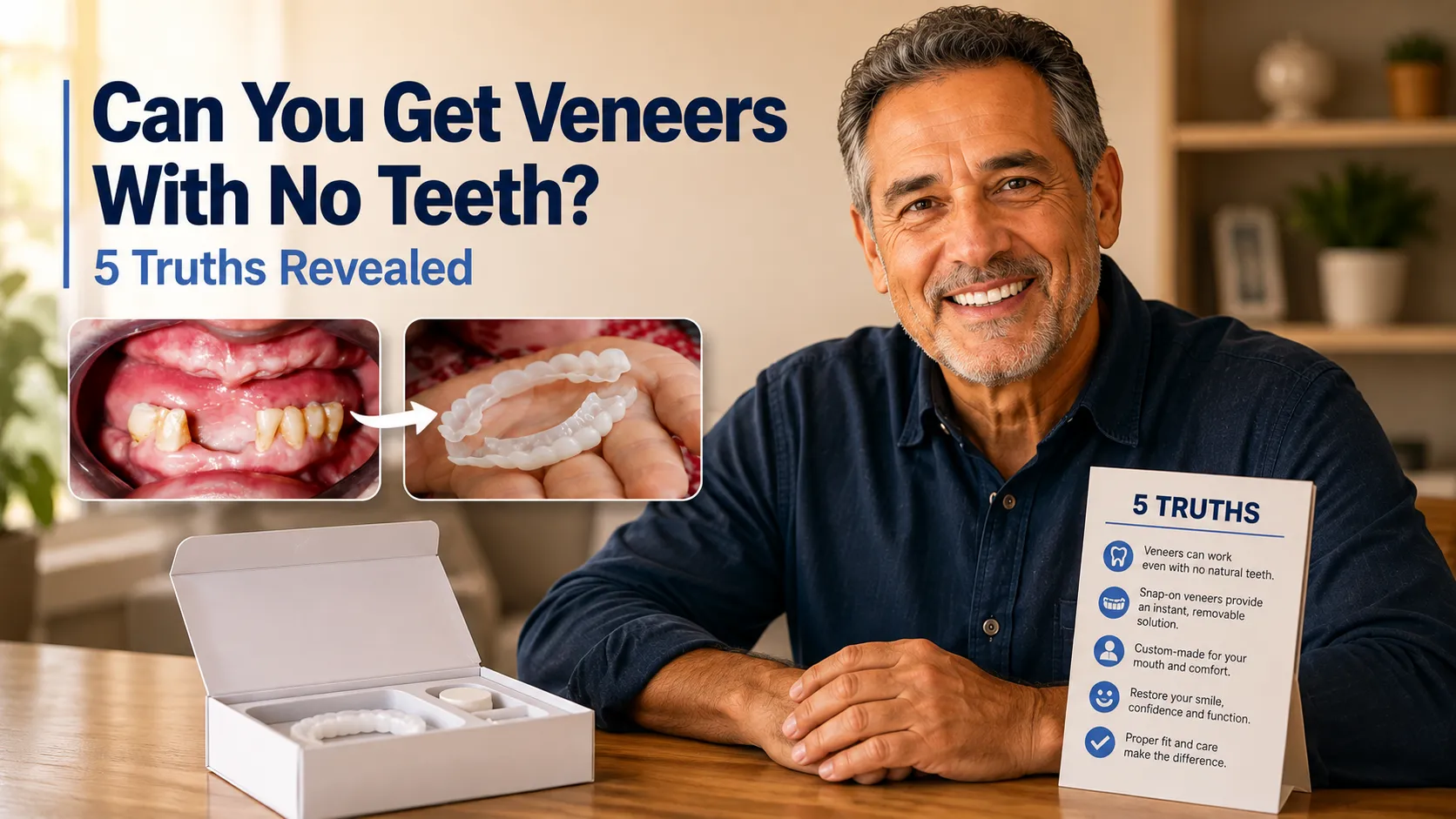
Here’s a question that trips up more people than you would think: can you get veneers with no teeth? Many people picture veneers as magic white shells that snap over bare gums and instantly rebuild an entire smile. That is a fun idea. It is also not how veneers work.
Veneers are thin covers. They need something solid underneath to hold onto, the same way a phone case needs a phone. No phone, no case. No tooth, no veneer. Simple logic, but it trips up a lot of people searching for a fast smile fix.
Table of Contents
Stick with this guide. It explains exactly why the short answer is no in the traditional sense, what your dentist will likely recommend instead, and which cosmetic options can still get you a camera-ready smile even if you are starting from zero natural teeth.
What Are Dental Veneers, Exactly?
According to the American Dental Association, dental veneers are custom-made, tooth-colored shells bonded to the front surface of a tooth. Dentists typically make them from porcelain or composite resin, and they use them to fix chips, stains, gaps, and oddly shaped teeth.
Per the Cleveland Clinic, veneers are cosmetic in nature. They improve how your smile looks, but they do not strengthen, rebuild, or replace a tooth the way a crown or an implant does.
That single fact answers most of this article already. Veneers dress up an existing tooth. They do not create one out of nothing.
So, Can You Get Veneers With No Teeth?
No. Traditional veneers cannot be placed if you have no teeth in your mouth. A veneer needs a natural tooth, or in some cases an implant crown, to bond to. Without that foundation, there is nothing for the veneer to grip, and no responsible dentist will glue porcelain onto bare gum tissue and expect it to survive your morning toast.
This is exactly why the phrase can you get veneers with no teeth in your mouth keeps showing up in dental forums and Google searches. People assume veneers and dentures are interchangeable. They are not. Dentures and implant-supported prosthetics replace missing teeth. Veneers decorate teeth that already exist.
If you are missing every tooth, or close to it, your dentist will not lead with veneers. They will start the conversation around implants, dentures, or a full-arch prosthetic. Veneers can join the plan later, once there is a real tooth or crown for them to bond to.
Why Veneers Need Real Teeth To Work
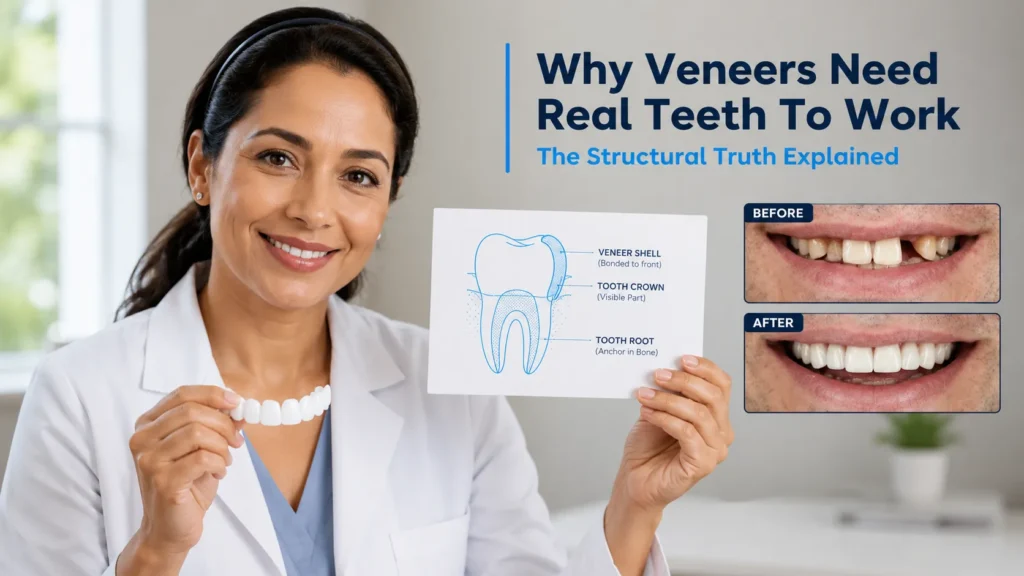
Veneers rely on dental cement to bond the shell to the enamel surface of a tooth. Enamel gives that cement something firm to grip. Gum tissue is soft, it shifts, and it offers no surface a veneer can permanently attach to.
Picture taping a poster to a pillow instead of a wall. The tape needs a wall. Your veneer needs a tooth. That is really the whole mechanical story here, minus the technical dental language.
What Happens If Someone Tries Anyway
Unlicensed ‘veneer techs’ have appeared online offering to glue press-on style veneers directly over gums or damaged teeth. The ADA has specifically warned the public about this trend, noting that irreversible dental work performed by an unlicensed individual can cause lasting harm to gums, jawbone, and any remaining teeth.
Skip the shortcuts. A licensed dentist is non-negotiable for anything permanent involving your mouth.
What If You Have Some Teeth But Not All?
This is where things get more flexible, and honestly more common. Are veneers a viable option with missing teeth if you still have most of your smile intact? Usually, yes. Losing one tooth, or a handful, is not rare at all. The American College of Prosthodontists reports that more than 120 million Americans are missing at least one tooth.
If you still have healthy teeth around the gap, dental veneers for missing teeth can play a genuine supporting role in a full smile makeover. Here is how dentists typically use them:
- Veneers go on the natural teeth next to a dental implant or bridge, matching color, size, and shape.
- Veneers cover small or underdeveloped teeth, such as peg laterals, that sit beside a gap.
- Veneers close minor spacing left after a small tooth was removed, when the gap is narrow enough.
So the honest answer to whether you can get veneers with missing teeth is: it depends on how many teeth are missing, where the gap sits, and whether your remaining teeth are healthy enough to anchor a veneer. One missing back molar is a very different case than an entire missing arch. And yes, you can have dental veneers if you are missing a tooth, as long as a healthy tooth or implant crown sits nearby to support the plan.
For a deeper look at how veneers hold up over time once placed, our guide on how long veneers last breaks it down by material and type.
Best Cosmetic Options If You Have No Natural Teeth Left
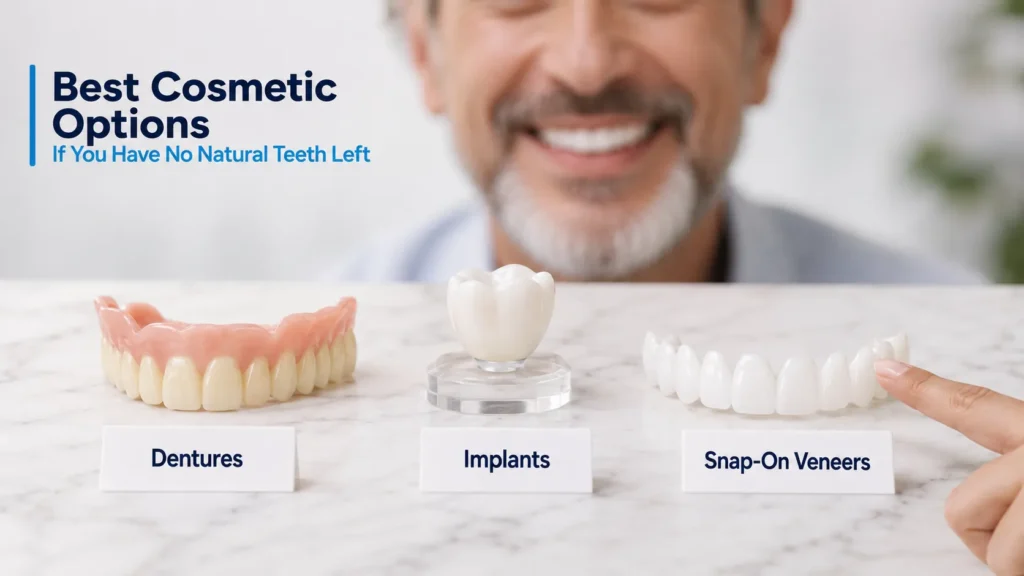
If you have no teeth at all, whether naturally or after extractions, your dentist has better tools for the job than a veneer. Here are the realistic paths forward.
Dental Implants
A dental implant is a titanium post surgically placed in the jawbone. Once it fuses with the bone, a crown attaches on top to act as the replacement tooth. Implants are the closest thing dentistry has to growing a brand-new tooth, and once an implant crown sits in place, veneers can be applied to neighboring natural teeth to blend everything together.
Implant-Supported Dentures (Full-Arch Options)
For an entire missing arch, dentists often anchor a full denture or a fixed bridge to several implants, sometimes called an All-on-4 style solution. This restores chewing strength and stability far better than removable dentures alone, and it gives you a permanent set of teeth that a cosmetic dentist can later refine and polish.
Full or Partial Dentures
Removable dentures replace some or all of your teeth and rest on the gums, sometimes with clasps anchored to remaining teeth. They cost less upfront than implants, but they require daily removal, cleaning, and periodic refitting as your gums change shape over time.
Snap-On and Removable Cosmetic Veneers

This is the category most people searching for veneers with no teeth are actually hoping to find. Removable, snap-on veneers fit over your existing teeth, or over a denture base depending on the product, without any drilling, cement, or surgery. They are not a functional replacement for missing teeth, but they are a fast, non-invasive way to change how your smile looks, often within a few weeks.
A few well-known names worth comparing if you want this kind of instant, no-prep smile:
- Shiny Smile Veneers – custom, removable snap-on veneers made from an impression of your own teeth.
- Pop On Veneers – a similar custom, mail-in impression system built for a quick cosmetic fix.
- instasmile – one of the longer-running clip-on veneer brands, also marketed for covering gaps left by missing teeth.
We have reviewed each of these in detail, including our Shiny Smile Veneers legitimacy check, our Pop On Veneers review, and our Instasmile veneers review, if you want to compare fit, price, and durability side by side.
One important note: these snap-on products work best when you still have some remaining teeth or a denture base to snap onto. If your gums are completely bare with nothing in place, talk to your dentist first, since a snap-on veneer needs a stable surface just like a traditional one does.
Can Veneers Be Combined With Dental Implants?
Yes, and this combination is one of the most popular ways cosmetic dentists finish a smile makeover. Once an implant crown replaces a missing tooth, veneers can be placed on the surrounding natural teeth so color, length, and shape all line up. The implant restores function. The veneers refine appearance. Together, they create a seamless result that reads as one continuous, natural smile.
How Do You Get a ‘Hollywood Smile’ With Missing Teeth?
A Hollywood smile, meaning bright, symmetrical, camera-ready teeth, is still achievable even if you are starting with several missing teeth. The process usually looks like this:
- Replace missing teeth first, with implants, an implant-supported bridge, or dentures.
- Let the gums and jawbone heal and stabilize around any new implants.
- Apply veneers, crowns, or whitening to the remaining natural teeth so everything matches.
- Fine-tune shape, shade, and symmetry during a final smile-design appointment.
Skipping step one and jumping straight to veneers is exactly what leads people to ask, half-joking, whether you can get veneers with no teeth in your mouth. The answer stays the same: build the foundation first, then decorate it.
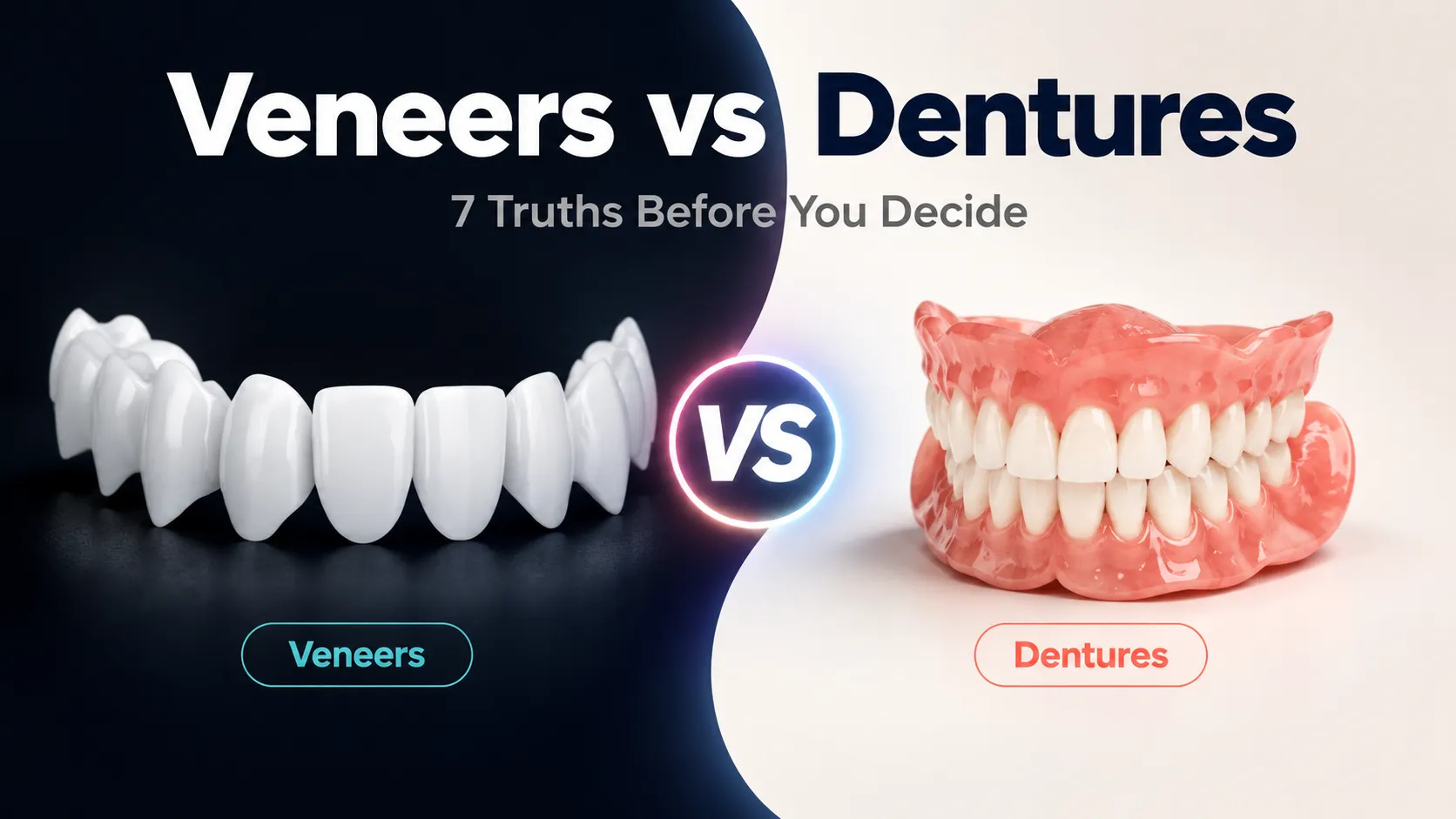
Veneers vs Dentures for Missing Teeth: Quick Comparison
These two treatments get confused constantly, so here is a side-by-side look.
| Feature | Veneers | Dentures |
| What it replaces | Nothing – covers existing teeth | Some or all missing teeth |
| Needs a natural tooth? | Yes, required | No, sits on the gums |
| Removable? | No, permanently bonded | Usually, yes |
| Best for | Chips, stains, gaps, shape issues | Missing teeth, full or partial |
| Reversible? | No | Yes |
The Bottom Line
Can you get veneers with no teeth? Not in the traditional sense, and any dentist worth their license will tell you the same thing. Veneers need a tooth, or an implant crown, to bond to. What you can get is a real plan: implants, implant-supported dentures, or removable dentures to rebuild your bite, followed by veneers or a snap-on cosmetic option to perfect the look once there is something solid underneath.
If your main goal is a quick, affordable, no-surgery smile upgrade and you already have some teeth or a denture in place, brands like Shiny Smile Veneers, Pop On Veneers, and instasmile are worth comparing. If you are starting from a completely bare mouth, talk to a licensed dentist about implants or dentures first. The smile comes together in that order, not the other way around.
Frequently Asked Questions
Can you get veneers if you have no teeth?
No. Veneers bond to natural tooth enamel or an implant crown. Without a tooth or implant already in place, there is nothing solid for a veneer to attach to.
Why can’t veneers be placed directly over missing teeth?
Veneers rely on cement bonding to hard enamel. Gum tissue is soft and shifts constantly, so it cannot hold a veneer securely or safely long-term.
What can you get instead of veneers if you’re missing all your teeth?
Dental implants, implant-supported dentures, or full removable dentures are the standard options. Veneers can be added to natural teeth later if any remain.
Can veneers be combined with dental implants?
Yes. Once an implant crown replaces a missing tooth, veneers on nearby natural teeth can match color and shape for a seamless, uniform smile.
What’s the difference between veneers and dentures for missing teeth?
Veneers cover existing teeth and improve appearance only. Dentures physically replace missing teeth and restore chewing function, and they are removable.
Can you get veneers on a bridge?
Not directly on the bridge’s replacement tooth, but veneers can be placed on the natural teeth supporting the bridge so the whole smile blends together.
How do you achieve a ‘Hollywood smile’ if you have missing or no teeth?
Replace missing teeth first with implants or dentures, let healing finish, then add veneers, crowns, or whitening to match everything into one bright, even smile.
Can veneers fill the gap left by a missing tooth?
Only very small gaps, like those from a peg lateral or minor spacing. A full missing-tooth gap needs an implant, bridge, or denture instead.
What is the best cosmetic option for someone with no natural teeth remaining?
Implant-supported dentures generally offer the best mix of stability, appearance, and function, followed by cosmetic refinement once teeth are restored.
Do you need healthy teeth to qualify for veneers?
Yes. Your dentist checks for healthy enamel, no active decay, and stable gums before approving veneers, since weak or absent teeth cannot support them.
This article contains affiliate links. If you purchase through our links, we may earn a commission at no extra cost to you. We only recommend products we genuinely believe in. Read our Affiliate Disclaimer for full details.