
The right way to hide a missing tooth depends on how quickly you need a solution and whether appearance or function is the priority. Dental wax and temporary kits provide limited emergency concealment, while flippers and removable veneers offer longer cosmetic coverage. Bridges, implants, and partial dentures require professional care but can restore more than appearance.
Table of Contents
If a missing tooth showed up on your radar this week, an event on your calendar, or just one too many self-conscious smiles in photos, you don’t need a permanent solution to feel normal again. Knowing how to hide a missing tooth well starts with understanding which products are actually built for daily wear versus a quick fix. Several real products can hide the gap starting today or within a few weeks, and this guide ranks them honestly by speed, cost, and how convincing they actually look.
We’ll also cover how to fix a missing front tooth at home for a short-term event, and when it’s smarter to skip the DIY route and call a dentist instead. Every fact here comes from official brand websites, published pricing, and general dental education resources, not invented reviews or fake star ratings.
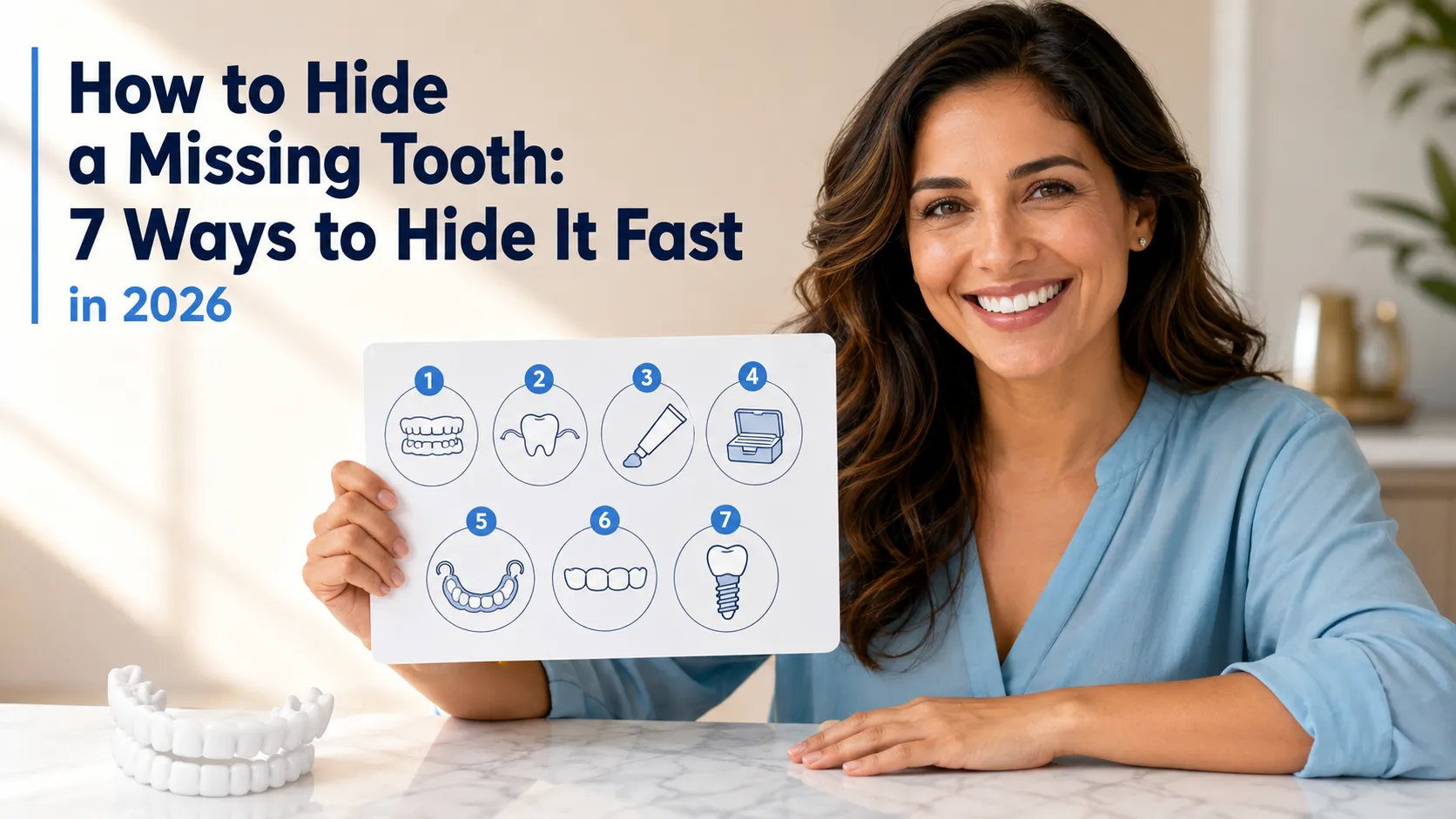
Fast Comparison: Every Way to Hide a Missing Tooth
| Option | Speed | Duration | Cost | Best For |
| Clip-on veneers | 2-3 weeks | 6 months-2 years | $270-$950 | Ongoing daily cover |
| Dental flipper | 1-2 weeks | Months to years | $300-$1,500 | Dentist-supervised temp fix |
| Temporary tooth kit | Same day | Days to weeks | $10-$30 | Emergency, short-term cover |
| Dental wax | Same day | Hours | Under $10 | True emergencies only |
| Partial denture | 2-4 weeks | 5-8 years | $500-$2,500 | Multiple missing teeth |
| Dental bridge | Weeks | 10-15 years | $4,100-$9,650 | Permanent, functional fix |
| Dental implant | Months | 20+ years | $1,600-$4,200/tooth | Permanent, full function |
The rest of this guide walks through each option, starting with the one most people searching this topic actually end up choosing.
Option 1: Clip-On Veneers (Best Overall for Most People)

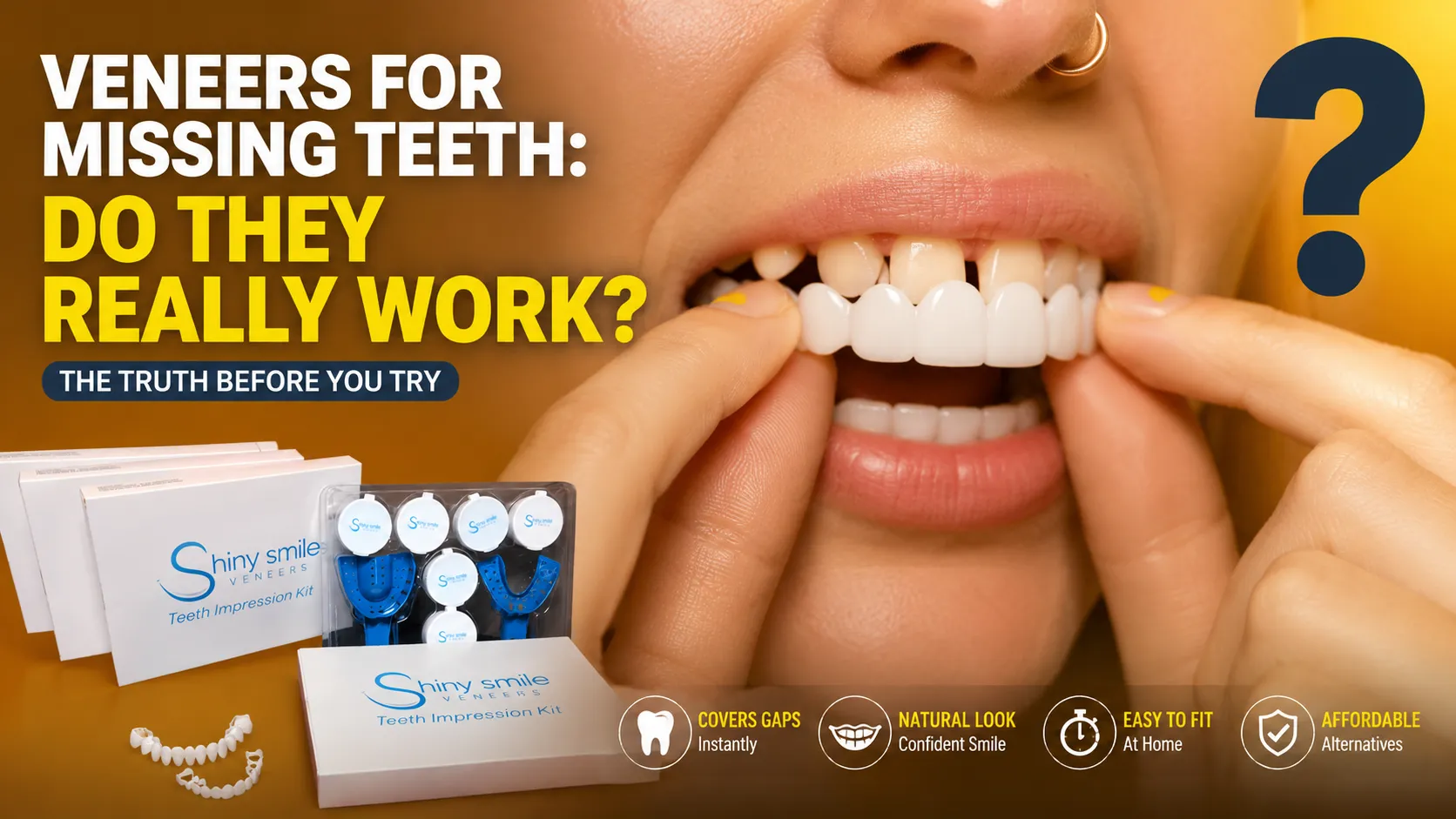
Removable clip-on veneers are custom-molded shells that fit over your existing teeth using an at-home impression kit. Brands build a filled-in tooth shape directly into the appliance, so wearing it visually completes your smile even where a tooth is missing.
This is the option most people mean when they search veneers for missing teeth, and it works especially well as veneers for missing front tooth cases, where appearance matters most and a single strong anchor tooth on each side is usually all you need. No drilling happens to your natural teeth, and nothing is permanent. You need healthy teeth on either side of the gap for the veneer to anchor onto, and most brands run a free eligibility quiz to confirm you qualify before you order.
For a deeper look at exactly how well this category handles missing-tooth cases specifically, our full guide on veneers for missing teeth breaks down qualification rules and brand-by-brand pricing in more detail than we can cover here.
Best Clip-On Veneer Brands for Hiding a Missing Tooth
Shiny Smile Veneers builds its custom snap-on product from FDA-approved, biocompatible dental resin, based on verified product information published by the company. Pricing runs about $370 for a single arch and $570 for a full set at regular price, with promotions often bringing that lower. The brand backs orders with free remakes if the fit is off. See our full Shiny Smile Veneers legitimacy review for the complete breakdown, including BBB standing and verified Trustpilot data.
Pop On Veneers, based in New York, requires at least four healthy teeth per arch to qualify. A full set lists at $699, typically promoted to around $479-$499. The brand’s 30-day Pop On Promise covers up to two remakes if your fit needs adjusting.
instasmile stands out specifically for multiple missing teeth. Its Dynamic model uses a thicker, reinforced design recommended once you have three or more consecutive missing teeth per arch, while the Classic model suits minor gaps. Pricing starts around $275-$400 for a single arch.
TruSmile is a newer name in this space. We’ve published a full TruSmile Veneers review covering its process and pricing if you want to compare it against the three brands above before ordering.
Option 2: A Dental Flipper (Fast, Dentist-Supervised)
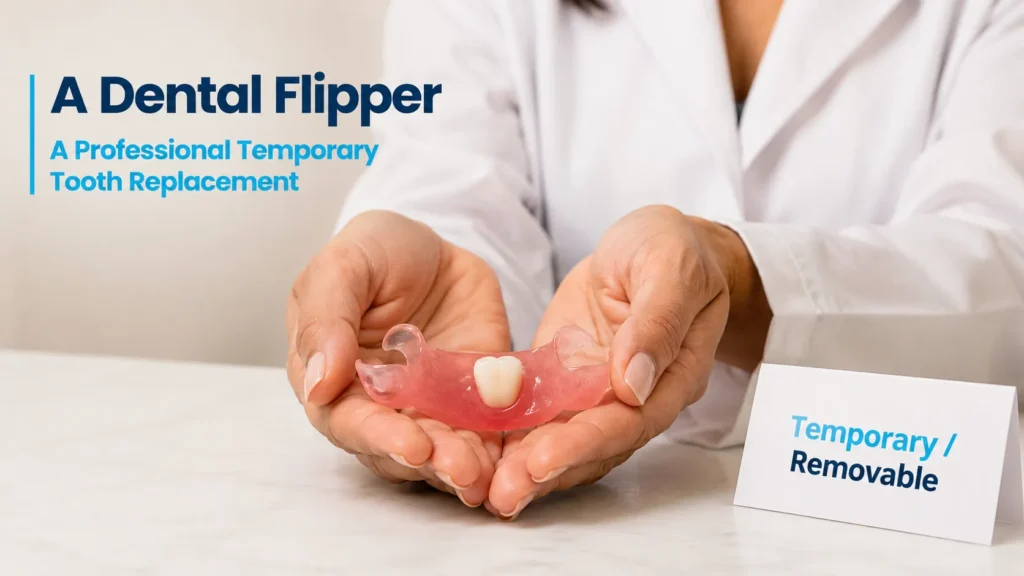
A flipper is a removable, acrylic partial denture a dentist can often make within one to two visits. It “flips” in and out of place, hence the name, and typically costs $300 to $1,500 depending on your dentist and location.
Flippers are usually recommended as a temporary bridge between losing a tooth and getting a permanent implant or bridge, since the surrounding bone and gum tissue often needs months to heal before permanent work can start. Unlike clip-on veneers, a flipper is fitted and adjusted in person by a dental professional.
Option 3: Temporary Tooth Repair Kits (Same-Day, Short-Term Only)
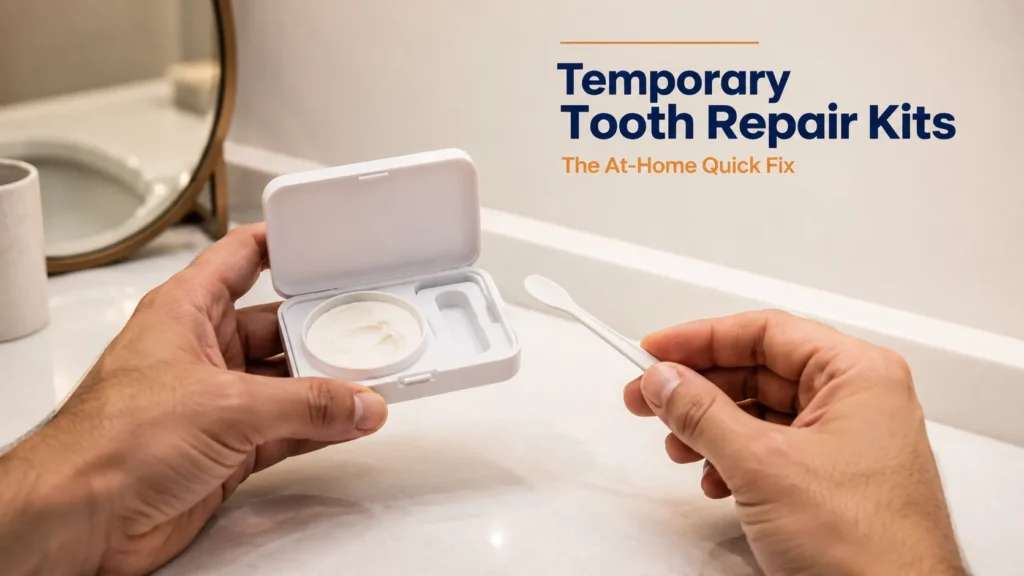
Temporary tooth kits are over-the-counter products sold at most pharmacies, containing a moldable material you shape into a tooth-colored filler and press into the gap yourself. They’re intended strictly as a short-term stopgap, not a long-term solution, and most manufacturers recommend removing and reapplying within days.
This is one of the more searched ways of how to fix a missing front tooth at home, especially before an event with little notice, and it’s a common short-term answer to how to hide a missing tooth on short notice. It works in a pinch, but expect a noticeably less natural look and feel compared to a custom clip-on veneer.
Option 4: Dental Wax (True Emergency Use Only)
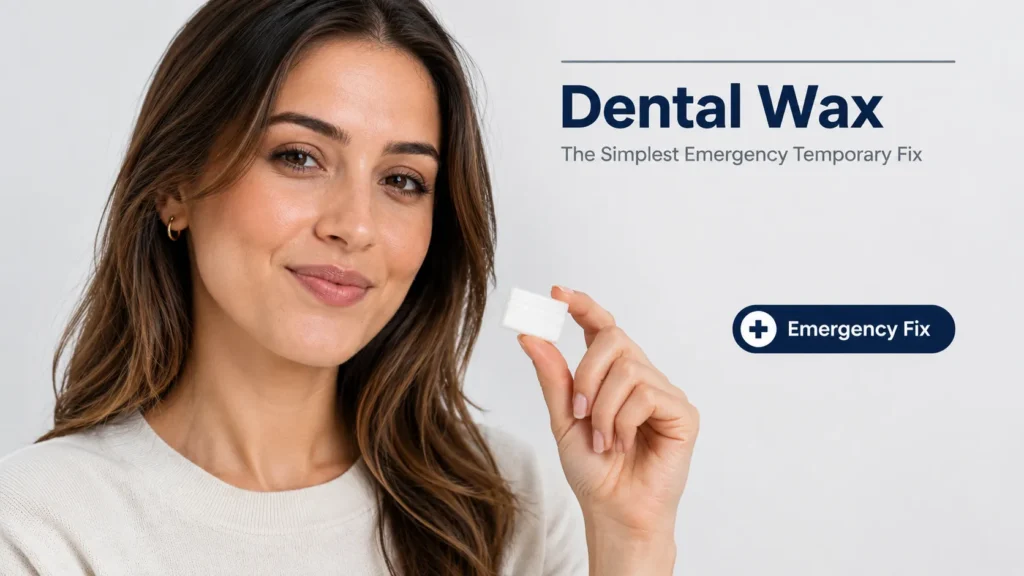
Dental wax, the kind orthodontic patients use to cover sharp braces brackets, can be pressed over a gap in a genuine pinch. It’s cheap, available at any pharmacy, and provides zero durability. Expect it to last a few hours at most, and don’t rely on it while eating.
This is the lowest tier on this list for a reason: it’s a stopgap for stopgaps, useful only when you have literally nothing else on hand before an event starts.
Option 5: Partial Denture (Multiple Missing Teeth)
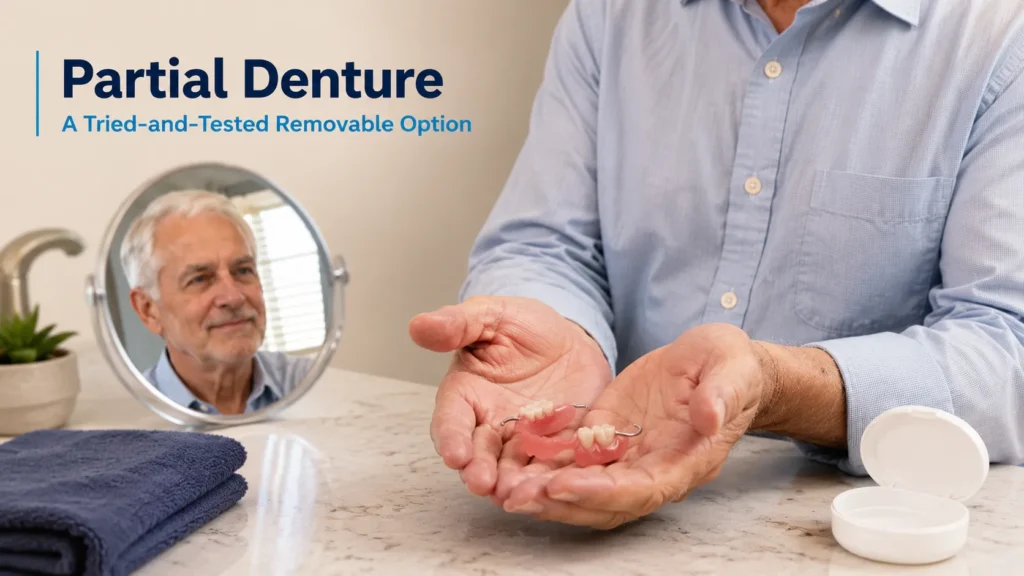
According to the American Dental Association, a partial denture fills gaps from several missing teeth while your remaining natural teeth stay in place, typically anchored with clasps or precision attachments. Unlike a clip-on veneer, a partial denture actually restores some chewing function, not just appearance.
Partial dentures generally cost $500 to $2,500 per arch and last five to eight years with proper care, making them a stronger long-term option once you’re missing more than one or two teeth in a row. For a full side-by-side on cost, comfort, and durability, our comparison of Pop On Veneers versus dentures covers this trade-off in detail.
Option 6 & 7: Dental Bridges and Implants (Permanent Function)
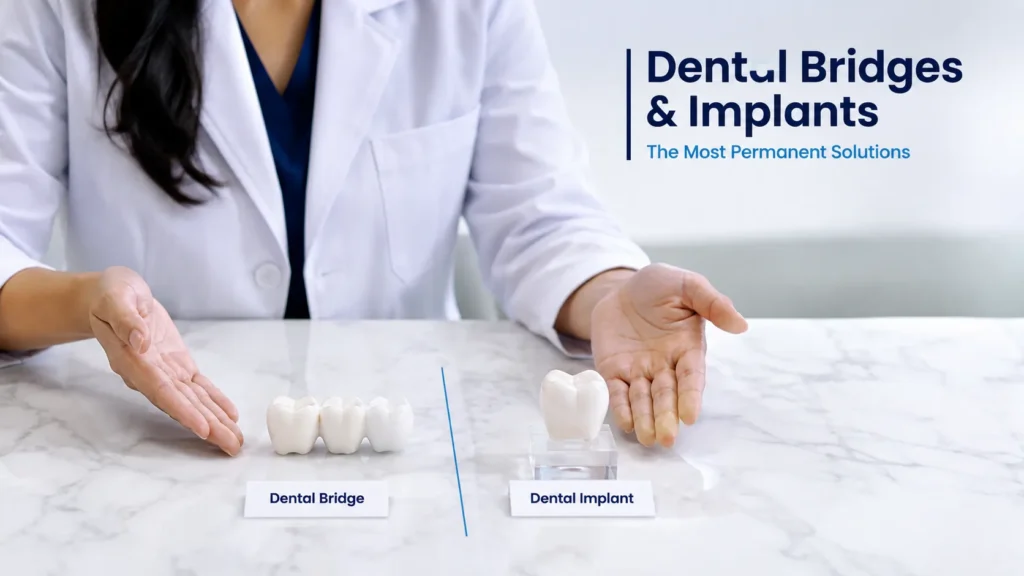
A dental bridge permanently bonds a replacement tooth to your neighboring teeth, restoring both appearance and chewing function, typically running $4,100 to $9,650 depending on materials and how many teeth are involved.
A dental implant surgically places a titanium post that fuses with your jawbone, topped with a crown, running roughly $1,600 to $4,200 per tooth. It’s the only option on this list that restores full function and can last 20 years or longer with proper care.
Both require a licensed dentist and are not something you can start or manage at home. If your missing-tooth situation involves pain, a loose neighboring tooth, or affects most of an arch, this is the conversation to have with a dental professional rather than shopping for a cosmetic cover.
How to Fix a Missing Front Tooth at Home: What’s Actually Realistic
“At home” covers a wide range, so let’s be precise about what’s genuinely doable without a dentist visit versus what needs one.
Genuinely doable at home:
- Ordering a custom clip-on veneer through an at-home impression kit
- Using an over-the-counter temporary tooth repair kit for a few days
- Applying dental wax for a few hours in a true emergency
Not realistically doable at home:
- Anything involving a permanent bond, bridge, or implant
- A properly fitted flipper, which requires a dentist’s mold and adjustment
- Treating pain, infection, or gum disease connected to the missing tooth
If your situation is purely cosmetic and you have healthy remaining teeth, a clip-on veneer is genuinely the strongest at-home option on this list, both in how it looks and how long it lasts compared to temporary kits or wax.
How to Make a Fake Tooth Without Overpromising Results
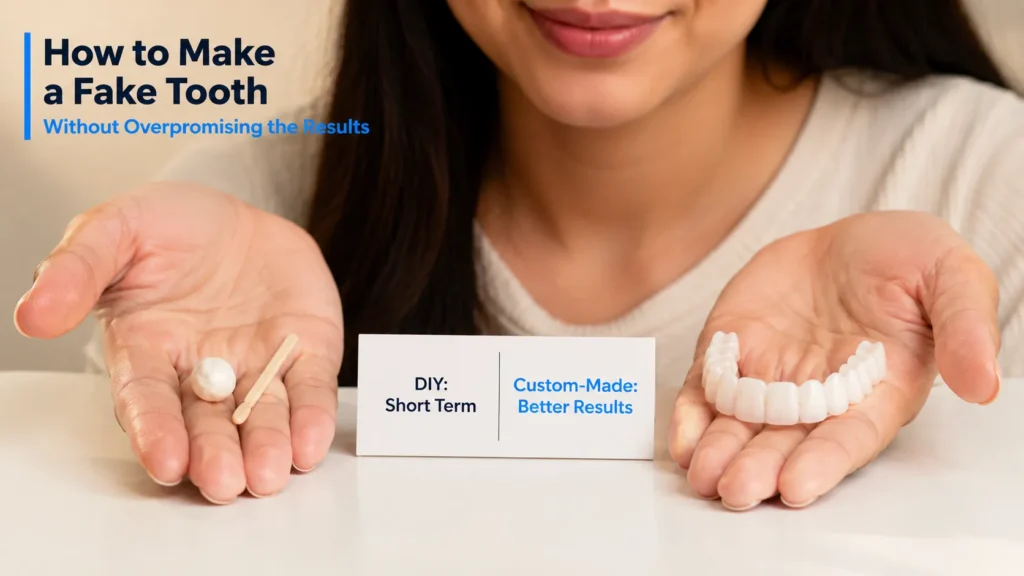
Searches for how to make a fake tooth usually lead to two very different places: hardware-store-style DIY hacks, and legitimate custom products.
We’d steer you firmly away from anything involving super glue, denture repair adhesive not intended for oral use, or household materials pressed into a gap. These carry real risk of damaging remaining teeth or causing an allergic reaction, and none of it is designed for repeated wear.
The legitimate versions of “making a fake tooth” are the custom clip-on veneer process (a lab builds it from your impressions) or a dentist-made flipper (built from a professional mold). Both start with an accurate impression of your mouth rather than a generic shape, which is the actual reason they look and fit better than anything improvised.
Safety Considerations Before You Choose
None of the cosmetic options in this guide are medical treatments, and this article isn’t offering dental diagnosis or treatment advice.
See a licensed dentist before covering a missing tooth with any product if you have:
- Pain, swelling, or bleeding at the site
- A tooth that was recently knocked out or fractured
- Signs of infection, including fever or persistent throbbing
- Loose or shifting neighboring teeth
A missing tooth can sometimes signal an underlying issue, like untreated decay or gum disease, that a cosmetic cover won’t address. Our guide on what you can and cannot eat with removable veneers is worth reading once you’ve chosen a clip-on option, since daily care habits affect how well any of these products hold up.
Frequently Asked Questions
What is the fastest way to hide a missing tooth?
Dental wax or an over-the-counter temporary tooth kit works same-day, but only for hours or days. For a longer-lasting, more natural-looking fix, a clip-on veneer typically takes two to three weeks.
Can veneers fix a missing front tooth?
Yes, cosmetically. Clip-on veneers include a filled-in section that visually closes the gap left by a missing front tooth, as long as you have healthy teeth on either side to anchor the appliance.
How much does it cost to hide a missing tooth?
It ranges widely: under $10 for dental wax, $270-$950 for clip-on veneers, $300-$1,500 for a dentist-made flipper, and $500 and up for longer-term solutions like partial dentures.
How do I fix a missing front tooth at home without a dentist?
A custom clip-on veneer, ordered through an at-home impression kit, is the most realistic at-home option for a natural-looking, longer-lasting result without a dental visit.
Is it safe to make a fake tooth myself with household materials?
No. Household adhesives and materials aren’t designed for oral use and can damage your remaining teeth. Stick to over-the-counter temporary dental kits or a professionally made clip-on veneer instead.
Do temporary false teeth look natural?
Custom clip-on veneers, built from your own dental impressions, look considerably more natural than generic temporary false teeth or wax, which are meant for short emergency use rather than daily wear. If you’ve compared temporary false teeth kits before, you already know the fit is rarely close to custom.
When should I see a dentist instead of using a cosmetic cover?
See a dentist if you have pain, swelling, a recently knocked-out tooth, signs of infection, or if you’re missing several teeth and want chewing function restored, not just appearance.
Final Verdict
For most people asking how to hide a missing tooth, a custom clip-on veneer is the strongest balance of cost, speed, and natural appearance, especially for a single tooth or a couple of missing teeth in a row. Temporary kits and dental wax have their place for true emergencies, but they’re not built for daily wear. Whatever you choose, the fastest sustainable answer to how to hide a missing tooth remains a properly fitted, custom-molded appliance rather than a one-size-fits-all product.
If your case involves pain, several missing teeth, or a desire for real chewing function back, that’s a conversation for a licensed dentist about flippers, dentures, bridges, or implants, not a cosmetic product ordered online.
Whichever path fits your situation, take any brand’s free eligibility quiz seriously before ordering, and don’t ignore pain or swelling in favor of a cosmetic fix.
This article contains affiliate links. If you purchase through our links, we may earn a commission at no extra cost to you. We only recommend products we genuinely believe in. Read our Affiliate Disclaimer for full details.