
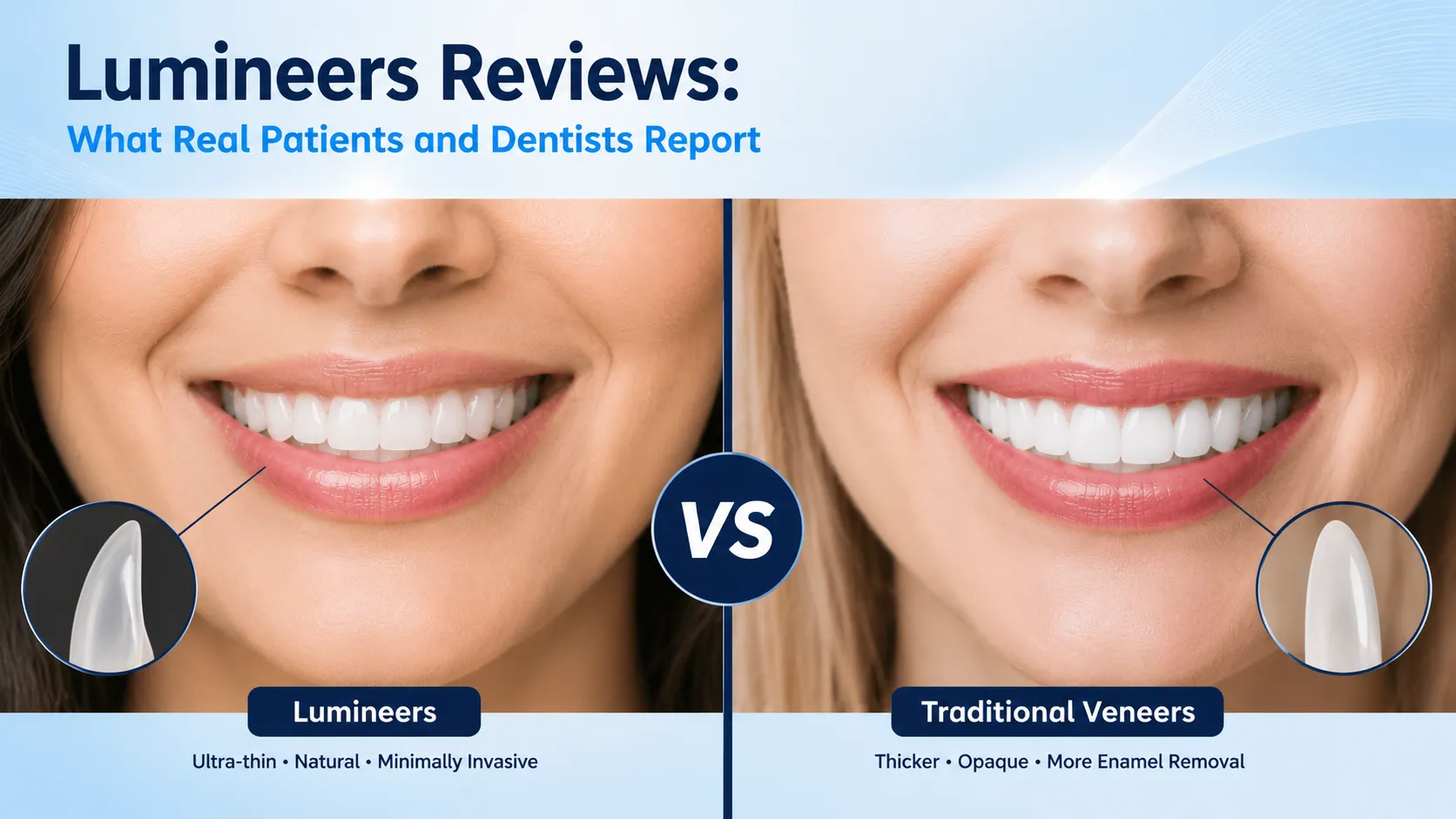
Lumineers is a specific DenMat veneer brand, not a general name for every no-prep veneer. Their thin design may reduce preparation in selected cases, but “no-prep” is not guaranteed for every patient. Existing tooth color, alignment, restoration margins, and the dentist’s experience can influence whether the final result looks natural or feels bulky.
Table of Contents
This guide pulls together what official Lumineers materials, independent health publishers, and financing resources actually say about the product: real cost ranges, how long they last, common pros and cons, and the honest tradeoffs patients report. If you are also weighing cost or insurance questions, our guides on veneers cost and does insurance cover veneers pair well with this one.
What Are Lumineers, Exactly?
According to Lumineers’ own FAQ page, the product is manufactured by a specific dental laboratory and applied only by dentists who offer it, not every cosmetic dentist. NewMouth’s overview confirms Lumineers are made from Cerinate feldspathic pressable porcelain, about 0.3mm thin, roughly the thickness of a contact lens, and are often called “no-prep” veneers because they typically require little to no removal of natural tooth enamel.
That thinness is the entire premise of the product. Traditional porcelain veneers run about 1.5mm thick and need enamel shaved down to make room. Lumineers skip most or all of that step, which is the main reason they get marketed as a gentler, more reversible option.
Lumineers vs Veneers: The Core Differences
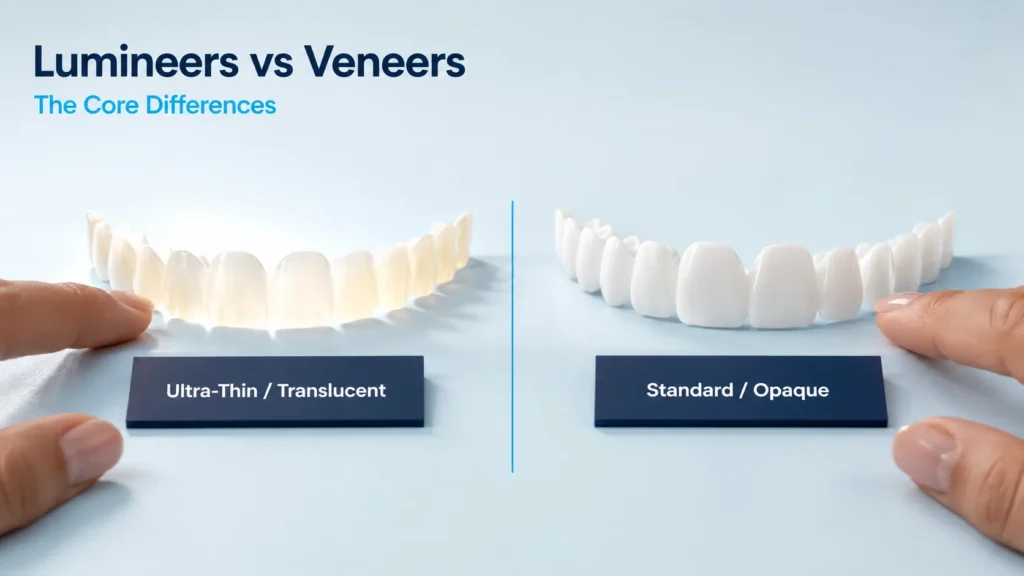
Any honest lumineers vs veneers comparison starts with material thickness and how much of your natural tooth gets altered. Healthline’s clinical comparison lays out the tradeoffs clearly: veneers are more opaque and better at hiding severe discoloration, while Lumineers are thinner, more translucent, and need far less prep work.
| Feature | Lumineers | Traditional porcelain veneers |
| Thickness | About 0.3mm (contact-lens thin) | About 1.5mm |
| Tooth preparation | Little to none | Enamel removal required |
| Reversibility | Considered removable, semipermanent | Permanent once enamel is removed |
| Cost per tooth | $800 to $2,000 | $925 to $2,500 |
| Typical lifespan | 10 to 20 years | 10 to 15 years, up to 20 with care |
| Coverage of severe staining | Weaker, more translucent | Stronger, more opaque |
Neither option is universally “better.” Lumineers vs porcelain veneers really comes down to how much correction your teeth need. Severely stained, chipped, or misshapen teeth usually respond better to full porcelain veneers, while mild to moderate cosmetic concerns are exactly where Lumineers were designed to shine.
Lumineers Reviews Cost: What to Expect Price-Wise
Per Lumineers’ official FAQ, the product typically costs between $800 and $2,000 per tooth, depending on your oral health situation and your dentist’s fees. CareCredit’s cost breakdown translates that into real-world budgets: roughly $4,400 for a partial smile makeover up to about $14,000 for a full one.
For comparison, NewMouth pegs traditional veneers at $1,000 to $2,500 per tooth, meaning the veneers vs Lumineers cost difference usually favors Lumineers by a modest but real margin. Neither option is typically covered by insurance, since both are classified as elective cosmetic treatment. Financing through CareCredit for veneers and Lumineers alike is common, and many dental offices also offer in-house payment plans.
For a full per-tooth and per-material breakdown across veneer types, see our complete veneers cost guide, and if you want to understand why insurance rarely helps, our guide to does insurance cover veneers breaks down Delta Dental, Medicare, and Medicaid rules.
How Long Do Lumineers Last?
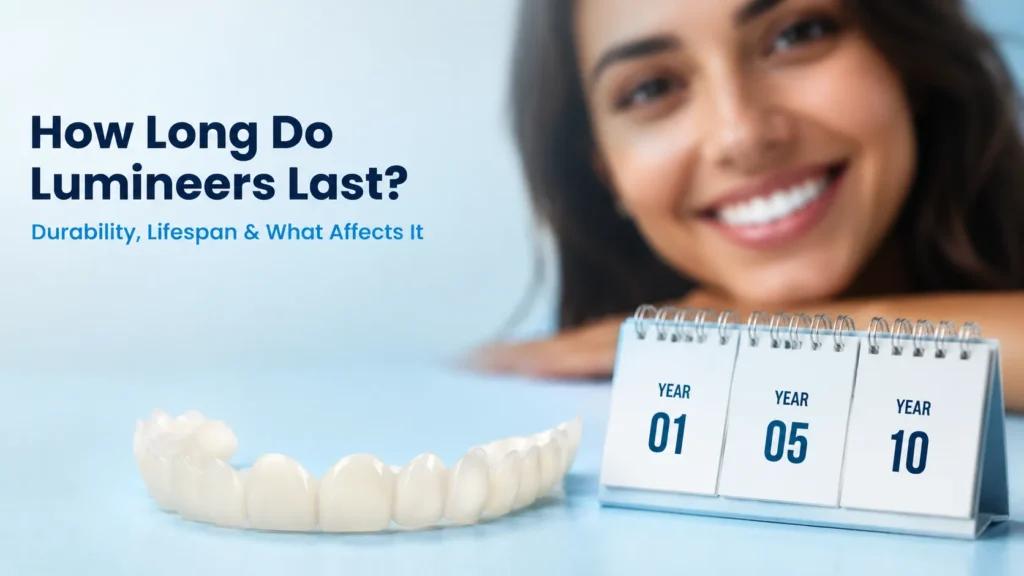
Sources vary somewhat here. CareCredit reports Lumineers can last 10 to 30 years with care, averaging 10 to 20 years. Healthline is more cautious, noting some sources report a lifespan closer to 10 years, and that few long-term independent studies have tracked Lumineers specifically, since most published data comes from the manufacturer or manufacturer-funded research.
The honest takeaway: how long do Lumineers last depends heavily on your bite, whether you grind your teeth, and how consistently you avoid biting directly into hard foods. Traditional veneers, by comparison, are documented at 10 to 15 years on average, with some cases reaching 20.
Lumineers Pros and Cons
Pros
- Little to no tooth enamel removal, unlike traditional veneers
- No anesthesia or numbing shots typically needed for application
- Considered semipermanent and potentially reversible
- Generally less expensive than traditional porcelain veneers
- Two-visit process with no temporary veneers required in between
Cons
- More translucent, so they cover severe staining less effectively
- Not as durable as traditional veneers in most reported cases
- Add slight bulk to teeth, which can look off on already-large teeth
- Tooth sensitivity and gum irritation are both commonly reported side effects
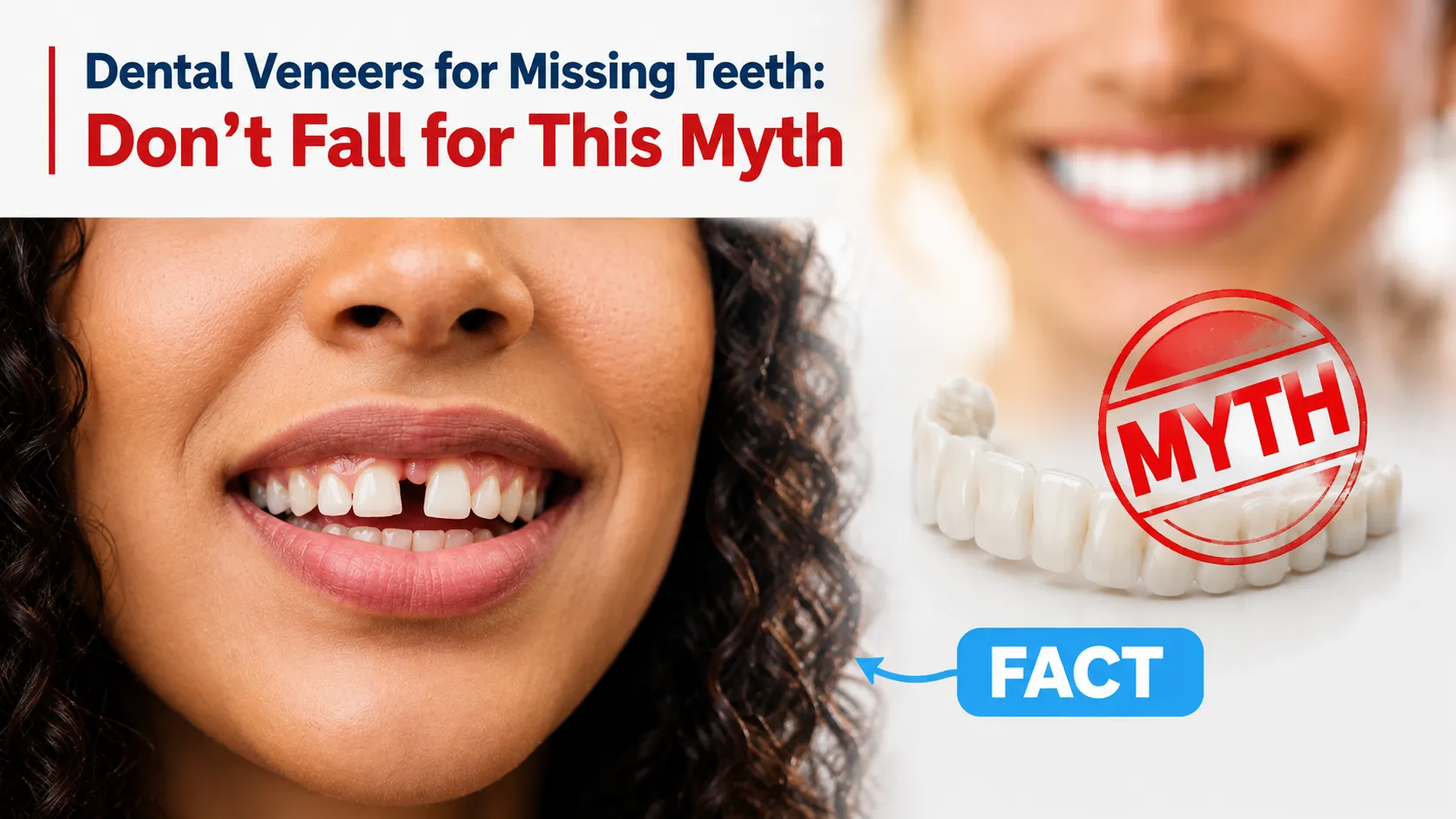
- Not ideal for large gaps, missing teeth, or very crooked teeth
Do Lumineers Look Natural? A Before-and-After Reality Check
Lumineers before and after photos, including the manufacturer’s own results gallery, tend to show the biggest improvements on mild to moderate cases: light staining, small chips, minor gaps, or slightly undersized teeth. That translucency that makes Lumineers look natural is the same property that limits how well they hide serious discoloration.
If your before photo shows heavily darkened or visibly damaged teeth, the honest expectation is that a Lumineers before and after transformation will look more subtle than one using fully opaque porcelain veneers. Ask your dentist for photos of their own comparable cases, not just manufacturer marketing images, before committing.
Lumineers Real Patient Reviews: What People Commonly Report

Genuine lumineers real patient reviews, whether from clinical sources or patient-facing review platforms, tend to cluster around a few consistent themes rather than wildly different experiences. On the positive side, patients frequently mention the painless application process and the confidence boost of a brighter, more even smile. CareCredit’s coverage echoes this, describing improved self-confidence and mood as commonly reported benefits.
On the critical side, the same sources point to temporary tooth sensitivity, occasional gum irritation in the weeks after application, and disappointment among patients whose teeth were more severely discolored than Lumineers could fully correct. These patterns show up consistently enough across independent dental publishers that they are worth taking seriously rather than dismissing as outliers.
Lumineers reddit reviews and other patient forums generally mirror this same split: satisfaction from patients whose cases matched the product’s strengths, and frustration from those who needed more coverage than a thin, translucent veneer can realistically provide. Treat individual online reviews as anecdotes, not clinical evidence, and weigh them alongside your own dentist’s assessment of your teeth.
Lumineers Regret Stories: Common Complaints to Know About
Reported regrets tend to fall into a short, predictable list rather than random bad luck. Knowing them ahead of time is the best way to avoid becoming a statistic yourself.
- Results looking less dramatic than expected on severely stained or damaged teeth
- Lumineers chipping, cracking, or coming loose, especially with teeth grinding or hard foods
- Bite feeling slightly different after application, requiring a follow-up adjustment
- Ongoing tooth sensitivity lasting longer than the typical few-week to one-year window
Most of these outcomes trace back to a mismatch between the case and the product, or an inexperienced provider. CareCredit specifically recommends using only a dentist experienced and certified in Lumineers application to reduce the risk of these complications.
Lumineers vs Snap-On Veneers
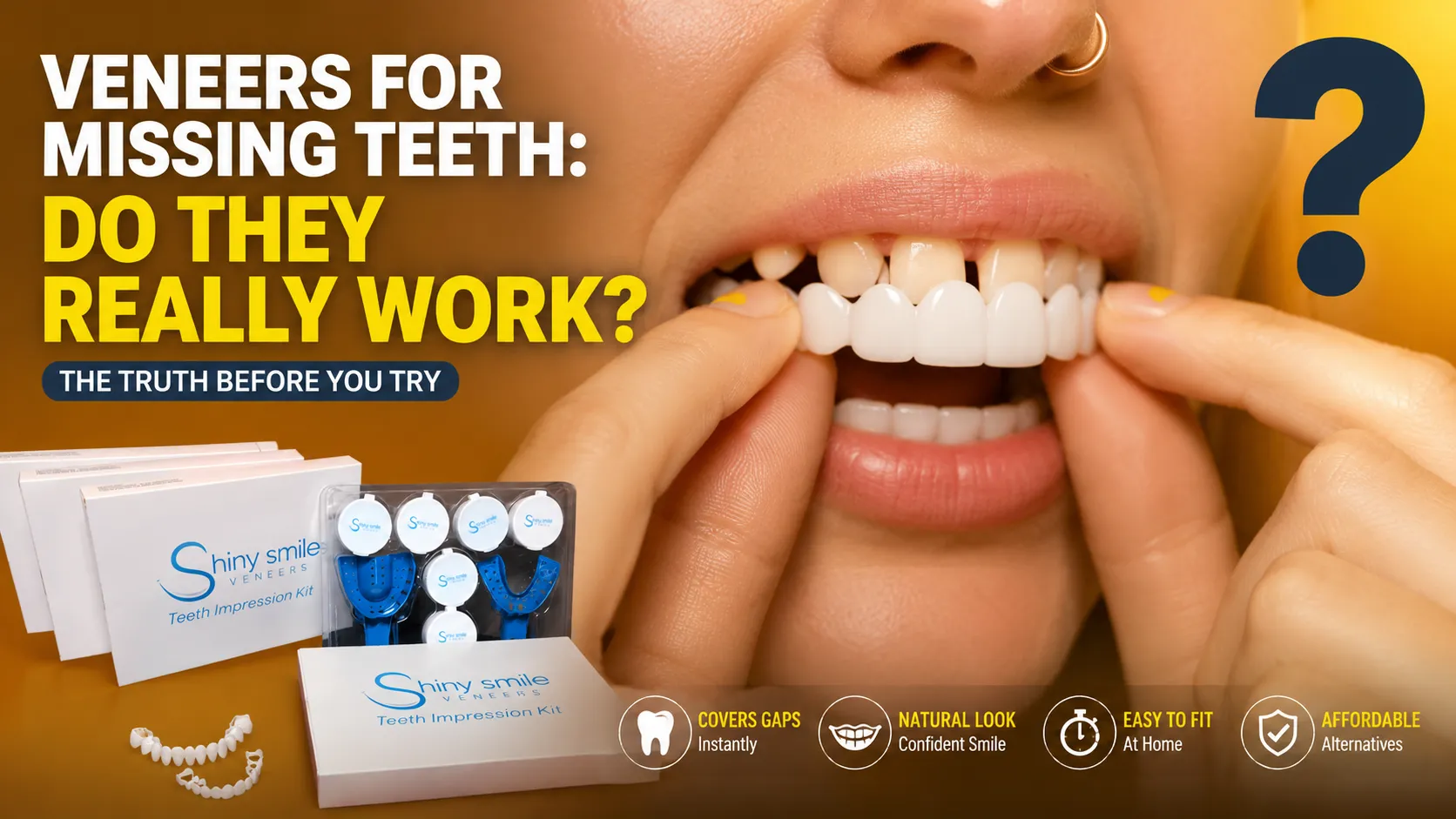
Lumineers vs snap-on veneers is really a comparison between a permanent-ish dental product and a removable accessory. Brands like Shiny Smile, Pop-on Veneers, and Insta Smile clip over your existing teeth without any bonding or dental visit at all, at a fraction of the cost of Lumineers. They are not a substitute for a dentist-fitted product, but they work well as a temporary or budget-friendly bridge.
Lumineers vs Invisalign for a Smile Makeover
These two treatments solve different problems, so the comparison only matters if you are unsure which issue you actually have. Lumineers change the color, shape, and surface appearance of teeth that are already reasonably well aligned. Invisalign clear aligners move crooked or misaligned teeth into a straighter position over months, but do nothing for staining, chips, or shape.
Some patients use both in sequence, straightening first with Invisalign, then finishing with Lumineers once the bite is aligned. If your main concern is crookedness rather than color or shape, Invisalign is the more targeted fix; if your teeth are already straight but discolored or uneven, Lumineers address that more directly.
Lumineers Maintenance Tips
- Brush and floss twice daily and keep up with regular dental checkups and cleanings
- Avoid biting directly into hard foods like whole apples or ice
- Wear a nightguard if you grind your teeth, since bruxism is a leading cause of chipped Lumineers
- Report any gum bleeding or irritation lasting more than a few weeks to your dentist
- Avoid nail-biting, which stresses the edges of thin porcelain veneers
Are Lumineers Worth It? Who Makes the Best Candidate
According to CareCredit’s clinical guidance, the best Lumineers candidates are adults with healthy gums, no missing teeth, no large gaps, and teeth that are not extremely crooked. Small teeth tend to benefit the most, since Lumineers add slight bulk that can look overdone on already-large teeth. Patients who grind their teeth or bite their nails are considered weaker candidates unless those habits are addressed first.
Are Lumineers worth it ultimately depends on matching the product to the problem. For mild staining, small chips, or minor shape issues on healthy teeth, many patients and dentists consider them a good value. For more significant damage or discoloration, traditional veneers or crowns are usually the more appropriate, longer-lasting choice.
Is Getting Lumineers Painful?
Not typically, and that is one of the product’s most consistently reported advantages. Because little to no enamel gets removed, most patients do not need anesthesia or numbing shots during application. CareCredit notes that some patients experience temporary tooth sensitivity or mild gum irritation for a few weeks afterward, and sensitivity can occasionally linger for up to a year, but the procedure itself is generally described as painless.
How Many Lumineers Do You Need for a Full Smile?
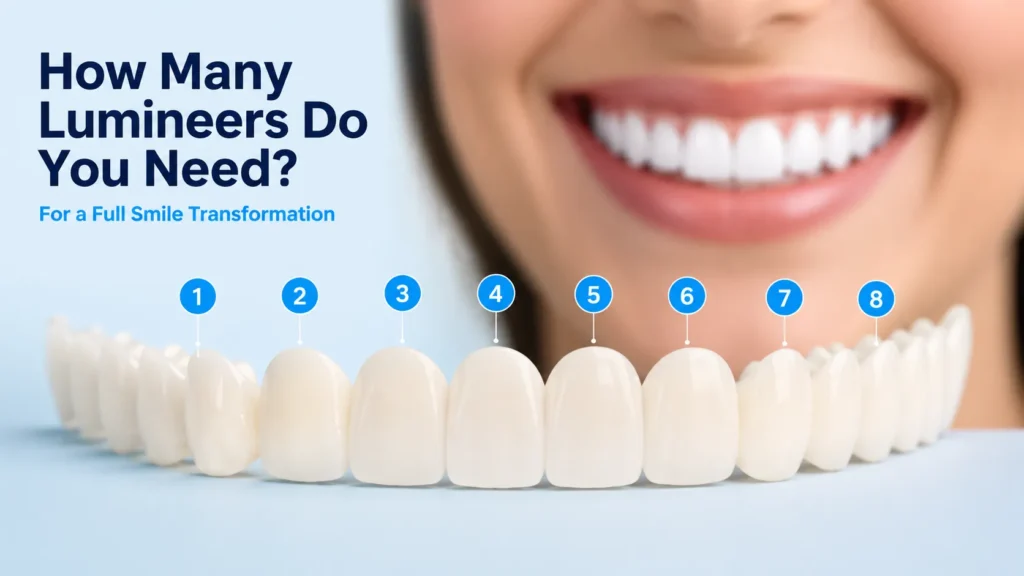
Based on CareCredit’s partial-to-full cost estimates, a typical smile makeover treats somewhere around 6 to 10 upper teeth, the ones visible when you smile, though some patients choose to treat both arches for a more complete result. The right number depends on how many teeth show in your natural smile line and how much correction each one needs, which is a conversation best had directly with your dentist during a consultation.
Do Celebrities Really Use Lumineers?
Lumineers has marketed itself to a Hollywood-adjacent clientele for years, and cosmetic dentists who describe themselves as “celebrity dentists” have publicly promoted the brand as a favorite among high-profile clients. That marketing angle is real and well documented.
What is much harder to verify is which specific, named celebrities have actually had Lumineers applied, as opposed to traditional porcelain veneers or other cosmetic dental work. Most celebrity smile speculation online is exactly that, speculation, since very few public figures confirm the specific brand or procedure they used. Treat any list claiming to identify a celebrity’s exact veneer brand with healthy skepticism unless it cites the celebrity or their dentist directly.
Questions to Ask Before Choosing Lumineers
- How many Lumineers cases similar to mine have you completed, and can I see before-and-after photos?
- Would traditional veneers serve my specific staining or damage better than Lumineers?
- What does your warranty or guarantee cover if a Lumineer chips or falls off?
- What financing or payment plan options do you offer if insurance will not cover the cost?
A dentist who answers these questions directly, with specifics rather than general reassurance, is usually a stronger sign of real experience with the product than marketing materials alone.
Frequently Asked Questions
Are Lumineers worth it?
For patients with mild to moderate staining, small chips, or minor shape issues on otherwise healthy teeth, many find them worth the cost. For severe discoloration or damage, traditional veneers usually deliver better, longer-lasting results.
Do Lumineers look natural?
Often yes, thanks to their translucency, which mimics natural enamel more closely than opaque porcelain veneers. That same translucency means they cover severe staining less completely than traditional veneers.
Do Lumineers stain over time?
The porcelain itself resists staining well, similar to traditional veneers, though the edges where they meet natural tooth can pick up discoloration over several years, especially with heavy coffee, tea, or tobacco use.
Can Lumineers be whitened?
No. Porcelain does not respond to whitening treatments the way natural enamel does. If your Lumineers appear dull or off-color, replacement, not whitening, is generally the only fix.
Do Lumineers ever fall off?
It can happen, though it is not the norm. CareCredit lists Lumineers falling off as a possible side effect, more common with poor candidate selection, teeth grinding, or an inexperienced provider.
Is getting Lumineers painful?
Generally no. Since little to no enamel removal is involved, most patients skip anesthesia entirely. Temporary sensitivity or gum irritation afterward is common, but the application itself is typically described as painless.
How long do Lumineers last?
Most sources report 10 to 20 years with proper care, and the manufacturer cites up to 30 years in some cases. Independent long-term studies remain limited, so treat the higher end of that range cautiously.
Are Lumineers reversible?
They are considered semipermanent and more reversible than traditional veneers, since minimal enamel is removed. That said, removal can still carry some risk of minor damage to the underlying tooth.
How many Lumineers do most people need for a full smile?
Based on typical partial-to-full cost estimates, most smile makeovers treat around 6 to 10 upper teeth, though some patients choose to treat both arches depending on their smile line and goals.
The Bottom Line
Lumineers reviews consistently point to the same conclusion: this is a genuinely gentler, less invasive product than traditional veneers, well suited to mild and moderate cosmetic concerns, but not a universal upgrade. The translucency that makes Lumineers look natural is the same trait that limits how much damage or staining they can hide. Match the product to your actual teeth, choose a dentist experienced with the brand, and go in with realistic expectations about longevity and coverage.
This article contains affiliate links. If you purchase through our links, we may earn a commission at no extra cost to you. We only recommend products we genuinely believe in. Read our Affiliate Disclaimer for full details.