
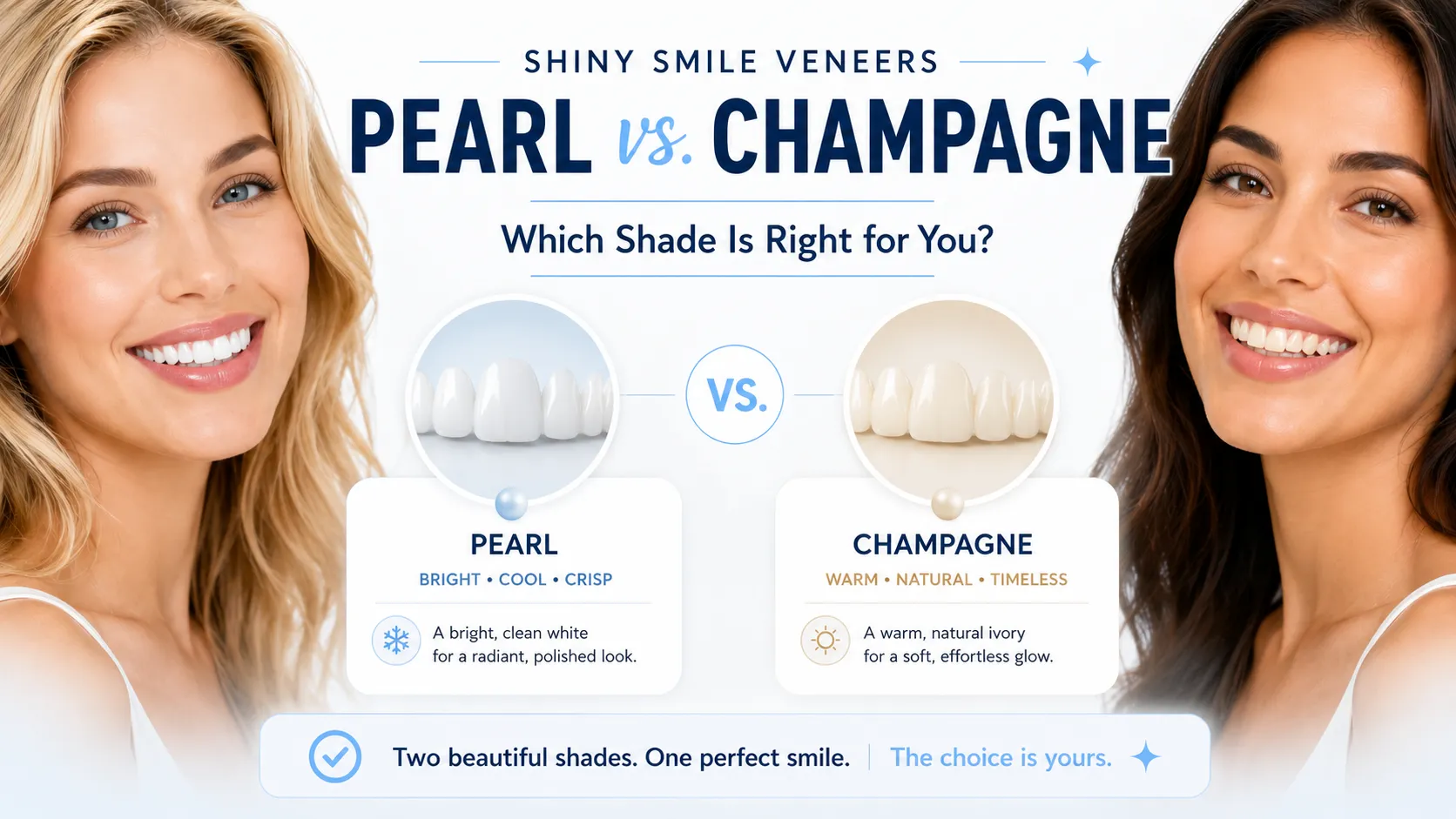
Skin tone can influence how bright a veneer appears, but it should not be treated as a rigid shade-selection rule. Lip color, surrounding teeth, facial contrast, indoor lighting, cameras, and personal preference also affect the result. Pearl offers a brighter neutral look, while Champagne may create a softer and warmer appearance in everyday conditions.
Table of Contents
So let us break this down properly, using the real differences between each option. You can explore all available shades directly on the official Shiny Smile Veneers website, but this guide will walk you through what each one actually looks like in real life so you can walk away with a clear answer that fits your face, your lifestyle, and where you actually plan to wear them.
Understanding the Three Shades – Bright White, Pearl, and Champagne
Before zeroing in on the pearl vs champagne debate, it helps to understand where both sit within the full shade range. The complete lineup of smile veneers – Bright White vs Pearl vs Champagne – covers three very different aesthetic goals. Bright White is the boldest, highest-contrast option. It delivers the most dramatic before-and-after difference and works best for people who specifically want a Hollywood-style white smile that stands out in photos and social content. Pearl occupies the middle ground – visibly brighter and cleaner than natural enamel, but without crossing the line into obvious cosmetic territory. Champagne is the warmest and most natural of the three, sitting closest to the color of healthy real teeth.
Knowing where Bright White lands in the spectrum of smile veneers – Bright White vs Pearl vs Champagne – makes it easier to evaluate where Pearl and Champagne sit relative to each other. Once you understand that Pearl is the balance point and Champagne is the understated option, the decision becomes a lot clearer.
Shiny Smile Veneers Pearl vs Champagne – The Core Difference
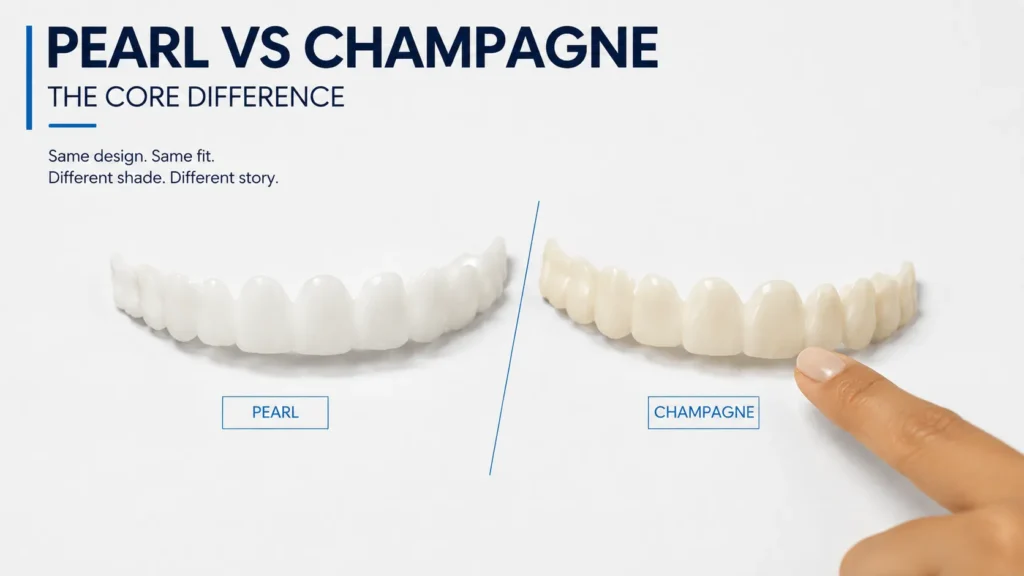
The core distinction between shiny smile veneers pearl vs champagne comes down to brightness versus realism. Pearl gives you a cleaner, brighter result that still reads as believable in most everyday situations – at work, on a date, in photos, or on a video call. Champagne prioritizes blending in over standing out, delivering a warmer tone that most people would not immediately identify as veneers at all.
That might sound like Champagne is the obvious winner, but it depends entirely on what you want. If you buy shiny smile clip on veneers to feel more confident in photos or to noticeably improve how your smile looks in the mirror, Champagne may not deliver the transformation you pictured. Pearl gives you more visible impact while still staying within the believable range. Champagne is the right answer if your goal is enhancement without anyone pinpointing what changed.
The Pearl Shade – Who It Works Best For
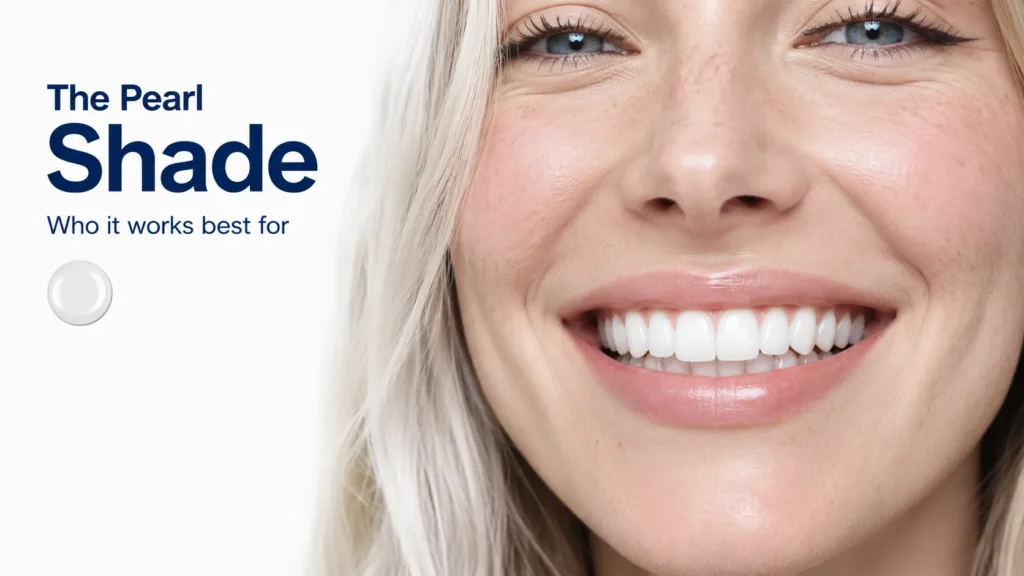
Pearl is consistently the most popular shade across verified customer accounts, and there is a clear reason for that. It sits in a zone where the smile looks noticeably better without looking dramatically different from what natural, healthy teeth look like. When people choose shiny smile clip on veneers for everyday wear – job interviews, family events, social outings, dating – Pearl gives them the confidence boost they want without the worry that the shade will look fake under different lighting conditions.
Pearl also tends to be the safest first choice for people who have never bought a cosmetic veneer before. If you are unsure which shade fits your skin tone or how much of a transformation you actually want, Pearl gives you the best chance of being happy once the box arrives. It photographs well, it holds up in daylight, and it works across a wide range of ages and skin tones. Most third-party review sources that cover shiny smile veneers pearl vs champagne land in the same place: Pearl first if in doubt.
The Champagne Shade – Who It Works Best For
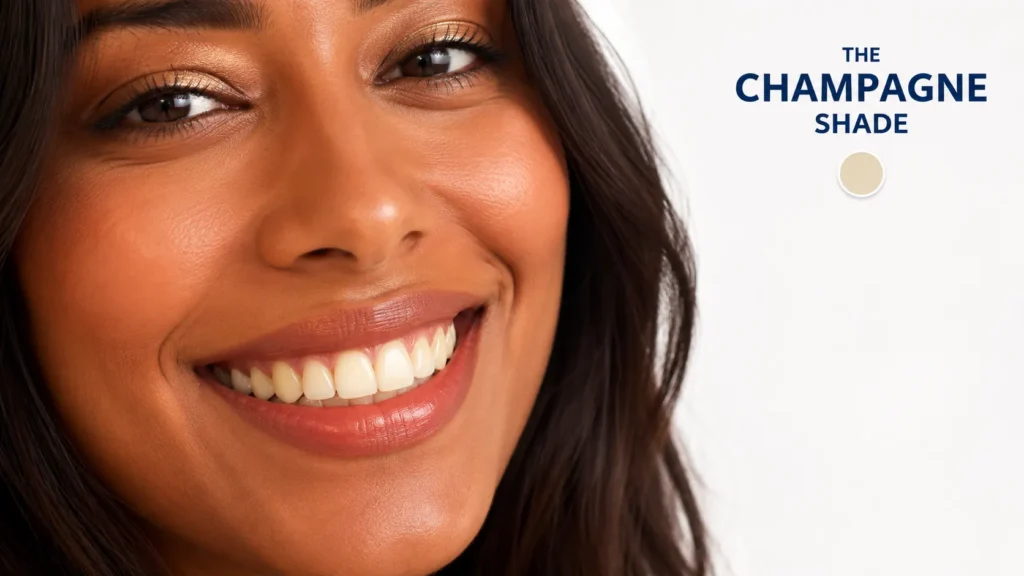
Among all smile veneers – Bright White vs Pearl vs Champagne – Champagne attracts buyers who specifically want the “nobody knows I’m wearing veneers” result. The warmth of the shade means there is less visual contrast between the veneer and the surrounding skin, gum tissue, and face, which makes the overall look feel more integrated. For buyers in their 40s, 50s, or older, or for people who work in conservative professional environments, Champagne tends to produce a more credible, age-appropriate result. The same logic applies if your natural tooth color is already fairly light – going dramatically whiter with Bright White or even Pearl might create an obvious contrast, while Champagne stays within a believable range for your existing baseline.
The trade-off is impact. If you picture a dramatic smile transformation, Champagne may feel disappointing when the set arrives. It adds warmth and improves the overall appearance, but it does not produce the clean, bright pop that Pearl does. This is the reason many buyers who go with Champagne already know ahead of time that they are choosing realism over drama, rather than stumbling into it by accident.
Shade by Skin Tone – A Quick Reference
Skin tone changes how every shade of white appears in real life. Very fair or cool-toned skin tends to make Bright White look crisper but also more obvious. Pearl usually works well across fair to medium skin tones and gives a clean result without the “too stark” effect. Champagne reads the most natural on warm, deep, or olive skin tones because the warmer undertone of the shade complements rather than contrasts with the skin.
Neither shade is wrong for any skin tone, but using skin tone as a tiebreaker when you are stuck between shiny smile veneers pearl vs champagne can save you from ordering the wrong option. If you have warm or deep undertones and want the most natural result, Champagne is usually the better call. If you have fair or neutral skin and want your smile to look clean and bright, Pearl is typically the stronger choice.
Which Shade Works Best in Different Settings?
The full breakdown of smile veneers – Bright White vs Pearl vs Champagne – shows that each shade was built for a specific use case.
Work settings and conservative environments: Pearl or Champagne. Bright White can feel overdone in professional settings where a natural result matters more than visual impact.
Photos, social media, and events: Pearl is the most balanced option. It photographs well and gives a visible improvement without looking like an obvious cosmetic appliance. Bright White is the choice if you specifically want maximum impact in images.
Weddings: Pearl is the most common recommendation from experienced buyers. It photographs cleanly, works in natural light and flash photography, and still looks like a real smile rather than a studio prop.
Everyday wear: Pearl handles the widest range of daily situations. Champagne is the better pick if your priority is going unnoticed during daily life rather than looking noticeably brighter.
How Long Do Shiny Smile Veneers Last?
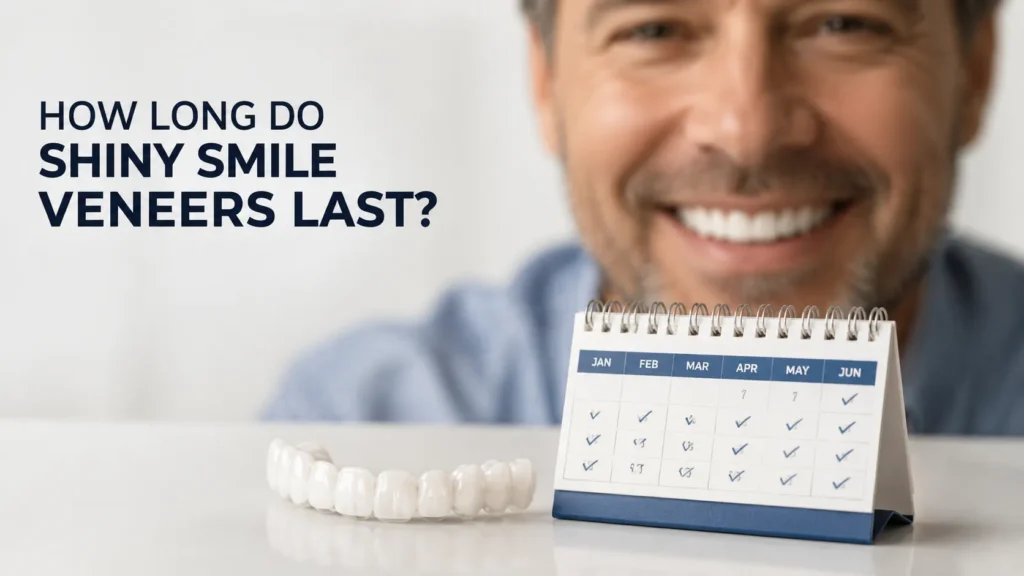
A common follow-up to the shade question is: how long do Shiny Smile Veneers last, and does shade choice affect longevity? The direct answer is that how long do Shiny Smile Veneers last depends primarily on how well you care for them rather than which shade you choose. According to the company’s own published information, with proper care the veneers can last up to five years. The brand backs the product with a three-year limited warranty against manufacturer defects and color changes, and a separate 15-month warranty against cracking or breakage under normal wear. An extended warranty option adds accidental damage coverage beyond the standard period.
Proper care means removing the veneers before meals involving hard, sticky, or very hot foods, brushing them gently with a soft toothbrush after each wear, storing them in their case when not in use, and avoiding abrasive toothpastes or harsh chemicals. How long do Shiny Smile Veneers last with consistent care is genuinely up to five years for most buyers, which is a meaningful lifespan for a removable cosmetic appliance at this price point.
How Many Teeth Do I Need for Shiny Smile Veneers?
Another question that comes up alongside shade selection is: how many teeth do I need for Shiny Smile Veneers? The product works by covering a full dental arch – either the top, the bottom, or both – rather than individual teeth. Each set of shiny smile clip on veneers covers all the teeth visible in that arch when you smile, which typically includes six to eight front and side teeth depending on how wide your natural smile is. The impression kit captures the full arch so the lab can build a veneer that fits every tooth in that row simultaneously.
How many teeth do I need for Shiny Smile Veneers if I have gaps or missing teeth? The veneers cover the visible spaces as well, presenting a continuous, even appearance regardless of gaps, chips, or missing units in the visible arch. This is one of the primary cosmetic benefits of a full-arch snap-on appliance rather than individual tooth restoration. If you have concerns about a specific missing tooth outside the visible arch area, it is worth contacting the company directly before ordering.
Can I Bite Into an Apple with Veneers?
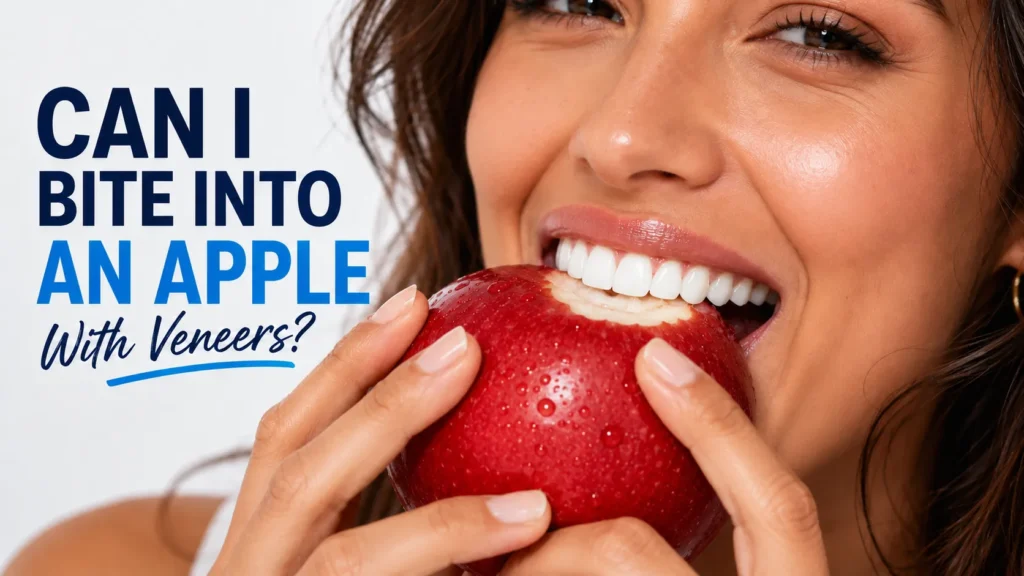
Can I bite into an apple with veneers? This is a question almost every new buyer has, and the short answer is no – not while wearing them. This applies to shiny smile veneers specifically and to snap-on veneers generally. The custom resin appliance sits over your natural teeth using a friction fit rather than a dental bond, which means hard, direct biting force – like taking a full bite out of an apple – puts stress on the appliance edges and can cause warping, cracking, or loosening of the fit over time.
Can I bite into an apple with veneers if I slice it first? Yes. Cutting apples and other firm fruits into smaller pieces, then placing them toward the back teeth rather than biting directly with the front, is the recommended approach for eating with veneers in place.
For a complete breakdown of what you can and cannot eat while wearing them, our guide on can you eat with Shiny Smile Veneers covers everything from soft daily foods to the full list of things to avoid, and it is worth reading before your set arrives so you know exactly what to expect. Most wearers find that removing the veneers for full meals and replacing them afterward sidesteps this concern entirely. In summary, can I bite into an apple with veneers on? No – but sliced, soft pieces are always fine.
Pearl or Champagne – The Final Recommendation
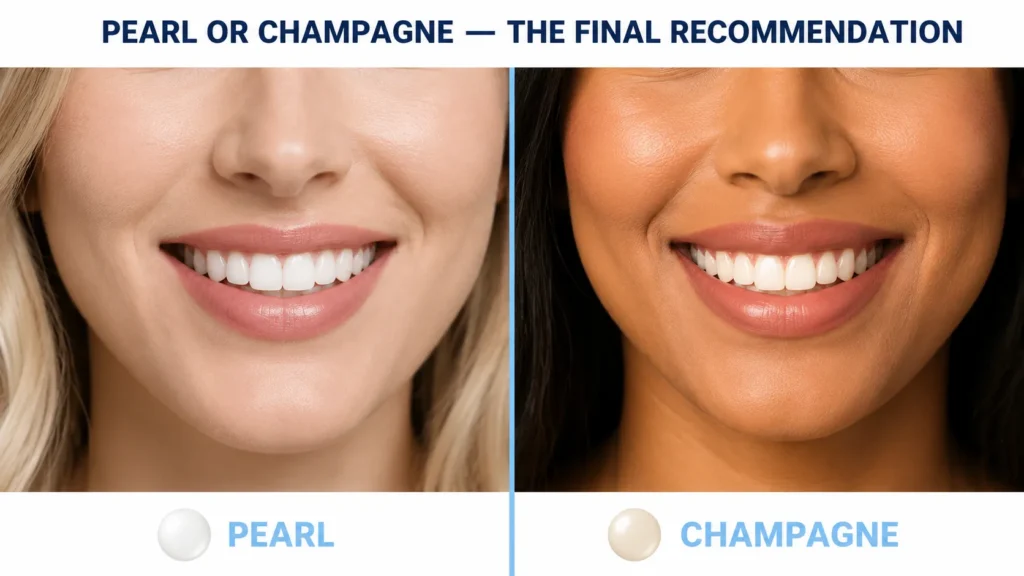
If you are still sitting with the shiny smile veneers pearl vs champagne question after reading all of this, here is the most direct answer possible. Choose Pearl if you want a visible smile improvement that works in photos, everyday life, professional settings, and social situations without looking obviously cosmetic. Choose Champagne if your main priority is the most natural-looking result possible, even if that means a subtler transformation.
Most first-time buyers who want a confidence boost and a noticeably cleaner smile land on Pearl, and that is backed up by the pattern across independent review sources and customer feedback. Champagne is the right call for buyers who want realism above all else, particularly those who are older, have lighter existing tooth color, or work in environments where a very white smile would attract more attention than they want. If you are still unsure after narrowing it down to shiny smile veneers pearl vs champagne, go with Pearl – it gives more room to feel satisfied regardless of the specific setting where you wear them.
Frequently Asked Questions
1. What is the main difference between Pearl and Champagne?
Pearl is brighter and more visibly white, while Champagne is warmer and more natural-looking. Pearl suits most everyday situations; Champagne suits buyers who prioritize realism over brightness.
2. Which shade from the Smile Veneers – Bright White vs Pearl vs Champagne range is best for first-time buyers?
Pearl is the safest starting point for first-time buyers because it gives a noticeable improvement without being as extreme as Bright White or as subtle as Champagne.
3. How long do Shiny Smile Veneers last with regular use?
The company states veneers can last up to five years with proper care, backed by a three-year warranty against color change and a 15-month warranty against cracking.
4. Which shade should I pick if I have a warm skin tone?
Champagne or Pearl. Champagne’s warmer tone complements warm and deep skin tones particularly well, while Pearl works well across most skin tones.
5. How many teeth do I need for Shiny Smile Veneers if I have gaps?
The full-arch design covers all visible teeth including gaps, presenting a continuous even smile appearance regardless of missing or spaced teeth.
This article contains affiliate links. If you purchase through our links, we may earn a commission at no extra cost to you. We only recommend products we genuinely believe in. Read our Affiliate Disclaimer for full details.