
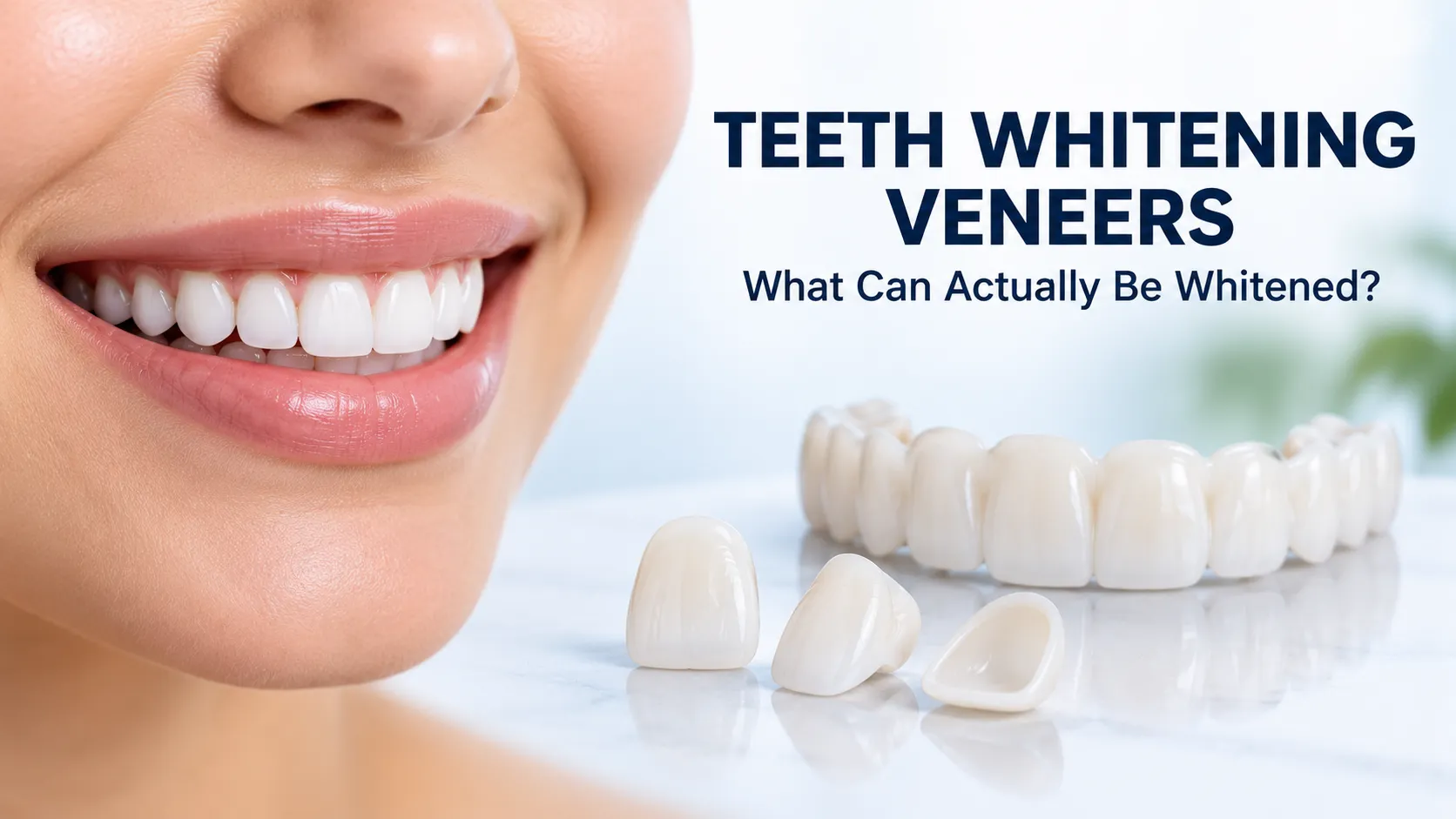
Teeth whitening veneers cannot be bleached after they are made. Whitening products can lighten natural enamel, but porcelain, composite, and removable veneers keep their manufactured shade. If you want a brighter smile, the usual options are whitening natural teeth before shade selection, removing surface stains professionally, or replacing a veneer that no longer matches.
Table of Contents
The phrase teeth whitening veneers describes two different cosmetic approaches. Whitening changes natural enamel. Bonded or removable veneers cover visible tooth surfaces with a selected shade.
A veneer can make teeth look whiter, but it does not bleach the enamel underneath. This distinction helps prevent wasted products and mismatched shades.
What Do Teeth Whitening Veneers Actually Mean?
People searching for teeth whitening veneers are usually looking for one of four things:
- A way to whiten existing porcelain or composite veneers
- A veneer shade that makes the whole smile look brighter
- Removable veneers that temporarily cover stained teeth
- Guidance on whether whitening should happen before getting veneers
These goals need different solutions. Whitening gel works on natural tooth structure, while veneer color is built into ceramic, resin, or removable cosmetic material. A dentist may polish away some external deposits, but polishing is not bleaching.
The American Dental Association’s teeth-whitening guidance explains that bleaching does not change veneers, crowns, fillings, or caps. Remember this before buying strips, LED kits, or abrasive toothpaste for teeth whitening veneers.
Can You Whiten Veneers?
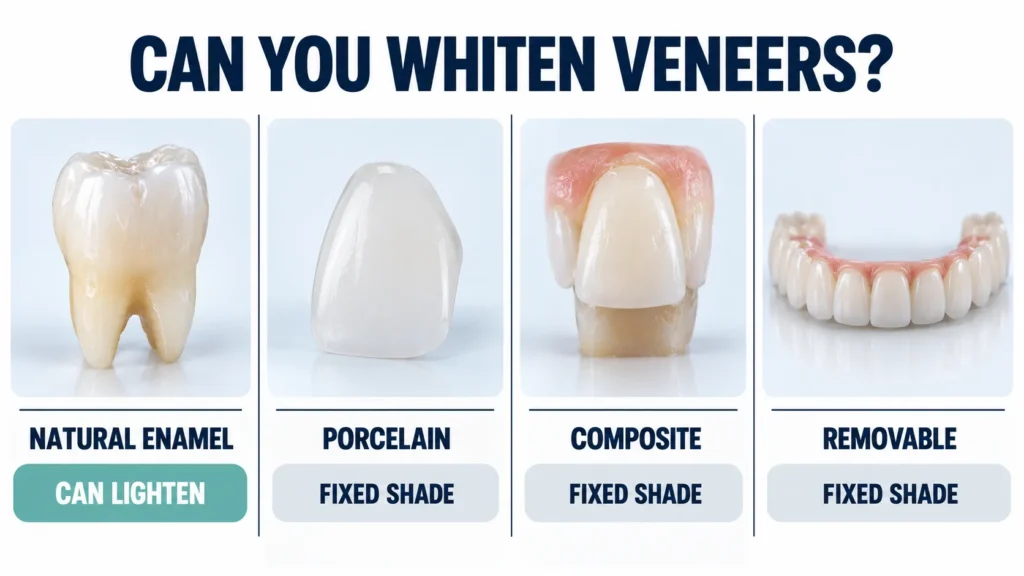
The short answer is no—not in the way natural teeth are whitened. However, the right response depends on the veneer type and why it looks darker.
Porcelain veneers
Porcelain veneers are ceramic restorations bonded to individual teeth. Their selected shade does not respond to peroxide. Porcelain resists staining, although coffee, tea, tobacco, plaque, and dark veneer edges can make a smile appear less bright.
If porcelain looks dull, a dentist may check for buildup, roughness, gum changes, cement discoloration, or nearby natural teeth. Cleaning may improve external stain, but an unsuitable porcelain shade normally requires replacement.
Composite veneers
Composite veneers are tooth-colored resin. They can stain and lose polish more readily than porcelain. Bleaching does not predictably lighten resin, but a dentist may polish, repair, or resurface it.
Our composite resin veneers review explains how resin differs from porcelain in stain resistance, repairability, cost, and maintenance. If composite becomes rough or discolored, professional evaluation is safer than repeatedly scrubbing it with aggressive whitening paste.
Removable veneers
Removable clip-on veneers do not whiten teeth. They cover visible surfaces while worn. Once removed, the natural shade is unchanged. For this reason, removable teeth whitening veneers are cosmetic covers, not bleaching systems.
Their shade is fixed. Whitening gel, bleach, baking soda, peroxide soaks, or harsh toothpaste may damage the finish. Follow the manufacturer’s cleaning instructions.
Natural teeth beside veneers
Natural teeth may be whitened when some teeth have veneers, but planning matters. Enamel can lighten while restorations remain unchanged. A dentist can decide whether whitening, polishing, bonding, or replacement should come first.
Teeth Whitening Veneers Compared at a Glance
| Option | What It Changes | Can Peroxide Whiten It? | Best Next Step if It Looks Dark |
|---|---|---|---|
| Natural enamel | The tooth’s own color | Often, depending on the cause of discoloration | Ask a dentist which whitening method suits the stain |
| Porcelain veneer | Covers the front of one tooth | No | Professional cleaning, polishing, margin check, or replacement |
| Composite veneer | Tooth-colored resin bonded to the tooth | No predictable bleaching | Professional polish, repair, resurfacing, or replacement |
| Removable veneer | Temporarily covers several visible teeth | No | Use approved cleaning methods or select a different shade when ordering |
This is why teeth whitening veneers are not one product category. Whitening, bonded veneers, and removable veneers make smiles appear brighter in different ways.
Should You Whiten Your Teeth Before Getting Veneers?
In many teeth whitening veneers plans, whitening comes before final shade selection. The dentist lightens untreated natural teeth, lets the color stabilize, and then selects matching ceramic or composite.
This sequence matters when only a few teeth receive veneers. Whitening later may lighten surrounding enamel and create a mismatch.
Whitening can temporarily increase sensitivity, and color needs time to settle. The dentist must also consider fillings, crowns, bonding, gum color, translucency, and the visible smile zone.
According to the American Dental Association’s veneer overview, porcelain and composite veneers are selected to match the planned tooth shade. The page also emphasizes that a dentist should treat decay or gum disease before placing veneers.
The usual teeth whitening veneers order is: confirm oral health, whiten suitable natural teeth, let the color stabilize, and then finalize veneer shade. Do not start powerful whitening immediately before placement without informing the dentist.
Best Veneer Option for a Whiter-Looking Smile
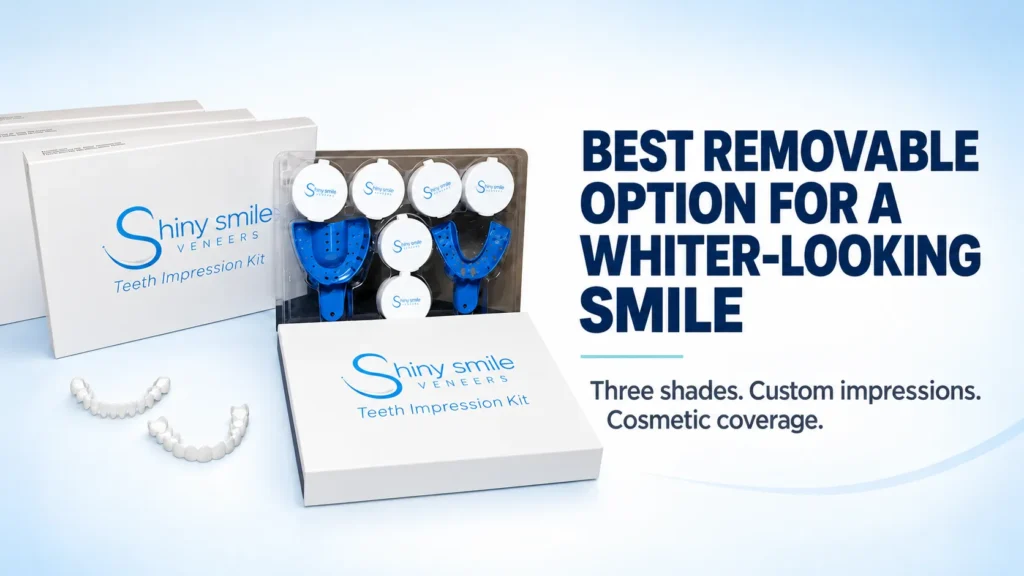
There is no universal best veneer. Porcelain can provide durable color masking and shape correction. Composite may suit a smaller repair or conservative budget. A removable veneer may suit someone wanting a reversible cover without tooth preparation.
Our removable option: Shiny Smile Veneers
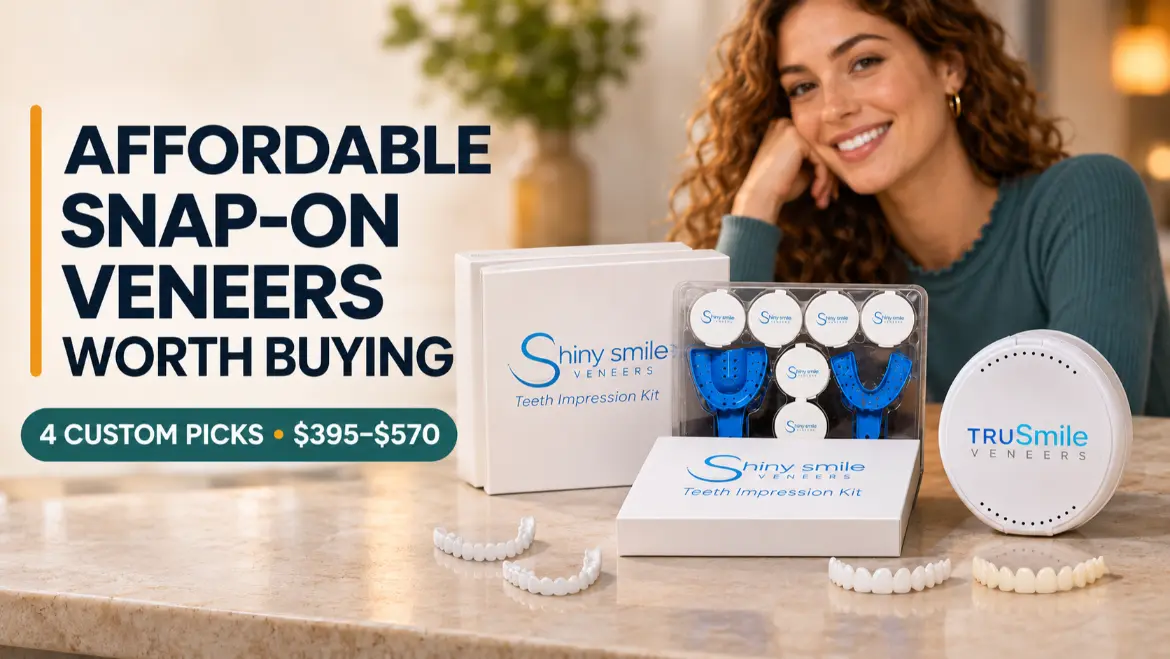
For readers seeking removable teeth whitening veneers—a whiter-looking cover rather than bleaching—our practical pick to compare first is Shiny Smile Veneers. It offers custom removable veneers made from at-home impressions in Bright White, Pearl, and Champagne.
The shade range is why it fits this intent. Bright White is most dramatic, Pearl is softer, and Champagne is warmer. The appliance changes what is visible while worn; it does not whiten teeth.
Review the process, suitability guidance, shades, and policies on the official Shiny Smile Veneers website. Prices, promotions, warranties, and remake terms change, so verify live conditions.
Do not use an at-home cover to hide pain, gum disease, loose teeth, tartar, unstable dental work, or serious bite problems. It cannot replace whitening, orthodontics, restorative treatment, or care for decay.
Before deciding, read is Shiny Smile Veneers legit? It examines the company, policies, shades, and limitations beyond sales claims.
Alternatives worth comparing
Pop On Veneers is another custom removable option. Instasmile offers multiple styles and online suitability screening. Both remain cosmetic covers, not whitening treatments.
For bonded veneers, no mail-order brand replaces a licensed dentist. Results depend on diagnosis, enamel preservation, bite planning, material choice, laboratory work, and technique.
The honest teeth whitening veneers recommendation is goal-based:
- Choose dentist-supervised whitening when healthy natural enamel mainly needs lightening.
- Consider bonding or composite when small shape defects and localized discoloration need correction.
- Discuss porcelain veneers when color masking, proportions, and surface appearance require a long-term bonded restoration.
- Compare a custom removable product such as Shiny Smile when you want reversible cosmetic coverage and understand that your teeth are not being treated or whitened.
How to Choose a Veneer Shade That Looks Natural
The brightest shade is not automatically flattering. Natural-looking teeth have warmth, translucency, texture, and variation rather than a flat paper-white finish.
When planning teeth whitening veneers, consider:
- Skin undertone: Cool, warm, and neutral undertones can change how white a shade appears.
- Whites of the eyes: A veneer much brighter than the eyes can appear artificial in some faces.
- Age and facial features: Extremely opaque white may look less believable on a mature smile.
- Number of teeth covered: A very white upper veneer can clash with visible lower natural teeth.
- Lighting: Shade photos look different under daylight, warm indoor bulbs, and phone-camera processing.
- Your goal: A special-event look may justify a brighter choice than an everyday natural result.
If you are considering Shiny Smile, our Bright White vs Pearl comparison explains the visual trade-off between a dramatic white shade and a softer everyday look.
Avoid choosing from edited social images alone. Look for unfiltered examples in varied light, remembering that screen brightness distorts shade judgment.
Are Whitening Strips, LED Kits, or Whitening Toothpaste Safe for Veneers?
Whitening products have different purposes, so safe and effective are separate questions.
Whitening strips and peroxide gels
Peroxide may whiten exposed enamel but not porcelain, composite, crowns, or removable veneers. It may also cause temporary sensitivity or gum irritation. A dentist should advise on teeth whitening veneers when restorations and natural teeth share the smile.
LED whitening kits
LED light does not make veneers bleach. The gel acts only on suitable natural tooth structure.
Whitening toothpaste
Whitening toothpaste removes surface stain; it does not change veneer color. Abrasive formulas may dull composite or removable material.
Our guide to the best toothpaste for veneers explains why a gentle fluoride toothpaste and soft-bristled brush are usually more sensible than chasing the strongest “whitening” label.
Household whitening methods
Do not use bleach, concentrated peroxide, lemon, vinegar, or abrasive powders. Acids damage enamel, chemicals injure tissues, and particles can roughen restorations.
How to Keep Veneers Looking Bright
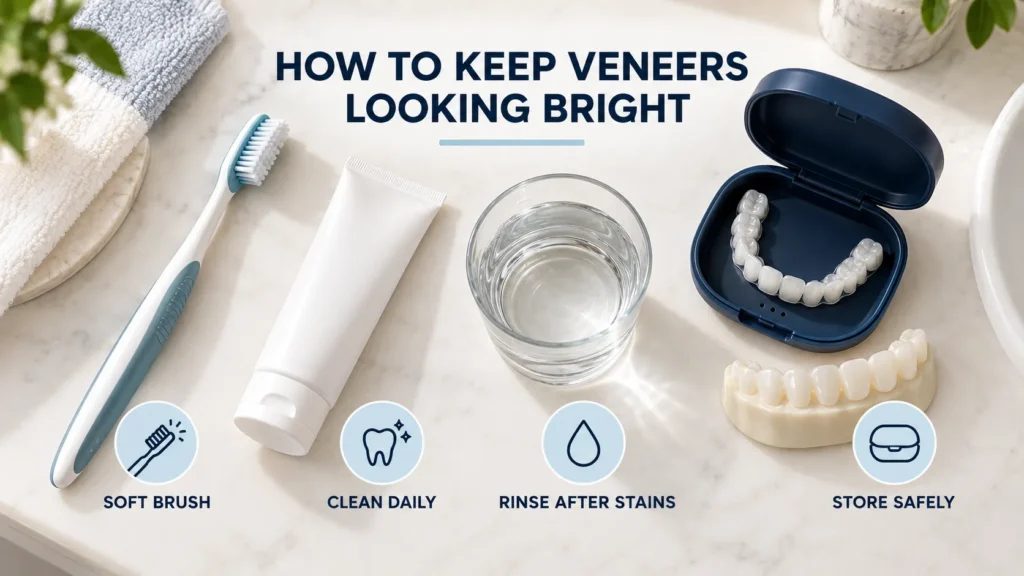
Good teeth whitening veneers care cannot bleach restorations, but it can reduce buildup and preserve their appearance.
For porcelain and composite veneers
- Brush twice daily with a soft toothbrush and a dentist-approved fluoride toothpaste.
- Clean between the teeth every day, paying attention to veneer margins.
- Rinse with water after coffee, tea, red wine, or strongly colored foods.
- Avoid smoking and tobacco, which can stain surrounding teeth and margins.
- Do not use teeth to open packaging or bite hard objects.
- Attend routine dental visits for cleaning and margin checks.
- Ask about a night guard if you clench or grind.
For removable veneers
- Remove the appliance before cleaning your natural teeth.
- Rinse it after use and clean it only with the brand-approved method.
- Avoid hot water, which may distort some materials.
- Do not soak it in whitening gel or household cleaners.
- Let it dry as instructed and store it in its protective case.
- Stop wearing it and contact the provider if it cracks, becomes painful, or no longer fits securely.
With removable teeth whitening veneers, trapped plaque, food, or liquid can cause odor, irritation, and dental problems. Never place a cosmetic cover over unclean teeth.
When a Dentist Should Check the Color Change
Not every dark area is a simple stain. Arrange a dental examination if you notice:
- A dark line or shadow around a veneer margin
- One tooth changing color more than the others
- New sensitivity, pain, swelling, or a bad taste
- Bleeding or receding gums around a restoration
- A rough, chipped, loose, or moving veneer
- Discoloration after an injury
- A removable veneer that causes sores or persistent pressure
These signs may involve plaque, gums, decay, cement, damage, or the underlying tooth. More whitening can delay diagnosis.
Common Mistakes to Avoid
The most common teeth whitening veneers mistakes are simple:
- Bleaching porcelain or composite. Restorations do not lighten like enamel.
- Whitening after shade matching. Neighboring teeth may become brighter than veneers.
- Choosing the brightest removable shade automatically. It may look opaque in daily light.
- Scrubbing with abrasive toothpaste. Abrasion may reduce gloss.
- Covering unhealthy teeth. Pain, decay, bleeding, or loose dental work needs care first.
- Expecting permanent change. Removable veneers look brighter only while worn.
Frequently Asked Questions
Can veneers be professionally whitened?
No. A dentist may clean or polish external stain, but a lighter manufactured shade requires repair, resurfacing, or replacement.
Do teeth whitening veneers damage natural teeth?
Bonded and removable teeth whitening veneers have different risks. Traditional veneers may require irreversible preparation. Removable appliances avoid preparation, but poor fit, trapped plaque, or untreated disease can cause problems.
Can I use whitening strips if I have veneers?
Strips may lighten exposed enamel but not veneers, creating a mismatch. Ask a dentist when restorations are visible.
Will whitening toothpaste make porcelain veneers brighter?
It may remove surface deposits but cannot bleach porcelain. Use a gentle product and have persistent discoloration checked.
Are removable veneers better than whitening?
Whitening lightens suitable enamel. Removable teeth whitening veneers temporarily cover color, shape, spacing, or gaps without improving the tooth underneath.
What is the best Shiny Smile shade for stained teeth?
Bright White is most dramatic, Pearl is softer, and Champagne is warmer. Consider skin tone, lower teeth, lighting, and your preferred effect. The cover hides stains; it does not remove them.
How long should I wait after whitening before veneers?
There is no universal schedule. Color must stabilize, and bonding can affect timing. Follow the treating dentist’s instructions.
Final Verdict
Teeth whitening veneers do not literally whiten veneers. Whitening changes suitable natural enamel, while porcelain, composite, and removable veneers retain the shade chosen when they were made. A dull veneer may benefit from professional cleaning or polishing, but a genuine color change usually requires repair, resurfacing, or replacement.
If you mainly want healthier natural teeth to look lighter, begin with a dental examination and an appropriate whitening plan. If you need to mask deep discoloration while also changing tooth shape, bonded veneers may be discussed. If you want a reversible cosmetic cover, Shiny Smile is a reasonable removable option to compare because it offers three distinct shades—but it should be judged by fit, eligibility, current policies, and realistic expectations, not whiteness alone.
The best teeth whitening veneers plan is the one that protects oral health first, coordinates natural-tooth whitening with shade selection, and produces a believable smile rather than simply the brightest one.
This article contains affiliate links. If you purchase through our links, we may earn a commission at no extra cost to you. We only recommend products we genuinely believe in. Read our Affiliate Disclaimer for full details.